
Not for Samurai
My family's "peasant" Japanese dish



If you go to any Japanese restaurant anywhere in North America, I can bet you money that you’re not going to find butadofu on the menu. That’s because it’s a meal that’s not fancy enough for restaurants, just simple enough to cook quickly at home from a hodgepodge of ingredients. I’ve found a lot of varieties of this Japanese dish posted online—it’s similar to the American beef stew. While some of the ingredients tend to be the same with each recipe (pork, miso, tofu), other people have added their own signature touch to it to make it unique to their family.
But butadofu is what my grandmother would call a “peasant dish.” She didn’t say it to speak down about our family, but was actually proud that we had come from so little and gained so much in her lifetime. My grandfather was raised on a farm, and my grandmother’s parents had started out their lives the same way. We weren’t from the nobility or samurai who are the basis of every Japanese film or TV show—we were from the other side of life, the ones who fed the samurai, the ones who worked the fields and ate simple meals at home while the nobility ate wagyu beef. We were the others. When my ancestors moved across the Pacific, America was seen as a golden opportunity. As immigrants, they sought to capture the American dream and climb that ladder upwards and leave their children better off.
But it was a long, tough journey. Especially after the Great Depression and being sent to concentration camps in WWII. But my grandparents managed to recover from those terrible events and have three children who all went to university. My uncle became a lawyer, my aunt an artist, and my mom was a copy editor and also the only one of her siblings to have a family—my sister and me.
At times, we didn’t have a lot growing up, and my mother would often stretch out meals or use ingredients that were on sale. One of my favorite American dishes she cooked was flank steak—at the time, one of the cheapest cuts of meat (although now restaurants have taken it over and made it “fancy” and expensive). She would dip it in flour, salt, and pepper, and fry it in a pan until the outside was crispy and the inside was soft and rich and chewy. Yum!

Butadofu was also on my mom’s regular rotation of meals, and she would make this dish once or twice a month. Because it’s pan-cooked, it could be made with the cheaper cuts of pork chopped up into small pieces. And because it has a thick, flavorful sauce of red miso and soy, she’d serve it over rice—so, the bulk of the meal would be rice with a spoonful or two of butadofu on top to flavor the white grains with the fragrant stew. It was filling and delicious.
Childhood is an interesting time of life. It’s not only where you learn many of the traditions of your family, but also where you learn lessons that last for your lifetime. But, at the same time, it’s a very self-centered time—meaning, your world is small. What your family does is what every family must do, of course. At least in a child’s mind.
Growing up, we ate some American dishes, some Mexican dishes (Californian cuisine was an influence on my mom’s cooking), and some Japanese dishes, and I thought this was how everyone ate. That everyone has a mixture of cultures in their mouths with every meal. At Thanksgiving, didn’t all families have turkey on one side of the table and sushi on the other?
Of course, this multicultural upbringing wasn’t all good. For example, I only learned Japanese names for some common items and didn’t know their American names until I was teased about them in school.
One incident sticks out in particular in my mind. My family always referred to a round, orange fruit with the thick skin and sweet meat with this name: kaki. We would eat it around Christmas as a treat, and I didn’t know it by any other name. When I brought some to school in my lunch, my frenemy who sat across from me wrinkled her nose and asked, “Ew, what’s that?” So, I told her: “Kaki.” She guffawed and said, “Caca? You’re eating poop?” And she said it loud enough to encourage other kids at the table to laugh as well.
I felt like I was going to cry—the communication barrier wasn’t my fault. It wasn’t until I went home, upset, that my mother explained to me the American term for it: persimmon. I wish I had known this before I’d opened myself up to a bully’s teasing.

So, I always had a bit of a love-hate relationship with my mixed background as soon as I found out that I was different from everyone else. And it made me cautious in life—after all, what if I only knew the Japanese word for something? What if I was opening myself up to ridicule again? It made me extremely shy—I went from a hugely outgoing kid when I was younger to one who hung back and tried not to speak in public at all, afraid of saying the wrong thing.
But, at home, it was a different story. At home, I returned again to the family that was uniquely mine and wouldn’t tease me for saying kaki or asking to eat inarizushi. The food that we ate around the dinner table was “normal” again. And butadofu was, to me, the epitome of that food. No one else I knew had ever eaten it or even heard of it. It wasn’t the popular sushi or teriyaki of Japanese cuisine. No, it was something that it seemed only my family knew about.
Once I grew up, I learned that it wasn’t a dish my mom created by herself. But it’s still one that few non-Japanese know about or enjoy, and so I feel that it’s a part of my heritage and part of my family’s food story. Here’s our recipe:
Ingredients:
2 tsp sugar
2 and 1/2 bundles of green onions, chopped to 1 inch lengths
1 lb pork, cut into small cubes
1/4 cup red miso (soybean paste)
2 containers tofu (firm, not extra firm or soft)
2 Tb shoyu (soy sauce)
1/4 tsp crushed red pepper
Cooking:
Cook the pork in the oil to brown (medium-high heat). In a separate bowl, mix together the pepper, shoyu, sugar, and miso. After blended, coat the tofu with the sauce and let it sit as the pork is cooking, so the tofu absorbs the flavors of the sauce. After the pork is cooked, add the tofu/sauce mixture to the pan and cook for several minutes. Add the green onions and turn the heat to low, covering the pan so that it steams the onions. After 10 minutes of steaming, serve it hot over rice.
***
If you make our family’s dish, I hope you enjoy it as much as we do!

About the Creator
Alison McBain
Alison McBain writes fiction & poetry, edits & reviews books, and pens a webcomic called “Toddler Times.” In her free time, she drinks gallons of coffee & pretends to be a pool shark at her local pub. More: http://www.alisonmcbain.com/
Keep reading
More stories from Alison McBain and writers in Feast and other communities.
Frozen Blueberries Recalled: What Families Need to Know
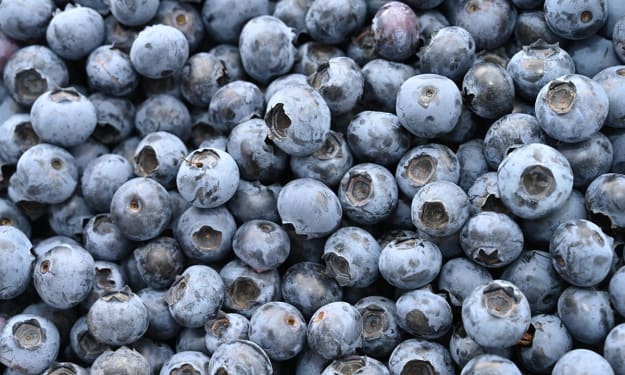
You open your freezer to grab a handful of blueberries for a smoothie. It is part of your routine. Maybe you add them to oatmeal for your child before school. Maybe you bake them into weekend muffins. Frozen fruit feels safe. It feels simple. But then you see the headline: frozen blueberries recalled. Suddenly, that bag in your freezer does not feel harmless anymore. Questions rush in. Are they safe to eat? What brands are involved? What should you do next? Food recalls can be unsettling, especially when they involve everyday items. This article explains why frozen blueberries recalled announcements happen, what risks are involved, and how to protect yourself and your family without panic.
By Muqadas khan3 days ago in Feast
I was in a Toxic Relationship, with my Workplace
“You got that?” My ex yelled. His hands were balled into fists at his side. At six foot three, he towered over me. A normal person would have been afraid, but I looked up a video of George Lopez repeatedly saying, “I got this,” and showed it to him. I had grown used to this treatment, so much so that I didn’t blink when he ripped the phone from my hand and threw it across the room.
By Jade M.4 days ago in Confessions



Comments (7)
Wooohooooo congratulations on your honourable mention! 🎉💖🎊🎉💖🎊
A great Japanese dish, I will try it. Thank you for sharing. Nicely Done!!!
Nice, I always thought miso and soy sauce weren't to be mixed together, but lately I've been experimenting, and happy to see your recipe is like that. Miso and pork go together so well. Optionally add in some spicy sauce and you have mabo tofu. Japanese versions of chinese food are almost better than the original.
I would love to go to Japan one day. Thank you for bringing the culture a little closer to home. The dish sounds great, easy to make and affordable. I eat rice every week in some way. Also, I'm no stranger to miso which is another selling point for butadofu.
Well-wrought! This sounds so delicious! My three kids are teen to adult now, but one of the hardest things about trying to get them to try new things was the way the opinions of other kids would effect their own. "You're not gonna eat that, are you?" Don't know why we do that to each other, but it seems perhaps an expression of the territorial instinct before reason is fully formed? Again, well-wrought, and a recipe I'll have to try!
This sounds good, I want to make it now.
I lived in Japan for three years, and I ate many meals in small little restaurants and on vacations in small towns and villages. I want to thank you for reminding me of that wonderful time in my life...and giving me a plan for my dinner tonight!