
It was, as far as I can ascertain, in September of the year 1811 that a
post-chaise drew up before the door of Aswarby Hall, in the heart of
Lincolnshire. The little boy who was the only passenger in the chaise, and
who jumped out as soon as it had stopped, looked about him with the
keenest curiosity during the short interval that elapsed between the
ringing of the bell and the opening of the hall door. He saw a tall, square,
red-brick house, built in the reign of Anne; a stone-pillared porch had
been added in the purer classical style of 1790; the windows of the house
were many, tall and narrow, with small panes and thick white woodwork.
A pediment, pierced with a round window, crowned the front. There were
wings to right and left, connected by curious glazed galleries, supported
by colonnades, with the central block. These wings plainly contained the
stables and offices of the house. Each was surmounted by an ornamental
cupola with a gilded vane.
An evening light shone on the building, making the window-panes glow
like so many fires. Away from the Hall in front stretched a flat park
studded with oaks and fringed with firs, which stood out against the sky.
The clock in the church-tower, buried in trees on the edge of the park,
only its golden weather-cock catching the light, was striking six, and the
sound came gently beating down the wind. It was altogether a pleasant
impression, though tinged with the sort of melancholy appropriate to an
evening in early autumn, that was conveyed to the mind of the boy who
was standing in the porch waiting for the door to open to him.
The post-chaise had brought him from Warwickshire, where, some six
months before, he had been left an orphan. Now, owing to the generous
offer of his elderly cousin, Mr Abney, he had come to live at Aswarby. The
offer was unexpected, because all who knew anything of Mr Abney looked
upon him as a somewhat austere recluse, into whose steady-going
household the advent of a small boy would import a new and, it seemed,
incongruous element. The truth is that very little was known of Mr
Abney’s pursuits or temper. The Professor of Greek at Cambridge had
been heard to say that no one knew more of the religious beliefs of the
later pagans than did the owner of Aswarby. Certainly his library
contained all the then available books bearing on the Mysteries, the
Orphic poems, the worship of Mithras, and the Neo–Platonists. In the
marble-paved hall stood a fine group of Mithras slaying a bull, which had
been imported from the Levant at great expense by the owner. He had
contributed a description of it to the Gentleman’s Magazine , and he had
written a remarkable series of articles in the Critical Museum on the
superstitions of the Romans of the Lower Empire. He was looked upon, in
fine, as a man wrapped up in his books, and it was a matter of great
surprise among his neighbours that he should ever have heard of his
orphan cousin, Stephen Elliott, much more that he should have
volunteered to make him an inmate of Aswarby Hall.
Whatever may have been expected by his neighbours, it is certain that Mr
Abney — the tall, the thin, the austere — seemed inclined to give his
young cousin a kindly reception. The moment the front-door was opened
he darted out of his study, rubbing his hands with delight.
‘How are you, my boy?— how are you? How old are you?’ said he —‘that
is, you are not too much tired, I hope, by your journey to eat your
supper?’
‘No, thank you, sir,’ said Master Elliott; ‘I am pretty well.’
‘That’s a good lad,’ said Mr Abney. ‘And how old are you, my boy?’
It seemed a little odd that he should have asked the question twice in the
first two minutes of their acquaintance.
‘I’m twelve years old next birthday, sir,’ said Stephen.
‘And when is your birthday, my dear boy? Eleventh of September, eh?
That’s well — that’s very well. Nearly a year hence, isn’t it? I like — ha,
ha!— I like to get these things down in my book. Sure it’s twelve?
Certain?’
‘Yes, quite sure, sir.’
About the Creator
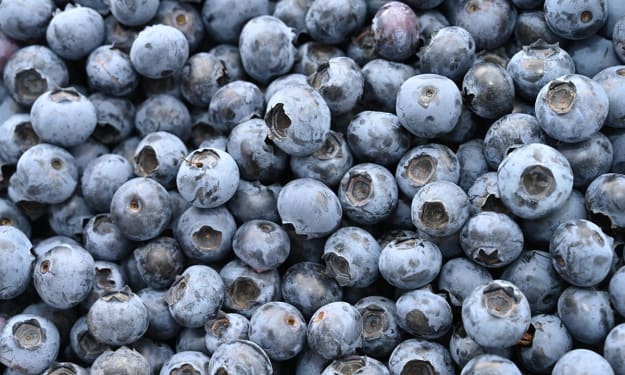
Frozen Blueberries Recalled: What Families Need to Know
You open your freezer to grab a handful of blueberries for a smoothie. It is part of your routine. Maybe you add them to oatmeal for your child before school. Maybe you bake them into weekend muffins. Frozen fruit feels safe. It feels simple. But then you see the headline: frozen blueberries recalled. Suddenly, that bag in your freezer does not feel harmless anymore. Questions rush in. Are they safe to eat? What brands are involved? What should you do next? Food recalls can be unsettling, especially when they involve everyday items. This article explains why frozen blueberries recalled announcements happen, what risks are involved, and how to protect yourself and your family without panic.
By Muqadas khan3 days ago in Feast
Rich People's Palates: Burgers That Cost More Than Rent
Who doesn’t love a good hamburger? It’s one of my favorite foods, whether I prepare one at home or hit up the nearest drive-thru. Now and again, I splurge and treat myself to one of the fancy $20 burgers from Five Guys, like I have Lil’ Wayne money and am not checking my balance before merging into the line.
By Criminal Matters3 days ago in Feast
A Knight of the Seven Kingdoms Series Review (Season 1)
As one of the biggest properties in fantasy, A Song of Ice and Fire remains immensely popular with audiences. After reaching far into the past with House of the Dragon, a second spin-off was on the cards. A Knight of the Seven Kingdoms serves up a bite-sized slice of action and drama, but it still claims a spot among the best small-screen titles.
By Robert Cain2 days ago in Geeks



Comments
There are no comments for this story
Be the first to respond and start the conversation.