
Kosher Food Market Size and Forecast 2025–2033
Certified for trust: How ethics, health awareness, and global retail are shaping the future of kosher foods


The global Kosher Food Market is entering a new phase of steady, sustainable growth, supported by rising consumer demand for certified products and heightened awareness of ethical, hygienic, and dietary standards. According to Renub Research, the market is expected to reach US$ 28.71 billion by 2033, up from US$ 21.89 billion in 2024, growing at a CAGR of 3.06% from 2025 to 2033. What was once viewed as a niche religious segment has transformed into a mainstream food category with universal appeal, attracting both Jewish and non-Jewish consumers who value transparency, safety, and responsible sourcing.
In today’s global food economy—where traceability, certification, and consumer trust matter more than ever—kosher food has emerged as a powerful quality signal. From retail shelves and restaurant menus to e-commerce platforms and export-oriented manufacturing, kosher certification is increasingly being adopted as a marker of premium standards rather than a niche requirement. This shift is redefining how brands position their products and how consumers perceive food quality worldwide.
Kosher Food Industry Overview
The kosher food industry has evolved far beyond its traditional boundaries. Rooted in Jewish dietary laws (kashrut), kosher certification ensures that food products meet strict guidelines related to ingredient sourcing, processing methods, cleanliness, and separation of certain food categories. Over time, these rigorous standards have come to be associated with purity, safety, and ethical integrity, making kosher foods appealing to a much broader consumer base.
Modern consumers are increasingly concerned about what goes into their food, how it is processed, and whether it aligns with their values. Kosher-certified products address these concerns by offering an added layer of assurance. As a result, kosher foods are no longer confined to specialty stores; they now occupy prominent shelf space in mainstream supermarkets, hypermarkets, and online marketplaces.
Manufacturers are responding to this demand with product innovation across key categories such as meat, dairy, bakery, packaged foods, beverages, and snacks. The rise of plant-based, organic, gluten-free, and health-oriented kosher offerings reflects how the industry is adapting to global dietary trends while maintaining religious compliance. At the same time, private-label kosher products are expanding in major retail chains, improving affordability and accessibility.
Geographically, North America and Europe continue to lead due to established certification authorities and high consumer awareness. However, Asia-Pacific and the Middle East are rapidly emerging as growth frontiers, supported by expanding retail infrastructure, increasing international trade, and growing recognition of kosher certification as a symbol of quality and export readiness.
Key Factors Driving the Kosher Food Market Growth
1. Rising Health and Ethical Awareness
One of the most significant growth drivers is the perception of kosher food as a healthier and more ethically produced option. Consumers increasingly associate kosher certification with stringent hygiene, safety, and oversight standards. The emphasis on ingredient verification, contamination prevention, and responsible sourcing resonates strongly with today’s health-conscious buyers.
Additionally, ethical considerations are playing a larger role in purchasing decisions. Concerns about humane animal treatment, sustainability, and transparent supply chains have made kosher products attractive not only for religious reasons but also for moral and environmental considerations. As consumers seek food that aligns with their values, kosher certification provides a trusted benchmark.
2. Expansion of Retail and E-commerce Channels
The accessibility of kosher products has expanded dramatically over the past decade. Large supermarkets, specialty retailers, and convenience stores are dedicating more shelf space to certified products, making them easier to find for everyday shoppers. Simultaneously, e-commerce platforms have transformed the market by offering a wider assortment of kosher goods, from niche specialty items to mainstream packaged foods.
Online retail has been particularly beneficial for small and mid-sized kosher brands, enabling them to reach new customers across regions and even internationally. Digital platforms also help educate consumers about certification standards, building trust and driving repeat purchases. This combination of physical and digital distribution has significantly broadened the market’s reach.
3. Increasing Product Innovation and Diversification
Innovation is at the heart of the market’s evolution. Food manufacturers are diversifying their portfolios to include plant-based, organic, allergen-free, and functional kosher foods, catering to consumers who prioritize wellness and convenience. Ready-to-eat meals, kosher-certified beverages, health snacks, and fortified products are gaining popularity among busy, urban populations.
Strategic investments in research and development, along with partnerships with certification authorities, are enabling brands to introduce new products faster while maintaining compliance. This diversification not only attracts traditional kosher consumers but also draws in mainstream buyers seeking high-quality alternatives.
Challenges in the Kosher Food Market
1. Complex Certification Process and High Costs
While certification is a core strength of the kosher food industry, it also presents operational challenges. Obtaining and maintaining kosher certification involves rigorous inspections, ongoing supervision, and strict adherence to religious standards. These processes can be costly and time-consuming, particularly for small and medium-sized enterprises.
Maintaining consistent certification across multiple production facilities, suppliers, and product lines adds further complexity. In addition, variations among certification authorities and interpretations of kosher laws across regions can create confusion and increase compliance costs, potentially limiting market entry for new players.
2. Limited Awareness in Emerging Markets
Despite growing global interest, awareness of kosher food benefits remains limited in many developing regions. In these markets, kosher products are often perceived as relevant only to Jewish consumers, rather than as indicators of quality or safety. This narrow perception restricts demand growth.
Moreover, limited availability of certified suppliers, higher product prices, and distribution challenges can hinder expansion in these regions. To unlock their full potential, industry stakeholders must invest in consumer education, retail partnerships, and localized product strategies.
Kosher Food Market Overview by Regions
United States Kosher Food Market
The United States leads the global kosher food industry, supported by a mature certification ecosystem and high consumer awareness. Demand extends well beyond the Jewish population, driven by consumers who associate kosher certification with premium quality, safety, and ethical standards.
Major supermarkets and online retailers offer extensive kosher product ranges across snacks, frozen foods, beverages, dairy, and packaged meals. Innovation in plant-based and organic kosher foods is further fueling growth, while large food manufacturers increasingly seek certification to enhance brand credibility and access a broader customer base.
United Kingdom Kosher Food Market
The United Kingdom market is growing steadily, supported by demand for transparent labeling, clean ingredients, and ethical sourcing. The presence of established Jewish communities and the availability of kosher products in mainstream retail channels have strengthened the market’s footprint.
Local producers and importers are expanding product offerings in bakery, dairy, and packaged goods, while e-commerce platforms are improving nationwide accessibility. Regulatory support and improved visibility of certification labels continue to enhance consumer confidence.
China Kosher Food Market
In China, the kosher food market is gaining momentum as food safety and quality assurance become top priorities. Kosher certification is increasingly viewed as a mark of purity and reliability, particularly for export-oriented manufacturers and premium food brands.
Rising international trade, a growing middle class, and the expansion of foodservice and hospitality catering to international travelers are creating new opportunities. Although awareness among the general population remains moderate, multinational companies are adopting kosher certification to strengthen their global competitiveness.
United Arab Emirates Kosher Food Market
The UAE has emerged as a dynamic market for kosher foods, driven by cultural openness, tourism, and international trade. Increased Jewish tourism and normalization of trade relationships have significantly boosted demand in hotels, airlines, and restaurants.
As a regional trade hub, the UAE facilitates the import and distribution of kosher products across the Middle East. Partnerships between local businesses and certification authorities ensure compliance with international standards, while growing awareness among non-Jewish consumers is expanding market acceptance.
Recent Developments in the Kosher Food Industry
July 2025: Eshbal Functional Food Inc. expanded its North American presence by acquiring a 55% stake in New York–based Dare to Be Different Foods, strengthening its portfolio of gluten-free and health-focused products.
March 2025: Feastables, founded by YouTube personality MrBeast, completed kosher certification for its chocolate products under the Orthodox Union (OU), enhancing its appeal to certified food consumers.
March 2025: Manischewitz launched its first “Deli on Wheels,” a mobile kosher deli offering traditional Jewish cuisine year-round, increasing accessibility to certified foods.
June 2025: Starter & Stone, a modern sourdough-focused pizzeria, opened in Lakewood, New Jersey, featuring artisanal kosher pizzas and curated side offerings.
These developments highlight how established brands and new entrants alike are leveraging certification, innovation, and creative distribution models to reach broader audiences.
Market Segmentation
By Type
Buckwheat
Seafood
Lamb
Pulses
Others
By Application
Culinary Products
Snacks and Savory
Bakery and Confectionery Products
Meat
Beverages
Dietary Supplements
By Distribution Channel
Supermarkets and Hypermarkets
Grocery Stores
Online Stores
Regional Outlook
North America: United States, Canada
Europe: France, Germany, Italy, Spain, United Kingdom, Belgium, Netherlands, Turkey
Asia-Pacific: China, Japan, India, South Korea, Thailand, Malaysia, Indonesia, Australia, New Zealand
Latin America: Brazil, Mexico, Argentina
Middle East & Africa: Saudi Arabia, United Arab Emirates, South Africa
Competitive Landscape
The kosher food market features a mix of multinational corporations and specialized producers. Leading companies are investing in certification, product innovation, and geographic expansion to strengthen their positions. Key players include:
Kellogg’s Company
Nestlé S.A.
PepsiCo Inc.
Cargill Incorporated
Dairy Farmers of America Inc.
Conagra Brands Inc.
The Kraft Heinz Company
General Mills Inc.
Bob’s Red Mill Natural Foods
These companies leverage strong distribution networks, diversified product portfolios, and brand recognition to capture market share. Many are also expanding their kosher-certified offerings to align with consumer demand for premium, ethical, and health-oriented foods.
Future Outlook
Looking ahead to 2033, the kosher food market is set to maintain steady growth, driven by certification-driven trust, innovation in health-focused products, and the expansion of global retail and e-commerce. While challenges such as certification costs and limited awareness in emerging markets remain, the industry’s long-term prospects are supported by macro trends toward ethical consumption, transparency, and premium food standards.
As more consumers—regardless of religious background—seek products that reflect their values, kosher certification is likely to become an even stronger differentiator in the global food industry. For manufacturers, retailers, and investors, the market offers a resilient, value-driven growth opportunity.
Final Thoughts
The Kosher Food Market stands at the intersection of tradition and modern consumer priorities. What began as a religious dietary framework has evolved into a global symbol of quality, safety, and ethical responsibility. With Renub Research projecting the market to grow from US$ 21.89 billion in 2024 to US$ 28.71 billion by 2033, the industry’s future is defined by trust, innovation, and expanding global reach.
For brands that invest in certification, diversify their offerings, and educate consumers about the broader benefits of kosher standards, the coming decade presents a clear opportunity: to transform a time-honored tradition into a mainstream standard for responsible, high-quality food worldwide.
About the Creator
Renub Research
Renub Research is a Market Research and Consulting Company. We have more than 15 years of experience especially in international Business-to-Business Researches, Surveys and Consulting. Call Us : +1-478-202-3244
Keep reading
More stories from Renub Research and writers in Feast and other communities.
United States Healthy Foods Market Size & Forecast 2025–2033
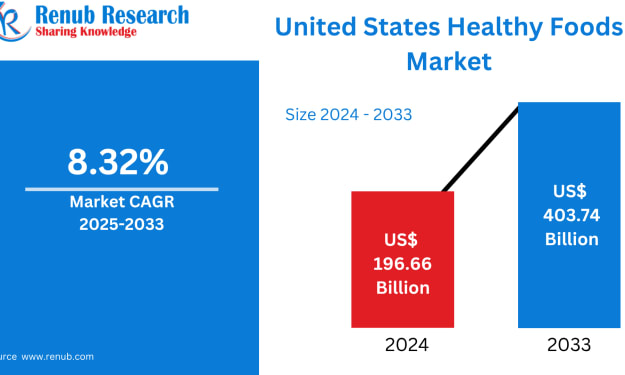
Introduction: A Health Revolution on America’s Plates The United States healthy foods industry is entering a period of extraordinary expansion. According to Renub Research, the market is projected to grow from US$ 196.66 billion in 2024 to US$ 403.74 billion by 2033, registering a robust Compound Annual Growth Rate (CAGR) of 8.32% during 2025–2033. This remarkable growth reflects a nationwide shift in consumer priorities—from convenience-first eating to nutrition-driven decision-making.
By Renub Research2 days ago in Feast
My Tous les Jours Trip
As someone who lives in a rural area, I don't get the chance to visit fancy restaurants or bakeries that often. So, when a friend told me about a French-Asian bakery that's less than an hour away, I knew I had to check it out and grab some pictures for social media. Tous les Jours ended up providing an immersive experience that went above and beyond my expectations--although I did leave with a few reservations.
By Kaitlin Shanks17 days ago in Feast
Gluten-Free Food Market Outlook: Growth, Innovation, and the Future of Clean Eating
Introduction: A Market That Has Moved Beyond Niche What was once a narrow category aimed at people with celiac disease has rapidly evolved into one of the most dynamic segments of the global food industry. Gluten-free foods are no longer limited to medical shelves or specialty stores—they now occupy prominent space in supermarkets, cafés, online platforms, and even fine dining menus.
By Marthan Sirabout 5 hours ago in Feast



Comments
There are no comments for this story
Be the first to respond and start the conversation.