
If you care about your health, ditch the diet drinks.
Our obsession with meal replacements is damaging our physical and mental health

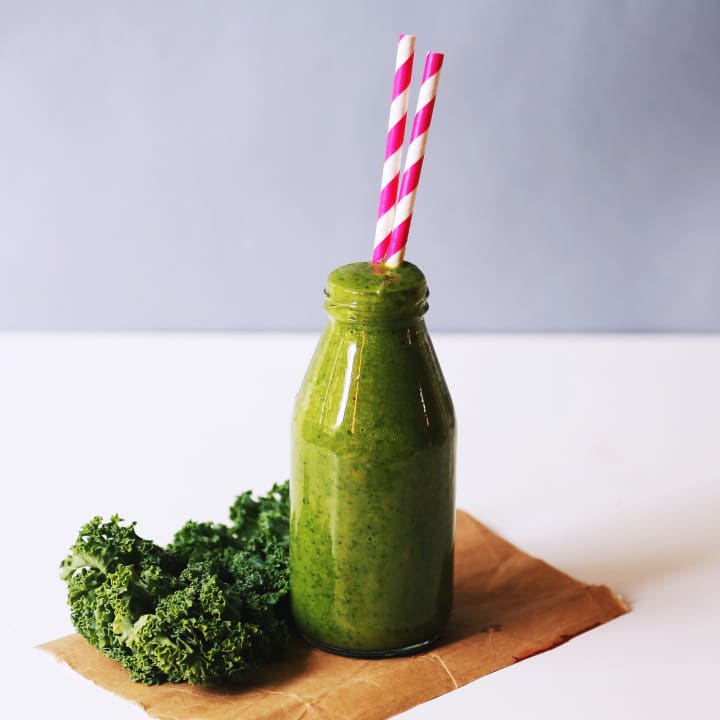
Since the 1980s, meal replacement drinks have been pitched to use as the be all and end all of weight loss. Lately, that focus has shifted, focusing instead on the time saving and cost effectiveness benefits of drinking your dinner.
I've tried these drinks myself and did indeed use them for a number of months on two separate occasions. This may seem strange behaviour for a self-ascribed foodie, but I too was seduced by the stylish ad campaigns on Instagram, the brand association and credibility, the eco-friendly ideals and most of all, the time saving elements.
First off, we'll address the elephant in the room - how healthy are they? Invariably, that depends on who you ask and what exactly you mean by healthy. It can even depend on which drinks you purchase, with drinks like Huel and Gemini being more nutritious than say a Slimfast shake.
The drinks themselves claim to be 'nutritionally complete', a fancy way of saying that everything you need to go through your day and not feel hungry is in this drink. Is that true? In my own experience, yes. I wasn't hungry after my drink. But I wouldn't say I was satisfied either.
The act of chewing may be the cause of this, or, more specifically, the lack of it. Several recent studies have linked chewing (mastication) to helping to improve the general health and well-being of the hippocampus, a region of the brain responsible for among other things, memory, information retention, and mood.
Furthermore, chewing releases digestive enzymes in our saliva that assist with the breaking down of nutrients, specifically carbohydrates, and the overall readiness of your bodies digestive process'. Ever chewed gum and your stomach has started to ache? That's why.
The Hippocampus So, while the drinks themselves may be nutritionally complete, the nutrients themselves may not be fully absorbed by the body and your memory, information retention, and learning skills could be negatively impacted.
One factor of these drinks that is often overlooked, is a different type of mental damage they may cause for some people - encouraging a negative relationship with food. For a period of my life, I had a negative relationship with food. I would count calories and get genuinely upset if I ate too much. I was underweight and even now I struggle with it, having only recently crossed into a more sustainable weight range.
This was right around the time I began drinking meal replacements. It wouldn't be true to say they were the cause, but they were most certainly a symptom, a way of appearing healthy while simultaneous obsessively counting calories and controlling exactly what went into my body.
For those of us with an unhealthy relationship with food, they can mask a much greater problem. "Have you eaten today?" "Of course, I just drank it." It enables an unhealthy fixation on your daily caloric intake, but worse than that it allows you to hide behind a visage of trendy 'healthy' lifestyles. By promoting the new line up of meal replacement drinks, we promote this unhealthy outlook on food and our own mental health.
There is also growing scepticism about the sustainability of meal replacement drinks. Few studies have been done into this and much of the information available about the sourcing of the drink's primary ingredients, be it oats or soy or another alternative, comes from the companies themselves, hardly an unbiased source. We are often left to fill in the gaps between vague statements regarding sustainability and organic produce, a problematic term in and of itself. This is to say nothing of the likely unreported exploitive labour of farmers in meeting the growing demand and the risks of such a homogeneous food source, where one bad harvest could cause worldwide famine.
They may be a better alternative to the mass factory farming system, but they are by no means a cure for environmental damage, just a different form. They can reduce food waste by a lot, in this they have conventional eating beat. That said, eating smarter, i.e buying local, eating less meat, buying from trusted sources, supporting the replanting of trees, recycling initiatives and food redistribution, will have a much more significant impact, both societally and environmentally.
Lastly, are the implications of a meal replacement-based diet on our communities. For all of human history, people have come together over food. Our relationship with food has shaped family life and is an identifying point of pride for many cultures. The preparing and consuming of food are a pivotal psychological bonding experience for us all.
Naturally, some of us enjoy the preparation part more than others, but that doesn't mean replacing food with convenience is the way to go. Many of my best memories have been made over a meal. Food has been with me through some of my highest highs and a welcome comfort in my lowest lows, despite my sometimes-dysfunctional relationship with it. Without the unity and harmony that food brings to our lives, a vital part of the human experience would be missing.
Meal replacements are much more convenient, that's true. I've come in after work many a night and wished dinner was already made. Perhaps though, if we are so focused on productivity and time management that we miss out on a critical bonding time and a well-earned break, we should re-examine our priorities rather that drinking our lunch as we charge into another meeting.
The meal replacement drink market will continue to grow, but we should be wary of its claims of superior health and environmental benefits, many of which are either cherry picked, overlook the big picture, or promote unhealthy habits. Few but the most ardent advocates push for a full overhaul of the whole system, which brings to mind hellish visions of people fed unappetising grey sludge on an industrial scale.
Most simply offer it as a quick and nutritious alternative for your commute or a substitute during a particularly busy day. In this, I agree with them. It's quick, it's convenient, and used in this way, it's essentially harmless. But it is not a solution to climate change. It is not a way to achieve superior health, in spite of how attractive their models may make it seem. It is not entirely without consequence, especially for those of us prone to unhealthy eating.
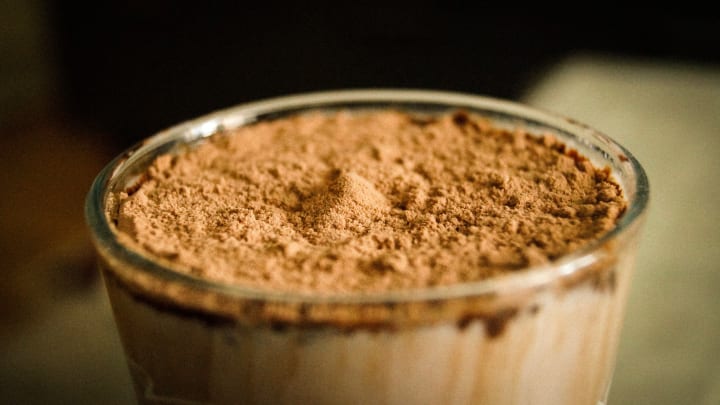
The one thing all meal replacements share, is this - they are products, with all the ethical implications associated. For the curious, give it a try. For the rest, I'll see you at dinner.
About the Creator
Keep reading
More stories from Danny Kane and writers in Feast and other communities.
Food that Conquered the world; Spartan Black Broth
Everyone knows the legend of Leonidas and his brave 300, dying in glory against the unending onslaught of the Persian Empire under Xerxes. It has been immortalised in songs, poems, books for millennia, and then of course a very successful film.
By Danny Kane6 years ago in Feast
My Tous les Jours Trip
As someone who lives in a rural area, I don't get the chance to visit fancy restaurants or bakeries that often. So, when a friend told me about a French-Asian bakery that's less than an hour away, I knew I had to check it out and grab some pictures for social media. Tous les Jours ended up providing an immersive experience that went above and beyond my expectations--although I did leave with a few reservations.
By Kaitlin Shanks23 days ago in Feast
Fish Farming Market Size and Forecast 2025–2033
Introduction: A Market Anchored in the Future of Food The global food system is undergoing a profound transformation, and fish farming—also known as aquaculture—is emerging as one of its most critical pillars. With wild fish stocks under pressure from overfishing, climate change, and habitat degradation, the world is increasingly turning to controlled, farm-based fish production to meet its growing appetite for seafood.
By Marthan Sir6 days ago in Feast
Wild Card Weekend Recap: What Happens Now?
I think I figured out why I love Wild Card Weekend so much. It's because it's the first playoff anything of the calendar year. The NFL season starts in the fall, and once upon a time, the champion was crowned either on or slightly before New Year's. The evolution of the NFL schedule has resulted in the playoffs starting just into the New Year, and currently, the final week of the season falls on the first weekend of the New Year, with Wild Card Weekend coming a week after that. So yes, chronologically, the NFL's Wild Card Weekend serves as the first playoff anything of the calendar year.
By Clyde E. Dawkins6 days ago in Unbalanced




Comments
There are no comments for this story
Be the first to respond and start the conversation.