
From Empire to Everyday
10 Dishes that trace back to ancient Persia

When we think of the Persian Empire, images of grand palaces, epic poetry, and legendary kings come to mind. Persia—modern-day Iran—was once one of the most powerful civilizations on earth, stretching from the Mediterranean to India. It was a land of poets, philosophers, astronomers, and storytellers, where culture and cuisine developed side by side.
Long before global cuisine had a name, Persia was quietly setting the table for much of the world. Persians were master farmers, traders, and flavor-builders long before the word “foodie” ever existed. They cultivated saffron as if it were gold, treasured pomegranates as symbols of life itself, and layered rice with herbs and spices until it became art. Caravans carried these ingredients across deserts and seas, weaving them into the fabric of other cultures.
Thousands of years later, their influence still lingers in the simplest places—your grocery cart, your coffee shop order, your kitchen counter. From smoothies and yogurt cups to pistachio ice cream, ancient Persian foods are now modern staples.
Here are ten foods with roots in Persia’s royal courts and village kitchens that continue to shape how we eat today.
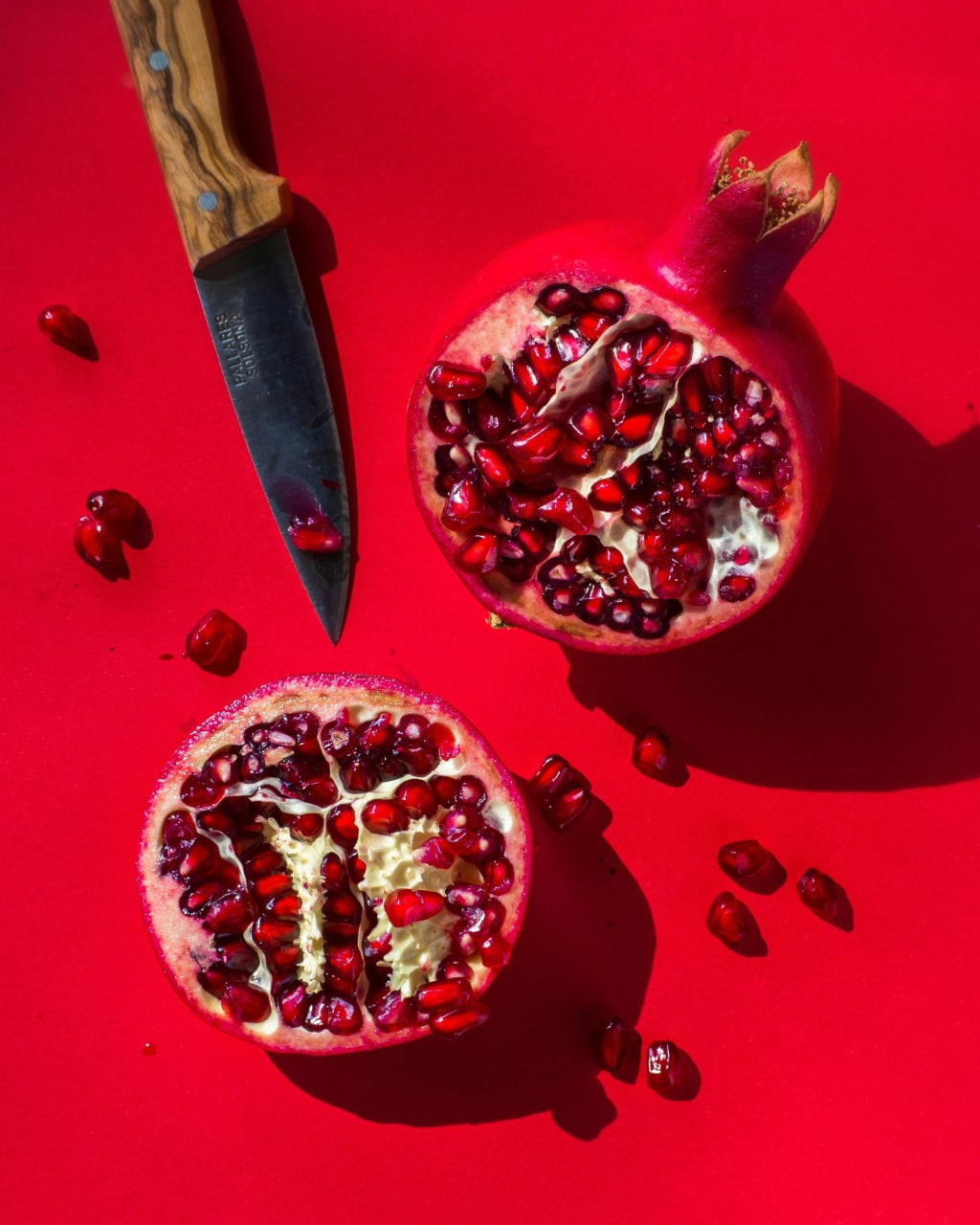
Pomegranates
To Persians, the pomegranate symbolized fertility, abundance, and eternal life. Its ruby-red seeds appeared in Zoroastrian rituals and palace art. Today, they’re sprinkled on salads, blended into smoothies, and bottled as juice.
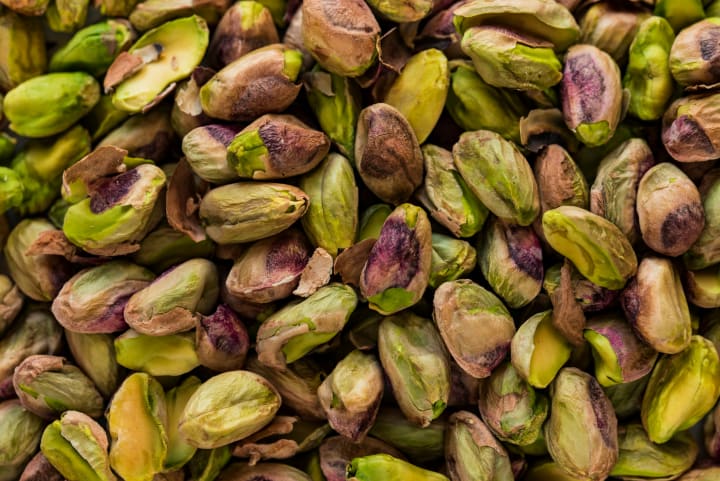
Pistachios
Over 3,000 years ago, pistachios were considered the “royal nut,” pistachios graced Persian courts before traveling the trade routes that spread them across the world. Now, they’re found in ice cream, pastries, and snack packs everywhere.
Yogurt (Mast)
Persians were among the first to ferment milk into yogurt, valued for cooling in hot climates and aiding digestion. Centuries later, yogurt is a staple—from breakfast bowls to smoothies.
Saffron
Known as “red gold,” saffron flavored feasts, scented perfumes, and even dyed royal robes in ancient Persia. Harvested with care, it was a symbol of wealth and refinement. Today, it remains prized in risottos, rice dishes, and gourmet kitchens worldwide.

Rosewater
Through early distillation, Persians transformed rose petals into fragrant rosewater used in sweets, ceremonies, and remedies. Now, it flavors desserts, drinks, and perfumes across cultures.
Dates
Dates fueled warriors, travelers, and caravans in ancient Persia and symbolized prosperity and hospitality. Today, they’re pressed into syrups, rolled into energy bites, and enjoyed as natural sweeteners.

Chickpeas
Chickpeas sustained Persian communities in countless forms—roasted, stewed, or ground into pastes—and spread widely through trade. Now, they appear in hummus, pasta, and crunchy roasted snacks.
Eggplant
Carried west through Persian trade routes, eggplant became a kitchen favorite. In Persia, it was often stewed with herbs or paired with yogurt, creating rich, earthy dishes. That legacy lives on today in classics like baba ganoush and eggplant parmesan.

Rice (Polow)
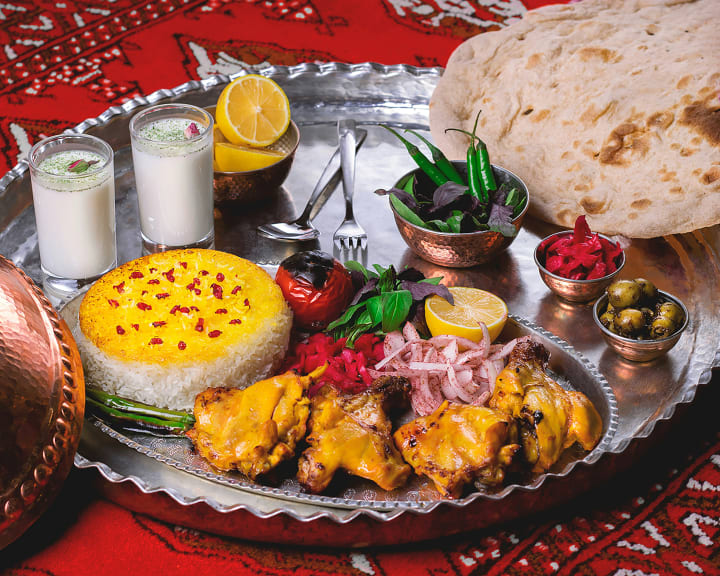
Persians elevated rice into art, creating fragrant polow dishes layered with saffron and herbs. Served at celebrations, rice became a symbol of abundance. Today, it remains a global staple—from basmati sides to rice bowls.
Herbal Greens (Sabzi)
For Persians, no meal was complete without fresh herbs. Platters of mint, parsley, and basil—sabzi khordan—were set out not just for flavor, but as symbols of health, balance, and harmony with nature. Crisp radishes often joined the plate too, their sharp bite acting as a natural palate cleanser, much like ginger does between different types of sushi. This ritual wasn’t an afterthought; it was a reminder that food nourished both body and spirit. Today, the tradition lives on in green salads, herbal teas, and wellness trends that promise vitality, though its roots stretch back much further than a juice bar menu.
These foods are not just pantry staples—they are fragments of an empire’s legacy, carried forward through centuries. When you break open a pomegranate, sip rosewater, or savor saffron rice, you’re tasting foods that once graced royal banquets and courts, sustained kings, and fueled caravans along the Silk Road. What was once extraordinary in ancient Persia has become familiar on our modern dining tables. Each bite is a quiet reminder that the everyday can be timeless, and that the flavors we enjoy today are echoes of a civilization that helped shape the way the world eats.
About the Creator
Mahsa Harkins
Turning the ordinary into the extraordinary with stories that spark curiosity and connection.
Keep reading
More stories from Mahsa Harkins and writers in Feast and other communities.
Creatures of the Weight Room
Ladies, we’ve all met them. The creatures of the weight room. The ones who violate personal space, invade your set, or just exist or breath in your direction without consent (instant ick). You came to lift in peace, but instead you’re dodging grunts, stares, unsolicited advice. Welcome to the weight room — part gym, part wildlife preserve, where primitive male behavior is alive and well across gyms everywhere. Here’s your unofficial field guide to the usual suspects and, more importantly, how to survive them.
By Mahsa Harkins4 months ago in Humor
My Tous les Jours Trip
As someone who lives in a rural area, I don't get the chance to visit fancy restaurants or bakeries that often. So, when a friend told me about a French-Asian bakery that's less than an hour away, I knew I had to check it out and grab some pictures for social media. Tous les Jours ended up providing an immersive experience that went above and beyond my expectations--although I did leave with a few reservations.
By Kaitlin Shanks20 days ago in Feast
Australia Seeds Market to Grow to USD 1.5 Billion by 2033 on Adaptive Agriculture & Sustainable Practices
The Australia seeds market is progressing as agricultural systems evolve and adapt to both economic and environmental challenges. According to IMARC Group, the Australia seeds market reached USD 1.3 billion in 2024 and is expected to grow to USD 1.5 billion by 2033, with a compound annual growth rate (CAGR) of 1.20 % during 2025–2033. This steady expansion reflects rising demand for high-yield, resilient seed varieties, supportive agricultural policies, and broader trends toward sustainable farming practices within Australia’s dynamic agricultural sector.
By Rashi Sharma8 days ago in Feast



Comments
There are no comments for this story
Be the first to respond and start the conversation.