
Exploring the Vibrant Spectrum: Black, Yellow, and Pink Foods in Asian Cuisine
Gourmet Asian Dishes with Yellow Peas

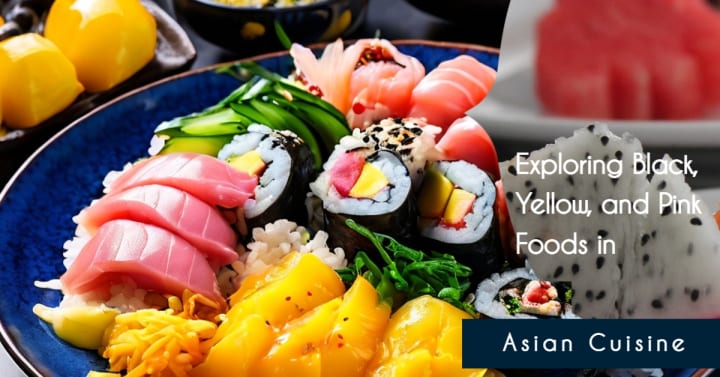
Asia's culinary world is renowned for its astounding variety and colorful palette, which includes an array of naturally vibrant foods—among these, black, yellow, and pink stand out, bringing unique flavor, nutritional benefits, and cultural significance to the table.
In this post, we’ll explore how these colors shape the taste and aesthetics of Asian cuisine, highlighting fascinating ingredients like black soybeans, yellow dragon fruit, and pink dragon fruit.
The Allure of Black Foods in Asian Cuisine
Black foods have been integral to Asian diets for centuries, prized not only for their distinct flavors but also for their supposed health benefits, which include anti-aging properties and an ability to prevent diseases.
Here’s a look at some critical black ingredients:
Black Soybeans
Black soybeans are a staple in Japan and Korea, especially during the New Year. They symbolize good health and hard work.
Rich in antioxidants and fiber, they are used in everything from traditional side dishes to modern salads.
Black Rice
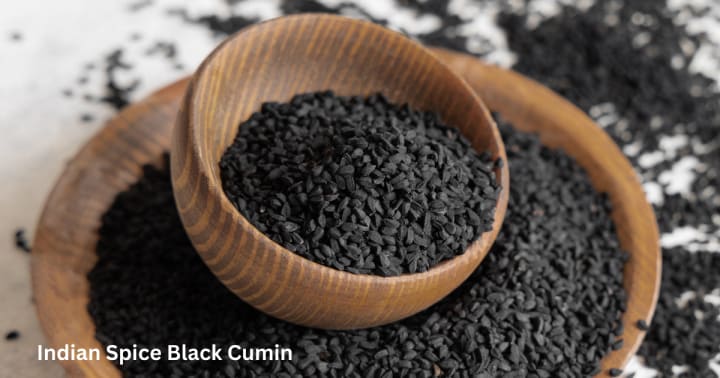
Often referred to as forbidden rice, black rice was once reserved for royalty in China. It’s known for its high anthocyanin levels, which can help fight cardiovascular diseases.
Black Sesame Seeds
These are used across Asia, from sprinkling on Japanese mochi to making black sesame soup, a popular Cantonese dessert that promotes skin health.
Black Sugar
Popular in Taiwan and Okinawa, black sugar is unrefined cane sugar that retains molasses. It’s healthier than white sugar and is used in traditional teas and sweets.
The Vibrancy of Yellow Foods
Yellow foods, often bursting with flavor and nutrients, are eye-catching and healthy. They are commonly associated with a cheerful aesthetic and are used extensively in sweet and savory dishes.
Yellow Dragon Fruit
Unlike its red cousin, yellow dragon fruit is sweeter and more refreshing. In Vietnam and Malaysia, it’s commonly consumed fresh, in fruit salads, or as a juice.
Yellow Turmeric
Turmeric is a staple in Indian and Thai cooking. It is known for its anti-inflammatory properties and is a key ingredient in curries.
Yellow Kiwi
Grown predominantly in China and New Zealand, yellow kiwi is sweeter than its green counterpart and packed with vitamin C.
It’s excellent in salads or as a natural tenderizer for meat.
Fresh Grapefruit
Widely used in Vietnamese and Thai salads, fresh grapefruit adds a tangy zest to dishes and is cherished for its vitamin C and lycopene, enhancing immune function and skin health.
The Pop of Pink Foods
Pink foods make dishes Instagram-worthy and are rich in nutrients like antioxidants and vitamins.
Pink Dragon Fruit
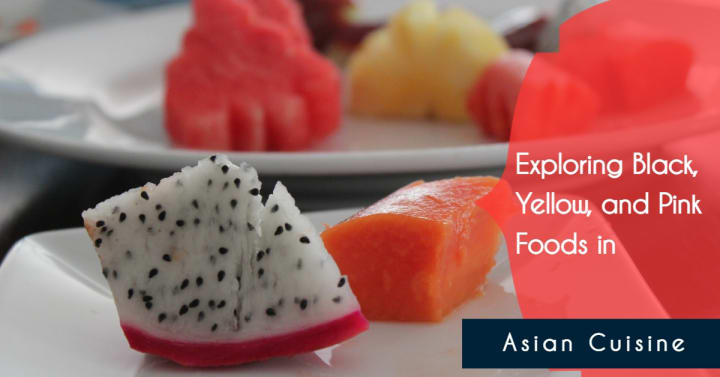
Known for its vibrant pink flesh dotted with black seeds, pink dragon fruit is visually stunning and loaded with fiber and magnesium. It’s popular in smoothies, desserts, and salads.
Pink Lemons
In Japanese and Thai cuisines, pink lemons are decorative and add a fruity aroma to dishes without the sourness of regular lemons.
Pink Onion
Milder and less tear-inducing than yellow or red onions, pink onions are used in Indian and Pakistani cuisines for their sweet flavor, perfect for raw applications in chutneys and salads.
Cultural Significance and Health Benefits
The use of colorful foods in Asian cuisine is deeply rooted in cultural traditions and the holistic approach to health.
For instance, black foods are often consumed during winter in Chinese medicine to help warm the body and boost kidney function.
Yellow foods, rich in carotenoids and flavonoids, strengthen the immune system and improve digestion.
Pink foods are visually appealing and thought to promote heart health and provide dietary antioxidants.
Culinary Uses
The culinary applications of these colorful foods are as diverse as the Asian cultures. Black sesame ice cream, yellow curry fish, and pink dragon fruit bowls are just a few examples of how these ingredients can be used to create dishes that are as nourishing as they are appealing.
Conclusion
The black, yellow, and pink colors in Asian cuisine do more than just please the eye. They enrich the continent’s culinary landscape, offering a sensory feast and significant health benefits.
Whether it’s the antioxidant-rich black soybeans, the vitamin-packed yellow kiwi, or the fiber-filled pink dragon fruit, these colorful foods help define Asia's rich and diverse dietary tapestry.
These ingredients show how deeply intertwined food is with cultural identity and health, and they invite food lovers and cooks around the world to explore beyond the ordinary, adding a splash of color and a dose of health to their everyday meals.
#AsianCuisine #ColorfulFoods #HealthyEating #CulinaryArts #DietAndNutrition
About the Creator
Dany Goldraij
I love marketing , promoting new ideas and new products. I care about healthy life , fitness and dogs.
Reader insights
Outstanding
Excellent work. Looking forward to reading more!
Top insight
Eye opening
Niche topic & fresh perspectives
Keep reading
More stories from Dany Goldraij and writers in Feast and other communities.
My Tous les Jours Trip
As someone who lives in a rural area, I don't get the chance to visit fancy restaurants or bakeries that often. So, when a friend told me about a French-Asian bakery that's less than an hour away, I knew I had to check it out and grab some pictures for social media. Tous les Jours ended up providing an immersive experience that went above and beyond my expectations--although I did leave with a few reservations.
By Kaitlin Shanks24 days ago in Feast
Orange Market Size and Forecast 2025–2033
Orange Market at a Glance (Renub Research) The Global Orange Market is expected to reach US$ 53.74 billion by 2033, up from US$ 38.45 billion in 2024, expanding at a CAGR of 3.79% from 2025 to 2033. Rising consumer demand for vitamin C–rich foods, the rapid growth of juice and beverage categories, health-conscious lifestyles, and the expanding use of oranges in cosmetics, pharmaceuticals, and functional foods are the primary growth engines. Export opportunities and favorable cultivation conditions across major producing regions further reinforce long-term market expansion.
By Aaina Oberoi6 days ago in Feast




Comments (4)
Thanks !!!!
Liked it.
Excellent writing
great content