
Eggs and Tomatoes
The Importance of Gardening, Being Prepared and Knowing How to Cook


I’ve been saving seeds and gardening for years now and each year put a lot of work into making the garden bigger. I’ve always planted more than I could use so that I could give some to my neighbors. This year, just before the start of spring, I had a dream that I was selling tomatoes over the corner of the front yard picket fence. When I woke up, I remembered the old adage… if you give a hungry man a fish, you feed him for a day, but if you teach him how to fish, you feed him for a lifetime. I knew that I needed to start planting tomato seeds.
My cousin jumped in to help me, and we planted over 500 tomato seeds which became seedlings and then we transplanted those into bigger pots. Those then turned into over 500 tomato plants. We also started lots of squash and peppers, and cucumbers, and began networking with other people in the community. I bought over 250 strawberry plants from an elderly couple who lived quite a distance from town at $1 a plant and sold them for $2 each so we could get more supplies. We had a plant sale every other weekend for two months where we helped lots of people get their gardens started.
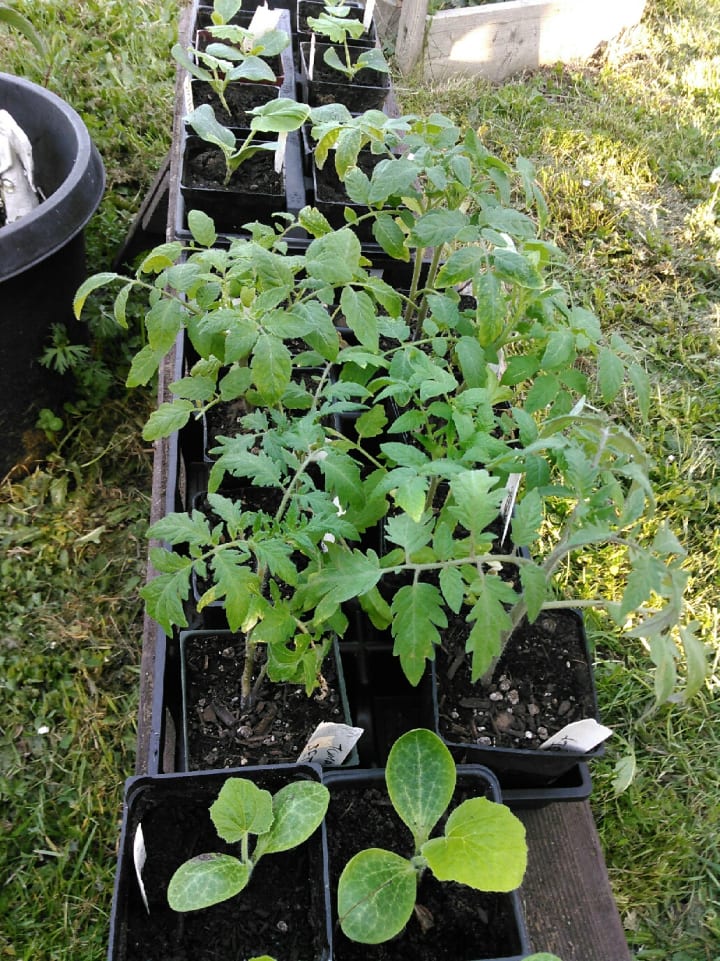
It became very apparent quite quickly that people were worried about having food. Worried about where their food came from, and worried about sustaining food supply as the pandemic had by then started in full swing. The other thing that became very apparent was most of the people coming to the “start your garden sale” had never gardened before. And, what was even more amazing that many young families came, with parents letting us know they had never gardened before, but their kids were bugging them to start gardens and learn how to cook. This inspired us to help teach people how to plant and start their gardens. We helped many people start patio gardens living in apartments, and helped teach “small space” companion gardening if that was all the space a person had to have some kind of garden.
Another thing that became very apparent all over Eugene and the state of Oregon, people were stepping up to help others with food. After all, it is the one thing that we all have in common. We have to eat to survive, and food scarcity at the start of the pandemic certainly became a problem. As schools were closed, they realized very quickly that many of their students had their best meals at school, and schools stepped up to provide breakfast and lunch despite the closures.
As restaurants closed down, many adjusted to help their customers and community as they knew the need for seniors and others who depended on those meals they would get once a day or occasionally. One example is Bagel Sphere in Eugene that made sure they met the needs of seniors, and provided free dough as well as bagels to drive up and deliveries to food banks. This was seen throughout the state where people began helping one another to make sure people had food.
It was apparent as well as shocking when the reality of food scarcity statistics started popping up during the summer. According to a Bloomberg article on July 29th, 2020 “Almost 30 Million in U.S. Didn’t Have Enough to Eat Last Week.” (1)
The LA Times shows that the report from the Census Bureau in the bureau’s weekly Household Pulse Survey, roughly 23.9 million of 249 million respondents indicated that they “sometimes [had] not enough to eat” for the week ended July 21, while about 5.42 million indicated that they “often [had] not enough to eat.” The survey, which began with the week ending May 5, was published showing the number of respondents who sometimes had insufficient food was at its highest point in the survey’s 12 weeks. The number who often experienced food insufficiency was at its highest since the week ending May 26. (2)
This follows a deep recession resulting from the COVID-19 pandemic, which put millions of Americans out of work. Some unemployed Americans were lucky to begin receiving an extra $600 per week benefit, or a stimulus check which most likely went to pay bills, though all this just was help for a short time. Congress at the time of writing was still debating a new relief package. Food insecurity was very apparent around the United States, and very likely to get worse.
Across the country, Americans who’ve never had to rely on food assistance before were turning to local organizations for help. The Census Bureau report showing nearly 30 million Americans said they didn’t have enough to eat in the prior week. This is a situation that is very likely to worsen. Food banks across the country and in Oregon are bracing for both another spike in food insecurity and the fact that the effects of the pandemic are likely to last until 2021 and beyond as the future is uncertain.
A number of food bank employees compared the current situation to the Great Recession of the late 2000s in terms of both length of need and impact, as the normal practice of turning to other parts of the country for support in times of a natural disaster failed in the face of a nationwide calamity.
“The best way to describe it is, we were very active through Hurricane Harvey, which devastated Houston and the surrounding area, and this is way worse than that,” said Mark Brown of the West Houston Assistance Ministries, a large food pantry in the area. “I’ve never seen this level of community-wide desperation at such an extended level.” (3)
Like other organizations and businesses, food banks faced major impacts of the pandemic, which kept some workers and volunteers home and required changes in procedure to implement social distancing. They changed distribution methods, setting up drive-through or no-contact pickups and starting deliveries while coping with supply chain problems. Staffers who were used to helping residents sign up for SNAP benefits in the field set up special phone lines to deal with the influx of applicants. You could see long lines of cars in many communities around the country as people looked for any help they could get as most were unprepared for such a calamity.
Per the Oregon Food Bank on July 14, 2020, the rate of food insecurity (being without access to a sufficient quantity of affordable, nutritious food) in Oregon is 14.6%. About 552,900 Oregonians are food insecure, of those 194,070 are children. About 72% of the people who receive food have incomes below the federal poverty level. (4)
It also became very apparent that we’re lucky we live in Oregon. In April, Oregon put $8 million toward the Oregon Food Bank in an effort to address rapidly rising food insecurity, according to an announcement from Governor Kate Brown. “In times of crisis, no Oregonian should need to wonder where they can find food for their family,” said Governor Brown. “I know many Oregonians, through no fault of their own, have lost their jobs and incomes due to the COVID-19 outbreak. The Oregon Food Bank Network is a vital resource for families in need." (5)
As the pandemic continues, the need for food pantries has gone up in our area as thousands face tough financial times. Food for Lane County saw a boost in demand for help at the start of things, and concur that it is not going away anytime soon.
"So in March when the shutdown started happening and people were staying home and a lot of people were losing their jobs, we saw a sharp increase in the need out there and people were coming to our programs who had never been with our programs before," said Dawn Marie Woodward of Food for Lane County. She says they have also seen a variety of items in shorter supply. However, with the help of local donors, the nonprofit says they have been able to stay open. "It's a testament to this community that we have been able to do it, they have helped us financially when we have needed to buy the food, and we live in an amazing community and that is our role, to make sure people are not hungry." Woodward stated. (6)
An article in the Oregonian shows: As soon as COVID-19 began shutting down the economy, the head of the Oregon Food Bank knew that her organization would have to feed many more than the 860,000 Northwesterners it fed in 2019. That number was hard enough: This year, Morgan said, the state hunger situation went “from crisis level to unimaginable.”
Still, the food bank is now spending a million dollars a week on food. Eight million dollars from the state has helped; so have considerable contributions from Oregonians, who seem to have the same objections to each other being hungry that they had before the lockdown. “We are overwhelmed by the generosity of our state,” says Morgan. “Our community has stepped up.” (7)
It was apparent there was also pride and gratitude in communities that stepped up to help their neighbors, with donations pouring in despite hard times for so many Americans. When reality hits, we all have to step up and help each other.
It’s quite apparent that one of the things we all have in common is food, and in an emergency the #1 need is FOOD. But despite everything in the news lately, most Americans still aren’t prepared with a survival-food plan.
If the grocery store shelves are stripped bare... or if you're unable to leave your house to get food from your local market... it is imperative that you have long-term food on hand, so that you're ready to protect yourself and those you love from going hungry. Knowing that you’ll have potentially lifesaving nutrition in an emergency, or some kind of gardening plan to offset your food needs can help you feel confident in any type of crisis situation. The longer you can sustain yourself and your family with food, the better off you will be.
It’s apparent we're not exactly living in "normal times" right now. And no one knows exactly when another crisis will come barreling down on us. One thing's for sure… it doesn't take much to disrupt the food supply. If disaster strikes, finding food could be near impossible. Stores could sell out or have their shelves stripped bare by hungry people desperate for supplies. We've seen that happen now, and who knows what's going to happen next.
Did you know? Two out of three Americans aren’t adequately prepared for a disaster or have no plans at all. This is pretty shocking, considering the Red Cross and FEMA both recommend that every American have at least 72 hours of Non-Perishable food on hand in case of an emergency.
American Red Cross. “What Do You Need In A Survival Kit?” https://www.redcross.org/get-help/how-to-prepare-for-emergencies/survival-kit-supplies.html
FEMA and Department of Homeland Security Disaster Planning . https://www.ready.gov/kit
Why Grow Your Own Food and Learn How to Cook?
Growing your own food and saving seeds for gardening is fun and empowering. Food grown in the garden is much tastier than store-bought food and way more nutritious. It can also help in other ways:
• Spend less time and money at the market.
• Know where your food comes from.
• A backup resource in case of emergencies.
• Harvest seeds again & again for replanting.
• Relieves stress while gardening.
• Be self-sustainable and more independent.
Seeds are easy for anyone to start growing in their backyard, garden plots, raised beds, containers, hydroponic units, patio pots, and however you can be creative about it. It is also easy to grow many fruits and vegetables from the scrap parts such as celery, carrots, and others that can be started in water then transferred to pots or the garden. Many areas have community gardens, and getting plant starts together for gardening is an easy way to get started on gardening to augment food supplies.
You might want to start small and grow some potatoes, carrots, tomatoes, or herbs to bring to the family dinner table, or you might want to aim for more self-sufficiency and cut out some of the dependence on the grocery store altogether. Many families still have a tradition of canning and preserving foods, and it’s a good time to learn new things to augment food supplies. No matter what, it is apparent that making a diverse food plan is super important especially nowadays. Having a small flock of chickens is also fun and augments protein in the diet with wonderful eggs that can be used in multiple ways when cooking. Cooking lessons are invaluable too, though it's quite easy to start cooking and fun to learn and reap the benefits of home-cooked meals.
You can garden all year long too. Right now, at the time of this writing, we are planting for fall crops, and getting the greenhouse ready for winter. It is definitely not too late to start planting vegetables, especially if you got off to a late start. And in most Oregon valleys, it’s easy to put in a second (or third) sowing of certain crops, such as carrots, radishes, kale, and lettuce for a fall vegetable garden. The best time to plant garlic is in October and November. Saving seeds from the produce you eat for next year’s garden is vital right now too. At the start of the pandemic, seeds flew off the shelf as fast as toilet paper did.
It’s amazing how many nutrients we get from our food when we get back to the basics, without all the processing and chemicals. After all, food is medicine. Networking within your community, helping others garden for shares, trading vegetables… it’s important that we keep supporting one another this way.
I think we have to make our mission to make sustainable gardening easier and more affordable for people around the globe, and that starts right here in our own backyards and neighborhoods. Learning to cook, preserve, and balance out a diverse lifestyle with food and sustainability is critical now to surviving through whatever may come our way together as communities.
It is apparent too, that we all must begin plans to stockpile a little food a little at a time and be ready to face upcoming months in case of anything that might happen. It’s really easier to be prepared than to be panicked when something does happen. And it’s easy enough to learn how to cook or improve your cooking skills, as simple ingredients make the best meals.
--------
As a side note... The garden has done great and we have been learning to can and freeze some of the tomatoes we planted. We've been giving away a lot of them to the neighbors too as we have tons of tomatoes this year!
Here’s one of my favorite recipes my grandmother used to make for us that you can improvise to your liking and make something simple yet elegant too:
BAKED EGGS in TOMATO SHELLS
This makes a great presentation at the table as part of any breakfast, lunch, or dinner.
Ingredients:
4 large firm tomatoes 1 teaspoon each of salt, pepper, and basil
8 eggs 1 teaspoon ground sunflower seeds
1 teaspoon ground hazelnuts 2 teaspoons chopped parsley
2 teaspoons of good oil dash of paprika
- Cut tomatoes crosswise in half.
- Scoop out the pulp from each half leaving a half-inch shell.
- Be careful not to cut through the bottom. Save the juice and pulp for other uses.
- Turn tomato shells upside down on some paper towels to drain.
Place tomato shells hollow side up in a lightly greased pan (9x13) or use a muffin tin.
Mix the ground sunflower and hazelnuts together.
Sprinkle ¼ teaspoon of nut mixture into each tomato shell.
Sprinkle each with 1/8 teaspoon of salt, pepper, and basil.
Break an egg into each tomato shell.
Drizzle ½ teaspoon of oil over each.
Sprinkle ¼ teaspoon of parsley over each egg and a dash of paprika.
Bake at 350 degrees for 25 to 30 minutes or ‘til eggs set to how you like them.
-- 2 shells each serves 4 or 1 shell each serves 8.
**You can substitute zucchini, eggplants, or even use half of an avocado for the base. Add onions and peppers, or pesto in the mixture. Also, top with cheese if you want. This is a basic recipe to follow and create something simple yet wonderful to eat!

-----
About the Creator
Renee Shaw
Renee is a seasoned Marketing Professional and Publicist, and an active Member of The International Association of Professional Writers and Editors (IAPWE)
Keep reading
More stories from Renee Shaw and writers in Feast and other communities.
Mom’s Stack of Little Black Moleskine Books
Mom’s stack of little black Moleskine books had been packed in that dang box ever since she’d passed away. I could hardly bear to look at them, though I knew at some point I’d have to. I was curious, for sure, but afraid of what I might find written there, and just break down and cry. My grief was too much to bear.
By Renee Shaw5 years ago in Families
My Tous les Jours Trip
As someone who lives in a rural area, I don't get the chance to visit fancy restaurants or bakeries that often. So, when a friend told me about a French-Asian bakery that's less than an hour away, I knew I had to check it out and grab some pictures for social media. Tous les Jours ended up providing an immersive experience that went above and beyond my expectations--although I did leave with a few reservations.
By Kaitlin Shanks27 days ago in Feast
Bacon Ranch Scalloped Potatoes
There’s something undeniably comforting about a bubbling dish of scalloped potatoes—layers of tender spuds, creamy sauce, and melted cheese all baked to golden perfection. Add the smoky crunch of bacon and the tangy zip of ranch seasoning, and you’ve got a side dish that steals the show. Whether you’re feeding a crowd at a potluck or cozying up for a weeknight dinner, this Bacon Ranch Scalloped Potatoes recipe is a guaranteed crowd-pleaser.
By Kristen Barenthaler8 days ago in Feast




Comments
There are no comments for this story
Be the first to respond and start the conversation.