
Durian Vs Vegemite
Love or Hate? Blame Your Hippocampus.

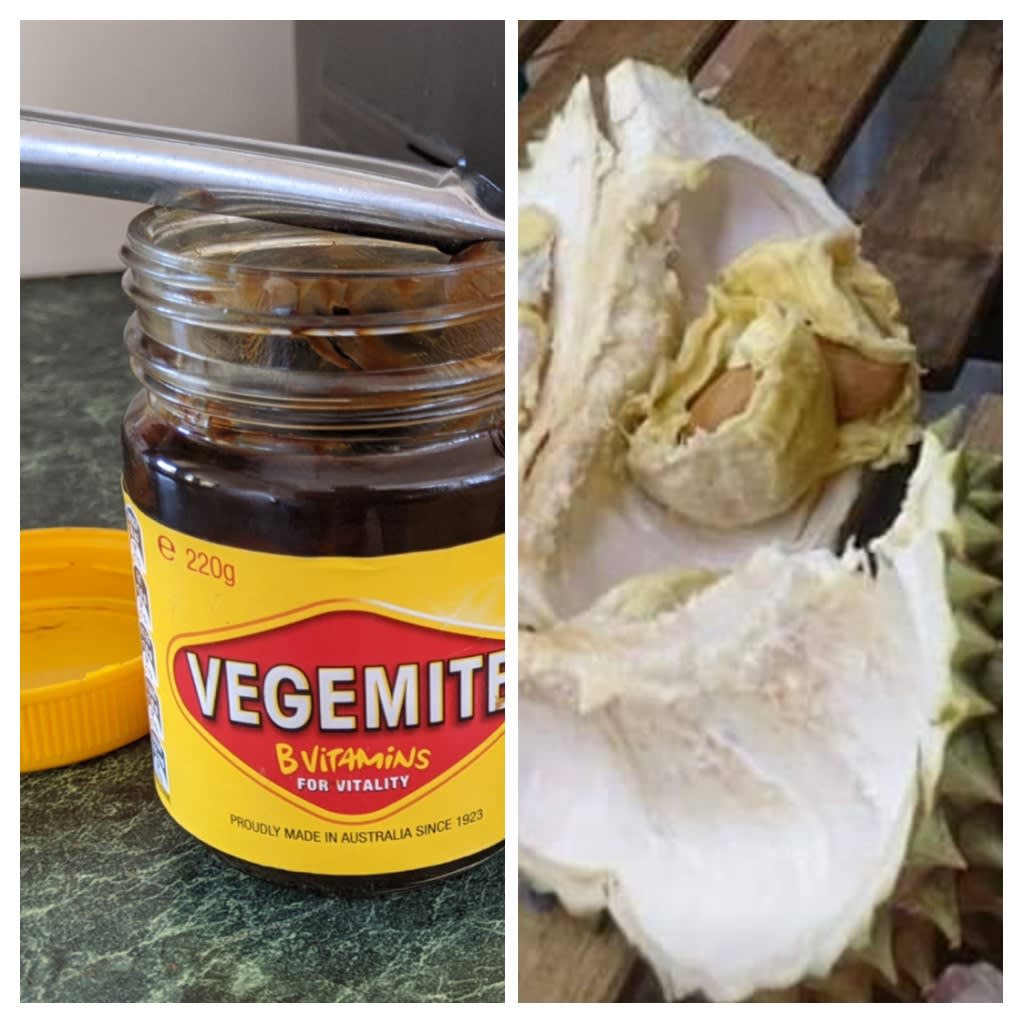
While on local holiday a month ago, an odor wafted through our campsite. Gas leak? Dead animal knocking over a trash bin while farting sulfur? No such luck. We recognised the smell. The family one site over was enjoying an after-dinner delight.
Moments later, two women approached our tent from downwind. “Can you smell that? Have you checked your bbq and gas fittings? We smell a gas leak and are trying to track it down.”
“It’s not a gas leak.”
“What?”
“It’s durian.”
This article originally appeared in a travel blog on Medium. A tentative link to a travel blog, I know, but you have to travel to Australia or Southeast Asia to try these popular delicacies, so it counts. Plus, travel is an adventure, so depending on how adventurous you are, consider this a warning or a challenge.
Straight up, I dislike both foods with a turn-and-run loathing. But, just like when I tried durian and Vegemite, I will try to swallow my bias — and keep it down.
Most Australians love Vegemite. It’s a daily staple. The only reason you’ll find a jar outside of Australia is because Australians travel. If you’re not Australian, it will sit on the shelf for years. But that’s no problem, it’s Vegemite.
The fruit, durian, finds its lovers in Southeast Asia — mainly Singapore, Thailand, Malaysia, and Indonesia — and their love for it can be as strong as the smell. It’s a treat they’ve even turned into an ice cream flavour and added to chocolate.
The one thing both foods have in common? The smell; you never forget the stink.
Durian
The fruit is sought and delighted in by the locals. They crave it, finding it savoury, sweet, and creamy like custard.
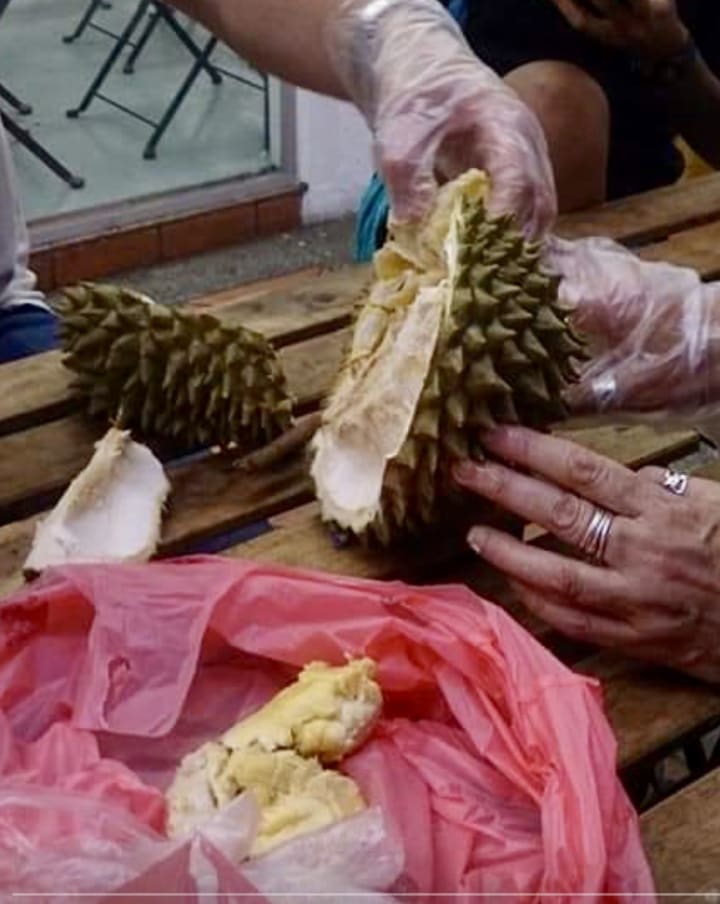
I find the fruit a trifecta. It looks ugly on the outside and horrid as sin on the inside. The smell is repugnant and sewer gassy. The taste is fetid, and it put me off custard.
“The odor is best described as pig shit, turpentine and onions, garnished with a gym sock.” — Richard Sterling, food writer
That comment seems harsh. Until you get on a train in Singapore. They ban durian on the Singapore rapid mass transit system.
Durian is proof that even Mother Nature goes off the rails sometimes, kind of like platypuses. But at least platypuses are cute and they are solely Australian, which brings us back to Vegemite.
Vegemite
A thick, dark brown spread made from leftover brewers’ yeast extract with whom-knows-what vegetable and spice additives. The stuff scraped from the bottom of a vat and born in Melbourne in 1922.
It is good for you due to all the B vitamins (B1, B2, B3, and B9). The salt content is high. Including folic acid once had the paste banned in the U.S. That ban lifted as the folic acid content is naturally occurring and not an additive. Sorry, U.S.A.
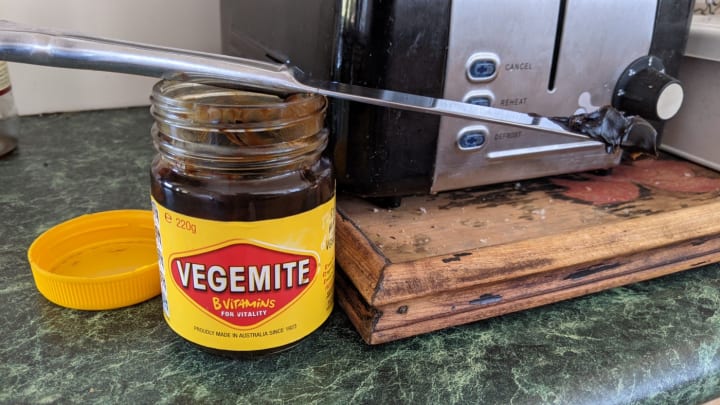
One warning, it’s not chocolate! Nor is it anything like Nutella. Treat it as such at your own peril. Spread it lightly, preferably on buttered toast. Personally, I use it so lightly the butter knife never comes near the jar. (It was a sacrifice just taking the photo above. You’re welcome.)
Other uses? Many use it in stock or gravy or as a bbq marinade. It also works as shoe polish and as a cure for mouth ulcers.
I’ve been warning of durian and Vegemite, so I must warn of the technical dry I’m about to spread next — hopefully as light as Vegemite — to help understand what causes this violent aversion to, or pavlovian craving for, these foods.
“Smells are first processed by the olfactory bulb, which runs along the bottom of the brain. The olfactory bulb has direct connections to two other brain areas, the amygdala and the hippocampus. These areas have a strong implication in emotion and memory. None of the other senses pass through these two parts of the brain, which makes the sense of smell the most successful for triggering emotion and memory.” — Irma Wallace, Health Infographics
“Amygdala — Two cell clusters, one in each hemisphere of the brain and where emotions are given meaning, remembered and attached to associations and responses.” — Healthline.com
“Hippocampus — located deep in the temporal lobe and is involved in the storage of long-term memory.” — Healthline.com
Appearance? The Vegemite jar’s brightly coloured and nice looking, and it doesn’t smell funky. Vegemite wins.
Smell? While durian is putrid, rotten, and vile, the smell of Vegemite is, well, of Vegemite. It’s a strong smell of old meat and yeast and burnt rubber, and it lingers. Durian wins. Barely.
Taste? The taste of Vegemite lingers, it’s hard to wash down — or spit out — and the amount correlates to the gag reflex. But durian has the addition of the creamy texture to add to the disgust of the rancid flavour. Vegemite wins.
Durian vs Vegemite, there are no fence-sitters. The love or hate was most likely wired into your brain in early life. Blame your hippocampus.
Now many of these comments are blanket statements, I know, and there will be the odd outsider who will instantly reach for more after their first taste. They are the exceptions that prove the rule. They may be brain-damaged. Check their hippocampus.
Comment: I have photos of people eating both items, but I couldn’t persuade the required permission to use them. Understandable. The facial contortions are not a flattering look.
About the Creator
Will Hull
Yankee, Aussie, freelance (and whatever-inspires-me) writer. Happier.
Editor at Counter Arts, Rainbow Salad and Songstories on Medium.com. You can also find me at https://hullwb.medium.com and https://ko-fi.com/willhull.
Thanks for reading.
My Tous les Jours Trip
As someone who lives in a rural area, I don't get the chance to visit fancy restaurants or bakeries that often. So, when a friend told me about a French-Asian bakery that's less than an hour away, I knew I had to check it out and grab some pictures for social media. Tous les Jours ended up providing an immersive experience that went above and beyond my expectations--although I did leave with a few reservations.
By Kaitlin Shanks22 days ago in Feast
Organic Baby Food Market Companies Analysis (2025–2033)
Introduction: A New Standard for Infant Nutrition The global Organic Baby Food Market is undergoing a transformative shift as modern parents increasingly demand clean, transparent, and sustainable nutrition for their children. Organic baby food—made without synthetic fertilizers, artificial preservatives, genetically modified organisms (GMOs), or chemical pesticides—has moved from a niche category to a mainstream necessity. Rising awareness of food safety, health outcomes, and environmental sustainability is reshaping consumer behavior worldwide.
By Aaina Oberoi5 days ago in Feast
Miss Persephone's Manual to a Seemingly Ordinary Life
Miss Persephone was found at the dining table, her blue eyes swollen, her tears arriving and retreating like the tides of the ocean. Earlier that day, her family had visited her in the retirement home where she had lived for eight years. It was her eightieth birthday.
By Imola Tóth2 days ago in Fiction



Comments
There are no comments for this story
Be the first to respond and start the conversation.