
Avocado Misconceptions: Our Own Included
Unraveling Avocado Myths and Realities
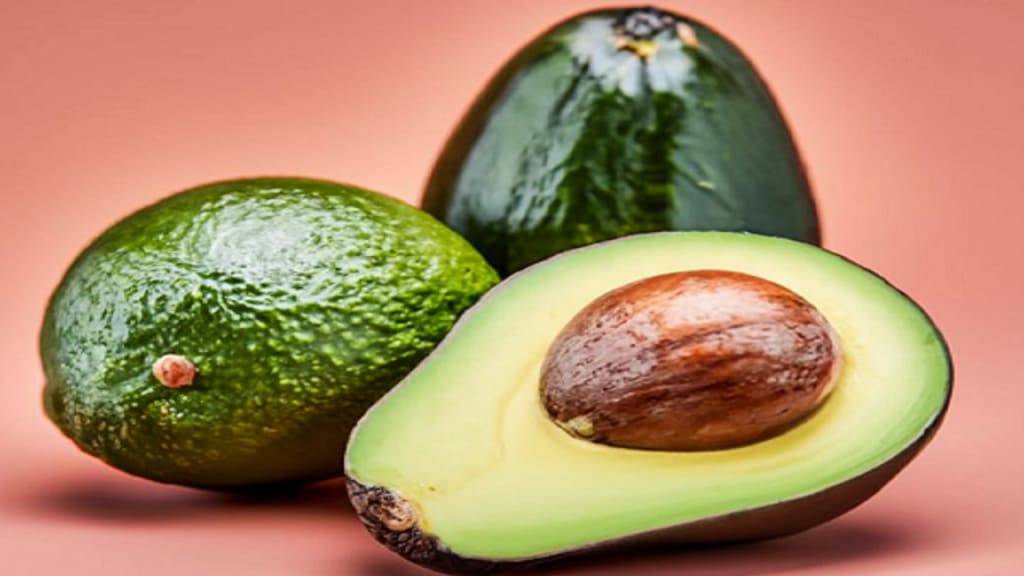
Avocados, a beloved staple in many diets, often spark curiosity about their origins. One prevailing myth attributes their existence to giant ground sloths, prehistoric behemoths thought to have spread avocado seeds across the Americas. However, this intriguing tale lacks substantial evidence. Delving deeper into the narrative reveals a fascinating journey of botanical evolution and human ingenuity.
The notion of ground sloths as avocado dispersers originated in the 1980s, stemming from a hypothesis regarding Costa Rican plants. While this idea hinted at the role of large animals in seed dispersal, it made only passing mention of sloths and did not reference avocados. Subsequently, a follow-up paper suggested ground sloths as potential dispersers of avocados, despite lacking empirical data. This speculative notion gained traction over the years, propagated by a popular science book and various media outlets.
However, scientific inquiry demands evidence, and the hypothesis linking ground sloths to avocados falls short in this regard. The absence of fossil records showing the coexistence of sloths and avocados during the Pleistocene undermines the theory. Furthermore, analyses of sloth coprolites failed to reveal traces of avocado consumption. Studies on sloth diets indicate a preference for grasses, shrubs, and in some cases, meat, but no evidence points to avocados as part of their menu.
The emergence of avocados as we know them today likely owes more to human intervention than to sloths. Archaeological evidence suggests that ancient Mesoamericans cultivated avocados in the Tehuacán-Cuicatlán Valley around 10,000 years ago. Over time, the size of avocado pits increased, possibly due to selective breeding by humans. Larger pits may have been favored for their potential to yield bigger fruits or support tree growth.
The cultural significance of avocados in Mesoamerican society adds another layer to their domestication. Ancient beliefs linking avocado strength to human vitality fueled efforts to cultivate larger fruits. This symbiotic relationship between humans and avocados contributed to the fruit's evolution and diversification.
Contrary to the sloth hypothesis, genetic studies suggest multiple instances of avocado domestication across Central America. Mesoamerican cultivation practices, such as agroforestry, fostered diversity among avocado varieties. Rather than a linear process of domestication, avocados underwent complex interactions with humans and the environment, resulting in a rich tapestry of genetic diversity.
In conclusion, the story of avocados transcends the myth of sloth dispersal. While ground sloths may have played a role in prehistoric ecosystems, avocados owe their proliferation to human cultivation and selection. The next time one indulges in guacamole or avocado toast, it's the ingenuity of ancient Mesoamericans, not extinct animals, that deserves recognition.
Did You Know:
⦁ In 2022, Mexico reaped a staggering 2.5 million tons of avocados, solidifying its position as the leading global producer of this beloved fruit.
⦁ Originally hailing from Mexico and Central America, avocados are now cultivated in numerous regions worldwide. Their cultivation demands substantial resources, as it takes between three to five years for an avocado tree to yield fruit.
⦁ Avocados have been a staple in the United States for decades, but their popularity has soared in recent years. By 2023, avocado sales in the U.S. reached a staggering $2.7 billion, more than doubling the sales value recorded in 2014. Forecasters predicted that domestic avocado consumption in the United States would surpass 2.7 billion pounds in 2022. To provide context, back in 2000, only around 542 million pounds of avocados were consumed in the country.
⦁ Avocado was originally called “alligator pear,” after an Irishman in 1696 called its tree by the name “alligator pear tree.”
⦁ As documented by Guinness World Records, the most massive avocado on record tipped the scales at five pounds and eight ounces (equivalent to 2.5 kilograms). This exceptional fruit claimed its title on January 3, 2018, under the ownership of Felicidad Pasalo from Hawaii, USA.
About the Creator
Keep reading
More stories from Terri Lynn McNeese and writers in Feast and other communities.
The Ancient Babylonian Method of Eclipse Prediction
"Unlocking the Celestial Puzzle: Deciphering Ancient Babylon's Eclipse Forecasting Technique" In the wake of an imminent celestial event, have you caught wind of the upcoming eclipse? Scheduled for April 8, a total solar eclipse will grace the skies over this region of the United States, marking the final visible occurrence in North America until the mid-2040s. Ponder for a moment the reactions of those millennia ago, who experienced such phenomena without the luxury of modern knowledge. Surprisingly, the ancient civilizations weren't entirely in the dark – they possessed a remarkable ability to forecast eclipses dating back to the 7th century BCE.
By Terri Lynn McNeese2 years ago in History
My Tous les Jours Trip
As someone who lives in a rural area, I don't get the chance to visit fancy restaurants or bakeries that often. So, when a friend told me about a French-Asian bakery that's less than an hour away, I knew I had to check it out and grab some pictures for social media. Tous les Jours ended up providing an immersive experience that went above and beyond my expectations--although I did leave with a few reservations.
By Kaitlin Shanks21 days ago in Feast
Miss Persephone's Manual to a Seemingly Ordinary Life
Miss Persephone was found at the dining table, her blue eyes swollen, her tears arriving and retreating like the tides of the ocean. Earlier that day, her family had visited her in the retirement home where she had lived for eight years. It was her eightieth birthday.
By Imola Tótha day ago in Fiction


Comments
There are no comments for this story
Be the first to respond and start the conversation.