
A food safety disaster that poisoned 10,000 people
A 3-hour power outage led to this disaster


On April 1, 2000, the first April Fool's Day of the new century, 830 bags of skim milk powder were produced at Japan Snowmark Dairy's Hokkaido Oki plant, of which 450 bags were tested and shipped, and the remaining 380 bags were rebuilt and became part of the 750 bags of milk powder that left the factory on April 10.
This skimmed milk powder is not sold directly to consumers. The fresh milk is skimmed and processed into milk powder, which becomes the raw material for dairy products before being shipped to the factory in the next production step, thus extending storage time and saving logistics costs.
On June 20, 278 bags of this milk powder, which had left the factory more than two months earlier, were received at the Snowmark Osaka plant, where they were processed into other products, including "Snowmark Daily Bone Tai" (skim milk) and "Cal-Power Milk Drink.
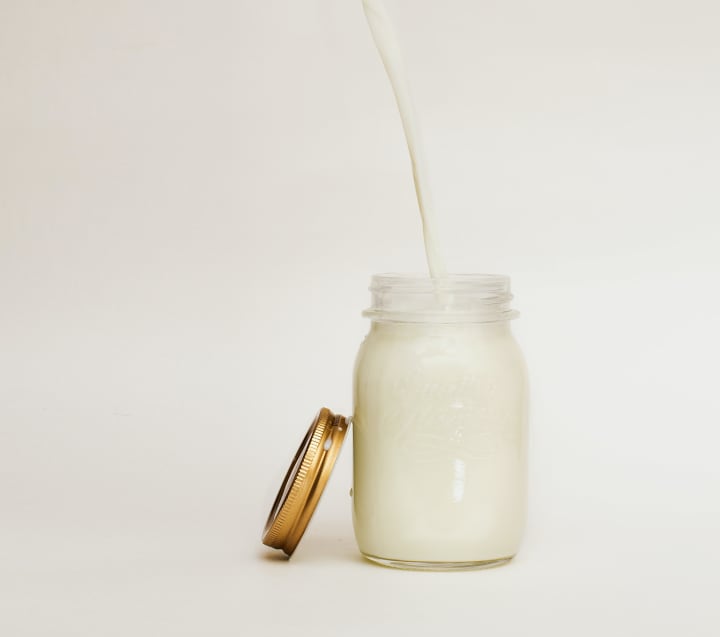
Three days later, these products were shipped out to supermarkets and sold as usual, as the brand Snow Seal still had a high status in the minds of the Japanese people.
At that time, Snow Seal was one of the top three milk brands in Japan, along with Meiji and Morinaga, and it was the largest of the three. Snow Seal was born in 1925 and made its fortune producing butter and cheese from Hokkaido milk, helping Hokkaido herdsmen solve the problem of storable fresh milk on the one hand, and breaking the "monopoly" of imported expensive dairy products on the other.
In short, the Japanese people have faith in the Snowmark brand, as do the other two milk brands, and almost every Japanese household is a loyal customer of one of these three, even if their products are half the price of similar products.
On June 27, 2000, the medical and health institutions in Osaka City suddenly received many requests for help, basically with vomiting, diarrhea, and other symptoms caused by food poisoning.
The next day, the number of reported cases continued to increase, and food poisoning patients appeared not only in Osaka, but also in Kageyama and Hyogo prefectures, and what they had in common, besides their symptoms, was that they had all drunk low-fat milk of the Snow Seal brand.
Although many clues pointed to Snow Seal products, the official of Snow Seal Dairy Company was not slow to deny a series of denials and was also considered to be making peace with the situation, with an attitude of not seeing the coffin without tears.
The evidence soon came when the Osaka Prefectural Institute of Public Health detected type A Staphylococcus aureus enterotoxin in Snowmark's low-fat milk and determined that this was the cause of food poisoning.
Only after the evidence was presented did Snowmark Dairy make the decision to recover 300,000 cartons of milk produced by the Osaka plant, almost a week after the earliest reports of food poisoning, which had affected more than 10,000 people.
As of July 10, the results of the patient investigation showed that 14,780 people had been affected, at least 155 people had been hospitalized, and an 84-year-old man had died from complications caused by food poisoning.
The impact of the incident was so great and widespread that it was called the largest mass food poisoning incident in Japan after World War II.
So, what happened?
First, the source of the low-fat milk. From the information provided by the food poisoning patients, the low-fat milk they consumed came in two packages, 500 ml and 1 liter, both of which had "AHE" printed on the package, i.e., from the Snowmark Dairy Osaka plant.
So the initial investigation must have started at the Osaka plant, and during a comprehensive sanitary inspection of the plant, covering 95 processing facilities, they pulled a coin-sized piece of milk from the check valve, which was tested and confirmed to contain Staphylococcus aureus.
However, this was not the source of the problem. The real culprit was the skim milk powder from the Hokkaido Oki plant that was the subject of the opening paragraph.
The day before the milk powder was shipped out, the Hokkaido Daiki factory was shut down due to a power outage caused by heavy snowfall in the area, which lasted for about three hours from 11:00 am. Including the time for re-commissioning after the power was turned on, the skimmed milk was kept at 20-30 degrees Celsius for 4 hours during the milk-fat separation process.
Since dairy processing needs to maintain low temperatures, the refrigeration equipment also stopped working after the power outage, and the large tanks used to temporarily store the remaining skim milk could not maintain low temperatures, leaving the entire 6-ton capacity of milk exposed to room temperature for up to 9 hours.
According to normal logic, this portion of the milk, which was likely spoiled, should have been disposed of and never put back into production. However, the plant manager did not do so, probably for two reasons: first, the cold weather in Hokkaido at that time caused the manager to let down his guard, and second, he did not have a basic understanding of microorganisms and toxins.
The plant manager thought that even though this part of the milk exposed to room temperature might deteriorate, the low temperature coupled with the sterilization process that followed made it less likely that microbial contamination would be a concern.
The high-temperature sterilization process in milk processing indeed kills most microorganisms, and 450 of the 830 bags of milk powder produced after electricity was restored did pass the microbial tests, including Staphylococcus aureus and E. coli.
However, high temperatures do not necessarily destroy the toxins produced by microorganisms. In the case of Staphylococcus aureus, it can be killed in 30 minutes at 80 degrees Celsius, but the Staphylococcus aureus enterotoxin produced by it can remain active in boiling water for 30 minutes, and it needs to be at 218-248 degrees Celsius for 30 minutes to make its toxicity disappear completely.
Many people are not well aware of the dangers of microbial toxins and simply believe that heating leftovers sufficiently will prevent food poisoning, but in fact, conventional heating cannot completely avoid food poisoning in case of improper preservation.
Staphylococcus aureus is widely present in nature and can easily overgrow leading to food poisoning. The dose of enterotoxin requires only 1 microgram, so it is also one of the important pathogens of bacterial food poisoning.
Staphylococcus aureus is most often detected in everyday food in raw meat, followed by raw cow's milk, so it is very important to maintain low temperatures in milk processing plants to inhibit bacterial growth.
Back at the Hokkaido plant, some of the batches of skim milk powder after the power outage resumed production passed the microbiological test but still contained enough enterotoxin to cause food poisoning, while for those 380 bags of milk powder that did not even pass the test, the bacteria exceeded the standard by 10%, but were not destroyed, but were rebuilt and diluted with the qualified batch to bring the index values up to standard.
But that's not all. What's even better is that when the tainted milk powder was sent to the Osaka factory, the factory had four products sharing the same blending tank, and any problem with any one production line would affect the other three.
It was later discovered that the Osaka plant was also concealing and not operating according to regulations. The valve where Staphylococcus aureus was detected was supposed to be cleaned weekly, but in reality, it had been cleaned three weeks before the last cleaning, and it was not cleaned.
So, as the saying goes, "When an avalanche happens, no snowflake is innocent," the food safety disaster was not a matter of one or two links, but rather a lack of management and awareness.
More dramatically, 45 years ago, in 1955, when Snowmark had just begun supplying milk to Japanese elementary schools, there was a massive staph infection that affected 1,936 students.
Snow Seal's routine was the same as 45 years later, first denying it, then apologizing and recalling the product after seeing hard evidence, even for the same reason: a power outage at the plant caused the microbial bloom.
Forty-five years later, the market was no longer so forgiving, and although Snowmark quickly stopped production to rectify the situation and quickly resumed production, businesses and consumers had lost confidence in it, supermarkets refused to sell it, people were afraid to buy it, Snowmark Dairy's performance was in the toilet, and the president resigned.
After that, Snowmark Food, a subsidiary of Snowmark Group, was exposed to the scandal of using imported Australian beef to pass off as Japanese domestic beef, completely losing all the goodwill of the brand.
It is counter-intuitive to say that we have always thought that Japan's food regulation is extremely strict, such as non-100% fruit juice can not use fruit photos and other regulations are already known to our countrymen.
The Snowpark milk incident affected the entire milk industry in Japan, and there are similar rules to the above, where only pure milk can use the trade name "cow's milk", while anything with other ingredients added can only carry the trade name "Milk".
There is no country or region where food issues are taken so seriously that has not experienced hardship. Japan has also experienced scandals such as the Morinaga tainted milk powder incident, the "gutter oil" crisis, the Fuyuma expired milk, and the "White Lovers" chocolate shelf life change.
About the Creator
Fester Hammer
We soon believe what we desire.
Keep reading
More stories from Fester Hammer and writers in Feast and other communities.
Is soya bad for women's health?
Consumed in many traditional Asian populations for millennia, soya has only been a common part of the Western diet for around 60 years. Now, many of our supermarkets are full of soy milk alternatives, soy burgers and other soya-based meat replacements – not to mention traditional soy-based products like tofu, tempeh, soya milk, miso and soya sauce.
By Fester Hammer3 years ago in Feast
My Tous les Jours Trip
As someone who lives in a rural area, I don't get the chance to visit fancy restaurants or bakeries that often. So, when a friend told me about a French-Asian bakery that's less than an hour away, I knew I had to check it out and grab some pictures for social media. Tous les Jours ended up providing an immersive experience that went above and beyond my expectations--although I did leave with a few reservations.
By Kaitlin Shanks23 days ago in Feast
Your Guide to Adagio Tea's Sister Sites
Adagio doesn't just sell tea--they also maintain five sister sites that contain recipes, reviews, forums and other resources for tea lovers. The layouts are a little outdated, and web traffic isn't exactly booming, but these sites still get occasional updates that make them worth checking out. Plus, you'll get access to over a decade's worth of information.
By Kaitlin Shanks8 days ago in Feast



Comments
There are no comments for this story
Be the first to respond and start the conversation.