
A dish that shaped my life?
You gotta be kidding


When I first read about this challenge, I was somewhat perplexed.
Vocal: Write about a dish that holds deep personal or cultural significance and share the story behind it—including the recipe.
Well, there isn't one. No dish of food that I have ever eaten holds anything deep, apart from the food itself. And then, only if it is a soup or cereal bowl. Personal significance? Nah! Sorry, none. Over the past sixty five years I have eaten many thousands of meals in many places around the world, including home of course. Some have been good, a few not so, some have been exceptional to the point that I still remember them. I remember many of the dishes my mother prepared and the one thing that my dad cooked: a meat pie (previously made by Mum) that he only had to put in the oven, but still managed to burn. I still recall (with a smile) the bitter tang of the charred pastry. Of all the meals and dishes I can remember eating, none have any great, lasting, personal significance.
If you are looking for a recipe from me, please feel free to skip all this blah and go straight to the end of the article
As to cultural significance, I am not sure that I even have a specific culture. When I have filled in those tedious race/ethnic/sexuality surveys they give you when you go for a job, I generally select either 'white-British' or 'white-English,' as being the closest fit. Neither of which fully describe my ethnicity. While I can understand the use of such data gathering exercises, my opinion is that race and ethnicity are far more complex than these surveys allow.
At this point, I could go on to explain my background, my culture, my ethnicity (I am presuming by culture, the curators of this challenge include ethnicity). I could provide a summary of my heritage that goes beyond the 'white-English' but I am not going to. We need to get back to the food.
If I were going to identify a cultural food that meant something to me and 'my culture' I guess I would have to try to think of something that was typically English. Ask any visitor to my home country what they were hoping to enjoy as a 'typically English' dish they would probably either say 'fish & chips' or 'roast beef and Yorkshire pudding.' Certainly there is no shortage of either in restaurants here.
Many years ago, I met an American friend, a WWII US Navy submarine veteran, during his first visit to London. He asked me to suggest an English restaurant we could meet. I had to do considerable research to find one. Most restaurants in London are pizza/pasta outlets, other Franco/Italian generic stuff, pubs (with limited menus) or spice restaurants (as they are called in the trade) - 'Indian' restaurants, as they are popularly known. This is despite the fact that most 'Indian' restaurants in this country are run by people whose families immigrated from Bangladesh or Pakistan, and not India.
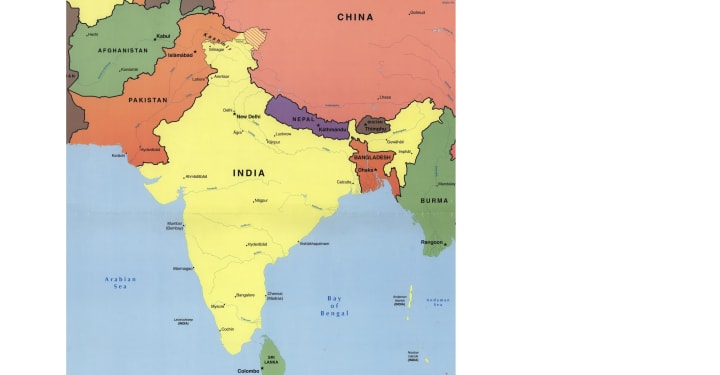
This brings me to my cultural point. If you ask me what the most important 'cultural' dish is to me, I would say that it was a 'curry.' Not a specific dish but a generic term for dishes that are made with different blends of spices and using cooking methods that originate in South Asia, particularly the Indian sub continent. There are countless numbers of dishes that fall into this category of food, some authentic recipes from their regional and cultural origins, some anglicized generic 'curry' favorites for the food trade to ply to their unsophisticated Saturday-night clientele.
Curry, then, is probably the singular most popular dish in England and (I suspect) our neighbours Ireland, Scotland and Wales. I have no research to back this up, it is purely anecdotal on my part. If I had to name a favorite dish, however, I think I would select from a spice menu, rather than a meat and two veg menu, or a fish and chips option.
Doesn't the suggestion that curry is a typically British dish smack of cultural imperialism? Well, historically, yes of course it does. We British only love our curry because of the large scale immigration to these shores by people from India, Pakistan and Bangladesh. All once part of the British Empire. When people move around the globe, for whatever reason, they take their food with them, which is one reason why London is considered the food capital of the world.
Vocal: share the story of a dish that has shaped your life.
Again, there isn't a dish that has shaped my life. I will however share the story of a dish that has become a small part of my life, or at least a part of my diet, over the years. The dish is known as pakora, and is a kind of fritter made from pretty much any vegetable, fried in a crispy, spicy, batter.
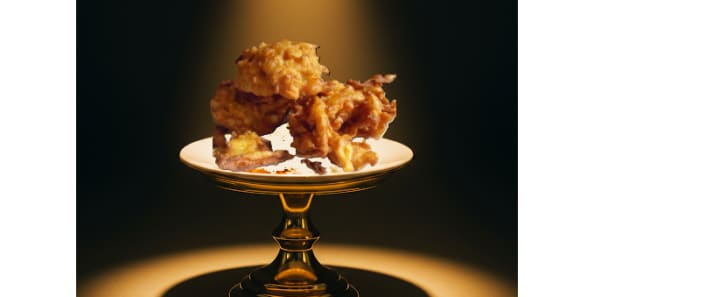
For such a simple, staple, dish, the taste is divine. Bite into the crisp, outer coating to release the heavenly aromatic spices hidden within. Soft, fluffy batter, blankets and protects the tender stems of broccoli, green leaves, zucchini, or other vegetable hidden inside. There is a version of this dish made with onion, known in 'Indian' restaurants as the onion bhaji. Often treated as an extra, a starter, a side dish, and not given the respect it deserves, in my view.
Why is this particular spice dish so important to me? Well, it seems to have popped up at various points in my life. As a youth, for instance, I once attended a conference of some sort. I no longer recall the details but I do remember that one of the other young men came along with containers and containers full of food.
"My Mum made it for us," he announced with obvious delight, and in a beautiful, sing-song Indian accent. The food Mum cooked for us was glorious, spicy, full of flavour, truly heavenly. There were many different dishes to enjoy, but the dish I remember the most was the vegetable pakora. Golden, light and fluffy inside, crispy, golden, and spiced to perfection. A variety of different vegetable mixes, all out of this world.
Did I say I was a vegetarian? In the 1980s, being a 'white-English' vegetarian was unusual. Getting any kind of appetising food that I hadn't cooked myself was problematic, to say the least. Indian food, food cooked by people of Indian (as opposed to Bangladeshi or Pakistani) heritage was always a good restaurant option because so many Indians are vegetarian.
Non-vegetarian spice restaurants catered more to the typical meat-centered English diet, but still often had good fish and vegetarian options. Even so, there was never anything to beat a proper, vegetarian Indian restaurant. There used to be so many more such restaurants but, sadly, they have fallen to the demand for standard curry choices like Tandoori, Madras, Tikka. All wonderful creations in their own right but, again, more likely meat.
When I first met the lovely young woman who was to become my bride, we would often go out to a restaurant that was a little different to the humdrum. In addition to a fantastic place that was run by people from a minority Hindu sect, and exclusively vegetarian, we also visited other South Indian restaurants as well as Malaysian, Thai and Indonesian. Although my wife eats meat, she also like variety when we eat out. Unfortunately for veggies like me, most restaurants in and around London these days, may have vegetarian choices, there are very few vegetarian-only outlets.
Skipping on to this century, pakora featured in recent celebrations of the late Queen's Jubilee. We organised a street party with neighbours, closing off our residential road and setting out tables in between, with shared drinks and food, plus activities for the kids. At one point, I was asked by a neighbour, if I had tried her pakora. Pakora, I said, was one of my favorite things, but there was none left. I clearly looked my disappointment and she insisted on cooking up some more, which she did despite my protests.
"These are just for you," she said when she returned 10 minutes later. They were absolutely the best food I ate that Jubilee day and I hope I was able to express my gratitude.
My first attempt at making pakora was a disaster
These days, I seldom manage to find any restaurant that knows how to make good pakora, other than the standard item 'onion bhaji' in 'Indian' restaurants, which is fine but seldom anything special. Could I make it myself? I have never quite got the hang of cooking well with spice. I did try it once, but with a cheater's trick. I bought a big pack of ready-made pakora mix. It included all of the dry ingredients for the batter. All I had to do was mix the contents of the packet with water, then finely slice some onions (my vegetable of choice). The only skilled part was the deep-fry, which did not tax my cookery skills too much.
How to make pakora the cheat's way
- Empty a packet of good quality pakora mix into a mixing bowl.
- Mix with water according to instructions on the pack.
- Heat up a deep pan with oil.
- Finely slice some vegetable(s) of your choice.
- Dunk a handful of your veg into the batter, remove and form into a rough ball.
- Check the temperature of the oil. If you drip some batter in, it will sizzle and brown instantly if it is hot enough.
- Carefully place several veg and dough balls, one by one, into the hot oil.
- Keep the balls mobile until cooked to a crispy golden brown. Remove and drain.
- Enjoy hot with other spice dishes, with a yoghurt or other dip, with a salad, or as a cold snack.
How did it go? My first attempt at making pakora was a total disaster. Not because of poor quality pakora. In fact, they were almost as good as other home-made pakora I had tasted. The problem was that they were so good, I ate the whole batch, which left me bloated and with a very poorly tummy. One reason I have not made them again.
From then on, I have stuck to enjoying pakora in a restaurant, or at home with my family, ordering a spice meal online for home delivery. The standard item I order when we have an 'Indian' takeaway is an onion bhaji, which is essentially another name for a pakora. We all share the bhaji.
How to make pakora the authentic way...
Sorry, my knowledge of pakora making only extends to the cheat's way. There are, however, plenty of recipes online.
Seems to me, pakora is about sharing. A dish of pakora can be shared by a few close friends, or many neighbours. You can eat sitting at a table, or as a snack, or as part of a TV dinner. Pakora is a great food for communal celebration, such as the Queen's Jubilee, or as a cold snack at any time. This is just my opinion of course. I have not asked anyone who knows how to make pakora what their view is.
As to the cultural side of all this, I like to think that the pakora also represents a shared culture. A sharing that dates back to the days of the British Empire, and the Indian Raj before that. Just like my Indian, Bangladeshi and Pakistani friends and neighbours, I am a grandchild of the British Empire. London, where I live, was the centre, the focal point of that empire and one that has, over the centuries, drawn many people in, sharing their many different cultures with those who have arrived here before, including the English.
Long may the sharing continue.
Thanks for reading.
Ray
About the Creator
Raymond G. Taylor
Author living in Kent, England. Writer of short stories and poems in a wide range of genres, forms and styles. A non-fiction writer for 40+ years. Subjects include art, history, science, business, law, and the human condition.
Keep reading
More stories from Raymond G. Taylor and writers in Feast and other communities.
Happy Hash
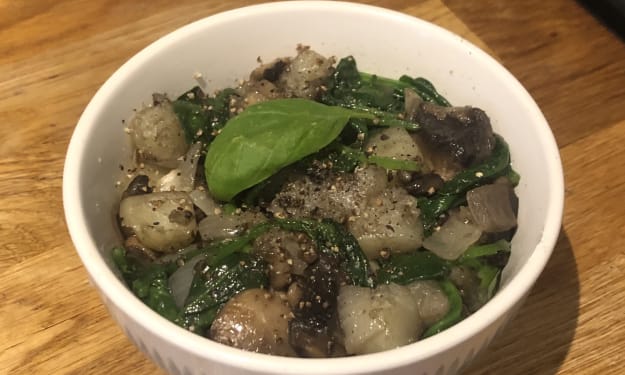
What did you have for breakfast today? This is my little starter meal for the morning. Hash champignons et épinards. The basic recipe is vegetarian, vegan, kosher and halal but if you are embellishing the dish (see options below), it would of course depend on the the extras you choose. I know some can't imagine breakfast without their bacon, for instance.
By Raymond G. Taylor2 years ago in Feast
My Tous les Jours Trip
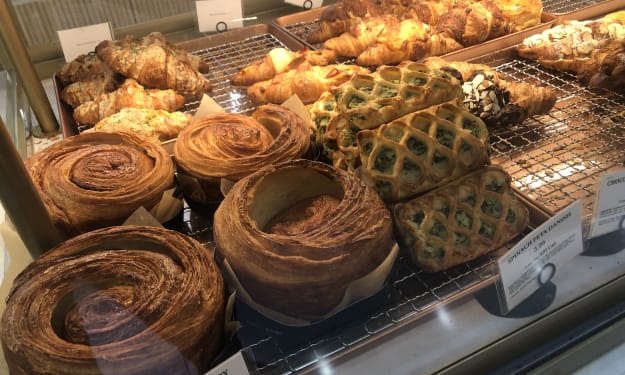
As someone who lives in a rural area, I don't get the chance to visit fancy restaurants or bakeries that often. So, when a friend told me about a French-Asian bakery that's less than an hour away, I knew I had to check it out and grab some pictures for social media. Tous les Jours ended up providing an immersive experience that went above and beyond my expectations--although I did leave with a few reservations.
By Kaitlin Shanks21 days ago in Feast

Comments (11)
Omgggg, I loveeeeee both pakora and bhajji! My mouth is watering right now hehehehhee
A delightful read👍🏼! I totally agree with you, trying to meet the challenge criteria regarding a dish that shaped my life etc!😵💫
Your dish sounds delicious to me and there is nothing wrong with your story. You always tell the truth. Good job.
Sounds decadently vegetarian & lip-smacking delicious.
This is an excellent response to the prompt and a very tasty-sounding dish. My issue was too many dishes hold great memories! I love how you tied this dish into England and India's shared culture. Now, I'm off to the grocery store for ingredients!!
This was great, Raymond, I loved the humor and thoughtfulness of this piece.
As a man and lover of spice, I appreciate a good curry. My favorite being yellow with a medium heat level. I liked how you broke it down to arrive at a dish you wanted to share. Pakora sounds divine!!!
Seems like a treat that will satisfy the savoury lover in me!
This is such a wonderful piece! Now I need to try pakora!
This is a lovely story, Ray.
Nice work.