
A Centaur Is Never Lonely
In Impossible Things, Miller Oberman's trans fatherhood is a loving rejoinder to the father who could not fully accept him.

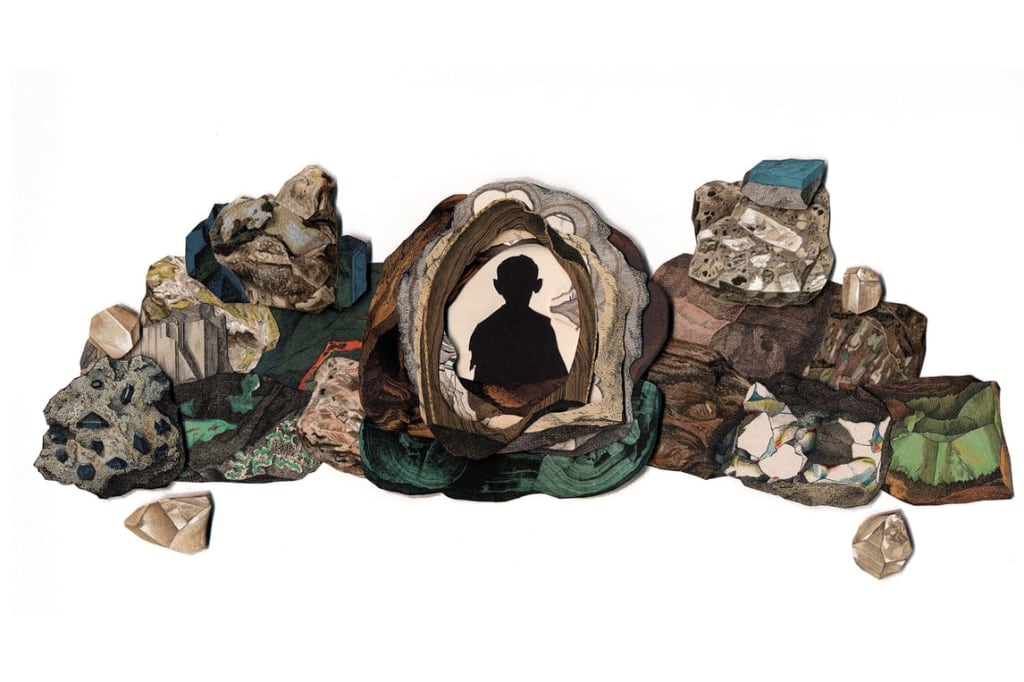
The backstory comes in the prologue, where we learn about the tragic death, in 1972, of the poet’s brother, Joshua, who, at two years old, had wandered into a neighbor’s pool where he drowned. The book itself, however, begins not with Joshua’s death, but with Oberman’s father’s passing at 59, in 2006, from lung cancer. Loss thus weaves its way through this book, and Oberman traces how it has shaped his relationship to his father, who, as he makes clear, was taken from him not only in death, but earlier, first through his emotional withdrawal while grieving Joshua, and later through his inability to fully accept Oberman’s gender identity. As Oberman puts it: “I knew he loved me. I knew he didn’t have any idea how to love me. I stopped trying to talk about my gender.”
For Oberman, trans fatherhood provides a way forward. And poetry, particularly Oberman’s kind of poetry, which bends time by joining together accounts of fatherhood across generations and gender identities, also offers another path. As he said when we spoke, “[p]oetry is a way to evade the linear.” If Oberman’s father’s memoir is marked by dates and times intended to impose order and assert control, Impossible Things insists on the fundamental nonlinearity of grief, loss, and relationships. It is an explicit response to his father, who Oberman addresses directly in the prologue:
Time: what a terrible choice for a reality check. If you were here, I’d tell you everything I’ve learned about time since you’ve been gone, how lyric it is, how elastic, how queer.
And later:
This is a story about how we get stuck in time, or parts of us. Pain nails us to a spot, and when we move from the spot, the nailed-down piece rips off.
Grief makes us see time anew, bending it this way and that, but as Oberman makes clear, there is another side to all this, a way in which his own trans identity allows him to reconfigure time outside the dictates of linearity.
Loss coincides with and is inextricable from what comes next—the birth of one’s own child and, alongside it, the possibility of reclaiming love for a flawed father. In the poem “Joshua’s Birthday,” the speaker, preparing a Shabbat dinner with his young children, including Reuben, nearly two, reflects: “Now begins the two-month corridor / between Joshua’s second birthday and drowning,” and then laments: “This time next year // I’ll have forgotten the exact feeling of living with a two-year-old.” The lines pair past and present; they also anticipate a future. Joshua haunts the story and, in some ways, haunts Reuben’s growing up, which, for Oberman, will mean losing the ability to see Joshua in his own son, but also to see his son as he is now, in the present. Such haunting grief comes to the surface again later in the poem, when, seemingly out of nowhere, we learn that “Joshua had just learned not to pick green tomatoes, that summer.”
Oberman couples the grief he feels for his brother with the joy he experiences when his child calls him “Papa,” a term of endearment made more precious to the poet because it is hard-won. Here, love for one’s child is in part a corrective, meant to somehow repair or make up for the pain caused by a father’s inability to accept his child as he is. Oberman ends the poem with a blessing for his own children: “be who you are, and may you be blessed / in all that you are and all that will you be. Amen.”
Throughout his poems, Oberman points to the power of names, and of naming, how it can be used to mark one as “other” and also to begin the work of self-reclamation, as in “The Centaur”:
First they called me “it,” and then, ignorant of how my people
use this word, they mashed up the meager nouns
they had for gender and called me “the goy,” and said
to not be one or the other was to be nothing.
Similarly, in “Theory,” the speaker recalls being subjected to bullying as an adolescent: “Maybe someone said ‘dyke’ or ‘goy’ / their names for me.” And later in the same poem:
They stone me stone stone stone
stonestone When I wrote of this before I focused on the
rocks
gave their scientific names suggested I was becoming one
Naming things feels good cataloging has great colonial
power
and so distracting A way of looking away
These experiences of naming as violation inform Oberman’s insistence on queer and trans kinship as opportunities to reclaim the self and to have one’s identity recognized by others, as when the speaker’s children refer to him as “Papa.” By calling himself a trans father, Oberman names the seemingly impossible, the idea that one can operate outside normative identity categories.
Quote: By calling himself a trans father, Oberman names the seemingly impossible, the idea that one can operate outside normative identity categories.. Unquote.By calling himself a trans father, Oberman names the seemingly impossible, the idea that one can operate outside normative identity
categories.
If, as a child, the speaker in Oberman’s “The Centaur,” imagined himself to be half-human, half-horse, to cope with the “barbs and kicks” and with being reduced to it or the goy, he now takes pride in being that centaur, standing guard over those in Dante’s seventh circle of hell, “who commit[ted] violence / against their neighbors.” The poem closes:
When sometimes I wish I’d had a boyhood, I remember those
days instead, my four muscled legs. I was seven feet tall then,
riding myself, carrying myself. A centaur is never lonely.
Queer and trans kinship are central to Oberman’s poetics, with its emphasis on the non traditional familial and care structures that emerge in response to experiences of rejection and even violence. For the speaker in this poem to be a centaur among other centaurs is to reclaim an image inextricably tied up with their own oppression and suffering, so that it now signifies the potential for new forms of kinship and of care.
“Theory” takes its epigraph from Judith Butler’s field-defining work, Gender Trouble:
Gender is, thus, a construction that regularly conceals its genesis; the tacit collective agreement to perform, produce, and sustain discrete and polar genders as cultural fictions is obscured by the credibility of those productions—and the punishments that attend not agreeing to believe in them.
Looking back at their adolescent self, the speaker sees the seeds of their own becoming in Butler’s scholarship, which serves as a point of kinship and an affirmation of the speaker’s selfhood:
The many gaps in the poem suggest an openness to new possibilities, as does the pronoun they, which, in addition to referring to Butler themself, also encompasses the fluidity of gender and the merging of past and present selves. By moving back and forth between present and past tense, the poem manages to “evade the linear” in pursuit of a new theory of kinship, which the speaker puts into practice by becoming a trans father, creating and loving a family of his own.
***
About the Creator
Sudais Zakwan
Sudais Zakwan – Storyteller of Emotions
Sudais Zakwan is a passionate story writer known for crafting emotionally rich and thought-provoking stories that resonate with readers of all ages. With a unique voice and creative flair.
Reader insights
Nice work
Very well written. Keep up the good work!
Top insights
Easy to read and follow
Well-structured & engaging content
Excellent storytelling
Original narrative & well developed characters
Expert insights and opinions
Arguments were carefully researched and presented
Eye opening
Niche topic & fresh perspectives
Heartfelt and relatable
The story invoked strong personal emotions
On-point and relevant
Writing reflected the title & theme
Keep reading
More stories from Sudais Zakwan and writers in Feast and other communities.
The Last Seat at the Table
The aroma of roasted spices and slow-cooked meat drifted through the narrow streets long before sunset, guiding neighbors like an invisible invitation toward the Khan family home. Every year, on the first evening of spring, the Khans hosted a grand dinner that people in the neighborhood simply called “the feast.” It was more than a meal; it was tradition, memory, and reunion served on wide copper platters. This year, however, felt different. After Mr. Khan’s sudden passing the previous winter, many wondered if the tradition would quietly fade away.
By Sudais Zakwan21 days ago in Feast
Cold Dish Recipes
Cold dishes are the unsung heroes of any great meal—they awaken the palate, balance rich flavors, and offer refreshing contrast. These ten recipes transform simple ingredients into extraordinary creations that will have everyone reaching for seconds. Best of all, they're incredibly simple to prepare. Let's dive in!
By yue . shui4 days ago in Feast
If meals are planned well, Ramadan is actually a great time to lose weight in a healthy way.
If meals are planned well, Ramadan is actually a great time to lose weight in a healthy way. The key is choosing the right foods for Sehri (Suhoor) and Iftar and avoiding overeating, as fasting already limits eating hours. Here is a straightforward guide to losing weight during Ramadan.
By Farida Kabir5 days ago in Feast
The BAFTA Awards
By now, in a stunning departure from recent years, most of the world is aware of what happened at the BAFTA film awards. Social Media Headlines will tell you the bare bones: that John Davidson, a Tourette's Syndrome advocate, shouted a racial slur at two Actors of Colour, Michael B Jordan and Delroy Lindo.
By Natasja Rose6 days ago in Psyche



Comments (1)
✅✅✅