
5 countries that have the most food
Most Food


Top 5 Countries with the Most Food
The world's food production is a complex and ever-evolving landscape, influenced by factors such as climate, geography, technology, and cultural practices. While it's challenging to definitively rank countries based on "most food," we can examine those that produce significant quantities of various food commodities. Here are five countries that consistently rank high in terms of overall food production:
1. China
China, the world's most populous nation, is also its largest producer of food. The country's vast and diverse geography, coupled with its advanced agricultural practices, allows it to cultivate a wide range of crops. China is a major producer of rice, wheat, corn, soybeans, potatoes, vegetables, and fruits. Additionally, its extensive livestock industry contributes significantly to global meat production.
Chinese cuisine, renowned for its diversity and complexity, is a reflection of the country's vast geography and rich history. With regional variations influenced by local ingredients, cooking techniques, and cultural traditions, Chinese cuisine offers a tantalizing array of flavors and textures.
One of the defining characteristics of Chinese cuisine is its emphasis on balance and harmony. The concept of "yin and yang" is often applied to food, with dishes carefully composed to achieve a balance of flavors, textures, and colors. This can be seen in the use of complementary ingredients, such as sweet and sour, salty and spicy, or hot and cold.
2. United States
The United States, with its vast agricultural lands and advanced technology, is another major food producer. The country is a leading exporter of corn, soybeans, wheat, meat, and dairy products. American agriculture benefits from a combination of factors, including fertile soils, abundant water resources, and efficient farming practices.
One of the defining characteristics of American cuisine is its emphasis on regional variations. From the Southern barbecue of the South to the seafood-centric cuisine of the Northeast, each region has developed its own unique culinary traditions. These regional differences can be seen in the ingredients used, cooking techniques, and the types of dishes served.
3. India
India, the world's second-most populous country, is also a significant food producer. Its diverse climate and geography allow for the cultivation of a wide range of crops, including rice, wheat, pulses, and vegetables. India is particularly known for its production of spices and tea, which are important commodities in the global food market.
4. Brazil
Brazil, the largest country in South America, is a major producer of agricultural commodities. The country is a leading exporter of soybeans, coffee, sugar, meat, and poultry. Brazil's vast agricultural lands, favorable climate, and advanced farming techniques contribute to its significant food production.
5. Russia
Russia, the world's largest country by land area, is a major producer of food, particularly grains and meat. The country's vast agricultural lands, combined with its temperate climate, allow for the cultivation of a variety of crops, including wheat, barley, rye, and potatoes. Russia is also a significant producer of livestock, including cattle, pigs, and poultry.
Factors Influencing Food Production
Several factors influence a country's food production capabilities. These include:
Climate: A favorable climate with adequate rainfall and suitable temperatures is essential for agricultural production. Countries with diverse climates can often grow a wider range of crops.
Geography: The availability of fertile land, water resources, and access to transportation infrastructure are crucial for agricultural development. Countries with large, fertile plains and access to waterways often have an advantage.
Technology: Advancements in agricultural technology, such as improved seeds, fertilizers, and machinery, can significantly increase food production. Countries with access to modern technology are more likely to achieve high yields.
Government Policies: Government policies, such as agricultural subsidies, land reforms, and infrastructure investments, can play a crucial role in supporting food production.
Cultural Practices: Cultural factors, such as dietary preferences and traditional farming methods, can influence the types of crops grown and the methods used to produce them.
It's important to note that food production is not solely about quantity but also about quality and sustainability. While the countries listed above are major producers, it's essential to consider factors such as food security, environmental impact, and the well-being of agricultural communities.
About the Creator
Moharif Yulianto
a freelance writer and thesis preparation in his country, youtube content creator, facebook
Keep reading
More stories from Moharif Yulianto and writers in Feast and other communities.
Vietnamese vs. Chinese Coffee
Vietnamese and Chinese coffee cultures, while both deeply rooted in Asia, have evolved distinct characteristics reflecting their unique historical, geographical, and social contexts. This essay will delve into the key differences between these two coffee traditions, exploring factors such as brewing methods, coffee beans, flavor profiles, and cultural significance.
By Moharif Yuliantoabout a year ago in Feast
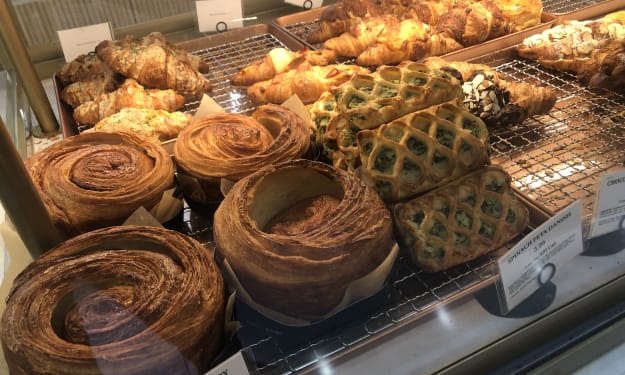
My Tous les Jours Trip
As someone who lives in a rural area, I don't get the chance to visit fancy restaurants or bakeries that often. So, when a friend told me about a French-Asian bakery that's less than an hour away, I knew I had to check it out and grab some pictures for social media. Tous les Jours ended up providing an immersive experience that went above and beyond my expectations--although I did leave with a few reservations.
By Kaitlin Shanks22 days ago in Feast
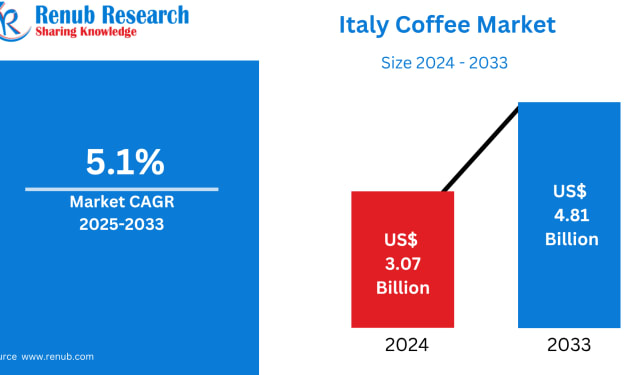
Italy Coffee Market Size and Forecast 2025–2033
Italy Coffee Market Outlook The Italy Coffee Market is anticipated to grow to US$ 4.81 billion by 2033 from US$ 3.07 billion in 2024, expanding at a CAGR of 5.1% during 2025–2033. Supported by Italy’s deeply rooted coffee culture, rising demand for premium blends, and the continued growth of café chains, the market is thriving across traditional espresso formats as well as newer ready-to-drink (RTD), capsule, and specialty segments. While Italians remain loyal to classic brewing rituals, evolving consumer lifestyles, e-commerce, and sustainability priorities are reshaping how coffee is produced, sold, and consumed across the country.
By jaiklin Fanandish3 days ago in Feast
Miss Persephone's Manual to a Seemingly Ordinary Life
Miss Persephone was found at the dining table, her blue eyes swollen, her tears arriving and retreating like the tides of the ocean. Earlier that day, her family had visited her in the retirement home where she had lived for eight years. It was her eightieth birthday.
By Imola Tóth2 days ago in Fiction


Comments
There are no comments for this story
Be the first to respond and start the conversation.