
Why Does Everyone Act Like the Eldest Son Is a God?
Unpacking gender roles, quiet double standards, and the daughter-shaped gap in family praise

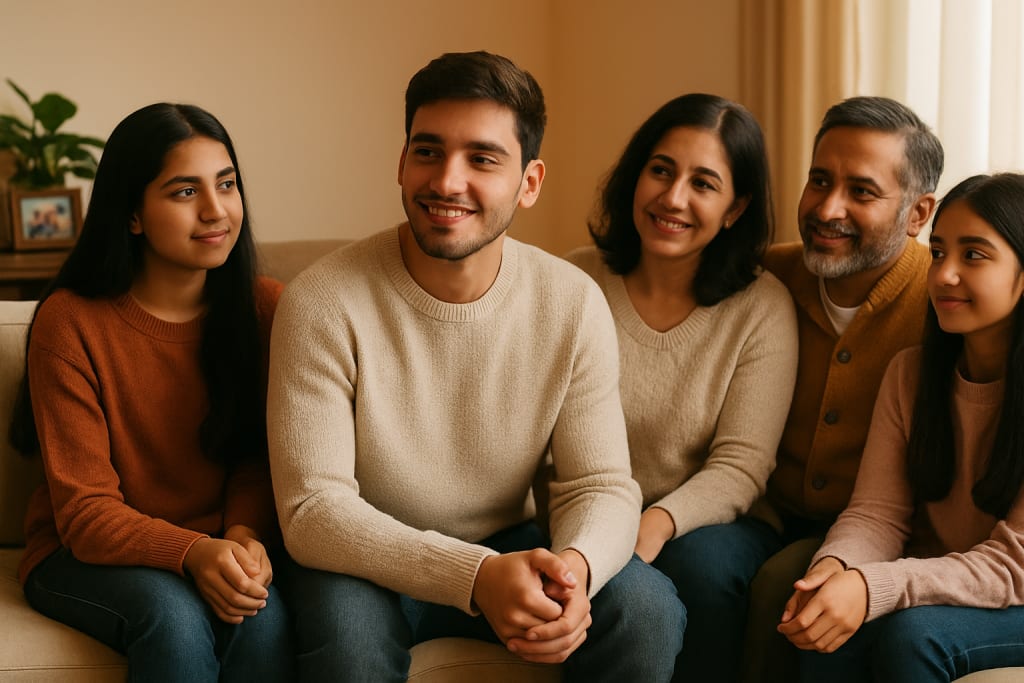
Let me paint you a familiar picture: the whole family is gathered. Someone brings up how well the eldest son is doing — usually a cousin. The doctor. The engineer. The boy who once cried because his charger broke, but now apparently holds the universe together.
Cue the proud aunties. Cue the “you should learn from him” side-eyes. Cue me sitting there, biting my tongue and wondering if being a daughter automatically makes your efforts less shiny.
Because here’s the truth: I don’t even have an older brother. But I grew up around a lot of older male cousins. And somehow, they’ve all been cast in the same golden-boy light. Every win, no matter how small, is treated like a national achievement. They applied for a job? Amazing. Woke up before 10 am? Stunning. Spoke to Grandma without being asked? Husband material.
Meanwhile, you — the daughter, the girl who juggled school, chores, relatives, expectations, and still remembered everyone’s birthdays—you’re “just responsible.”
The Eldest Son Effect
I call it that because it is an effect. An inherited idea that the eldest male in a brown family is more than just family — he’s practically divine. Revered. Respected. Above questioning.
He doesn’t just represent himself. He represents the family name, the legacy, the WhatsApp profile picture of your uncle.
And daughters? We’re asked to represent culture. Humility. Decency. “Adjusting nature.” Bonus points if we serve tea without being told.
It’s not always said outright. But the rules are written between the lines.
The Subtle (and Not-So-Subtle) Double Standards
Let’s play a quick game of compare-the-comments:
Your cousin posts a gym selfie: “Wow, so disciplined.”
You post one in leggings: “Aren’t you getting a bit too Western?”
He works late: “He’s providing for the future.”
You work late: “When will you have time to get married?”
He doesn’t show up to a family function: “He must be busy.”
You don’t show up: “She thinks she’s too good for us now.”
There’s an invisible list of what daughters are “supposed to” do. We’re expected to be soft but not weak. Smart but not intimidating. Helpful but never demanding. And above all, grateful — even when the playing field is clearly tilted.
Eldest Daughters vs. Eldest Sons
Let’s talk about eldest daughters for a second. We often become the quiet glue. The “second mom.” The one who gets handed the crying baby, the family drama, the emotional fallout — all before we even hit adulthood.
But when was the last time someone praised an eldest daughter the way they praise the eldest son?
Exactly.
The Wake-Up Call
This isn’t about hating on male cousins. I love mine. But love and truth can exist in the same room. And the truth is: sons often get praised for doing the bare minimum while daughters break their backs just to be noticed.
We deserve more than claps for being “well-raised.” We deserve space. Voice. Celebration. Not just for the things we do for others, but for who we are.
And honestly, I’m done playing along.
Here’s What I’m Choosing Instead:
- I’ll question the double standards — kindly, but clearly.
- I’ll speak up — even if it makes the aunties shift in their seats.
- I’ll celebrate my wins — even if no one else does.
- I’ll remind the little girls at the table that they don’t need to compete with the eldest son to feel important.
Because being a daughter shouldn’t mean being less.
So next time someone says, “He’s the eldest son, you know,” I’ll just smile and say,
“Cool. I’m the eldest daughter. That makes me the blueprint.”
About the Creator
Tavleen Kaur
🧠 Psychology student decoding the human brain one blog at a time.
🎭 Into overthinking, under-sleeping, and asking “but why though?” way too often.
✨ Writing about healing, identity, and emotion
Keep reading
More stories from Tavleen Kaur and writers in Families and other communities.
Christmas Abroad: Celebrating the Holidays Without Family
I moved to South Korea in 2017. I was twenty-two years old and excited to start my career as an English Second Language Teacher. With a Bachelor's degree and six hundred dollars in my bank account, I set off for Busan.
By Kera Hollow30 days ago in Families
A Heartfelt Family Gathering: Celebrating Dad’s Birthday with Those Who Truly Matter
Celebrations come in many forms — some grand and elaborate, others quiet and deeply meaningful. For Dad’s birthday this year, we chose the latter: a heartfelt family gathering filled with love, memories, and the simple joy of being together. It wasn’t a huge affair like some big birthday parties you see on social media. Instead, it was a celebration rooted in connection — a true family gathering that reminded us what matters mostMost of Dad’s coworkers couldn’t attend. Many of them live overseas or in different states, so they had planned their own smaller gatherings for him in their local areas. This was their way of honoring a loved one from afar, sending birthday wishes and thoughtful messages from miles away. Another bittersweet reality we faced was that so many of Dad’s older relatives and cherished family members could only participate in spirit — attending the celebration in our hearts rather than in person. It’s always a little sad to acknowledge that some loved ones are now celebrating with us from Heaven, watching over us instead of singing “Happy Birthday” beside us.
By Yassine Loufti7 days ago in Families



Comments
There are no comments for this story
Be the first to respond and start the conversation.