
They Meant Well — But It Still Hurt
When Love Comes with Conditions, and Compliments Cut Deep

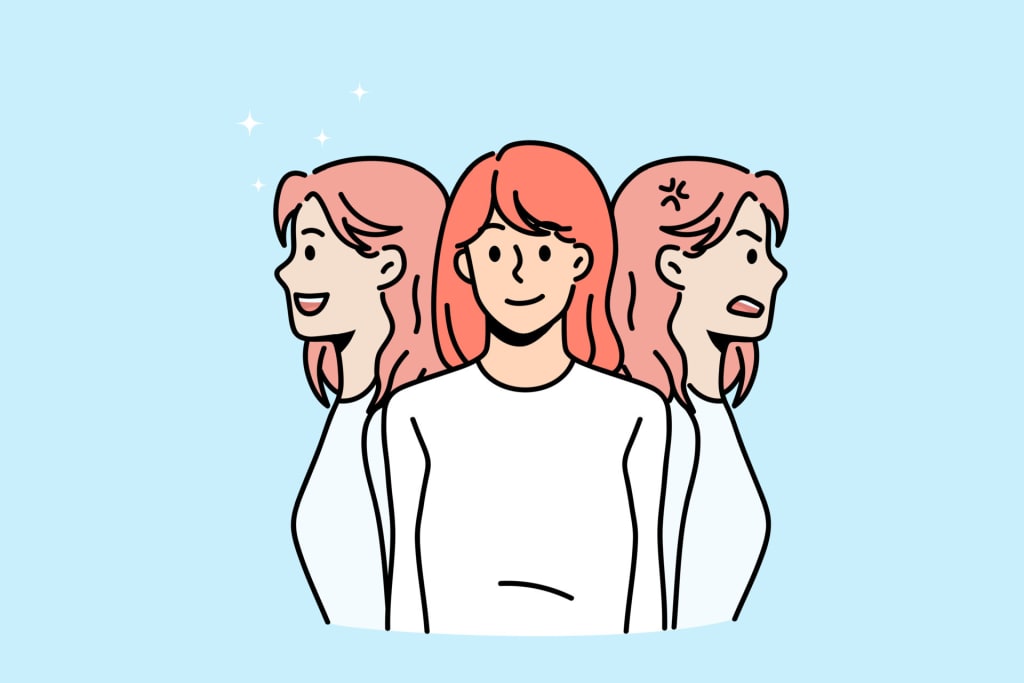
There’s a special kind of confusion that comes when the people who love you the most are also the ones who hurt you in small, invisible ways. Not because they want to — but because that’s the only language they know.
“They meant well.”
That’s what I’ve been taught to say after hearing something that stung a little too much. A comment about my weight. A joke about my skin tone. A warning not to “get too ambitious.” A compliment laced with conditions — “You’re pretty for someone your colour,” or “You’d be perfect if you lost a little weight.”
They meant well.
But it still hurt.
Growing up in a brown household, love didn’t always sound soft. It came in the form of criticisms meant to protect. Warnings meant to “toughen me up.” Comments that were supposed to “motivate” but felt more like quiet digs.
You learn early on that your worth is often measured through comparison — to cousins, to classmates, to an imaginary version of yourself that always could be “better.” Thinner. Smarter. Quieter. More obedient.
I remember one time, after getting a 80% on an exam I had studied for all week, an aunt smiled and said, “Why not 90%?”
Not out of malice. Not because she didn’t care.
But because in her world, praise had to come with a push.
And in those moments, it becomes hard to separate love from expectation. Hard to tell if they’re proud of who you are — or just who they want you to become.
Microaggressions in the Living Room
We talk a lot about microaggressions in academic or workplace settings, but some of the most persistent ones happen at home.
The uncle who jokes that you should stop eating that roti if you want a husband.
The cousin who calls you “too Western” for wearing shorts.
The family friend who says, “Don’t be too dark — no one will marry you.”
Everyone laughs. You smile awkwardly. And inside, a little part of you wilts.
The worst part? You’re made to feel like the sensitive one for not laughing along. Like you’re overreacting. Like you’re ungrateful for questioning the tone of what’s been said.
But these things add up. They build a version of you that starts filtering everything — how you speak, dress, eat, and even succeed — through the lens of what’s acceptable, or "not too much."
Conditional Love Feels Like a Contract
What happens when the love you receive feels like it depends on how well you perform?
How “good” are you?
How much do you suppress the messy, complicated parts of yourself?
You grow into an adult who doesn’t know how to take up space.
Who apologises before speaking.
Who says “I’m fine” even when you’re not.
Who feels guilty for resting, crying, asking for help, because somewhere along the way, you learned that love was something to earn, not something freely given.
And the hardest truth to admit?
Sometimes, the people who raised us with the most care also passed down the most pain. Not because they didn’t love us, but because they never got to unlearn the pain passed down to them.
Choosing a Softer Future
So, what do we do with this? With the love that came wrapped in expectations? With the comments that left invisible bruises?
We start by naming them.
Not with anger, but with honesty.
We start by setting boundaries — even if they’re met with confusion.
By reminding ourselves that our worth doesn’t shrink or grow depending on how perfectly we fit a role.
We love our families. We honour their sacrifices. But we also recognise that “they meant well” shouldn’t be the end of the conversation. Because meaning well is not the same as doing well.
Healing isn’t about blame — it’s about breaking the cycle.
So that one day, we can offer love that doesn’t come with conditions.
Compliments that don’t cut.
And protection that doesn’t feel like pressure.
Because we deserve to feel safe in the spaces that raised us.
And when that isn’t possible, we deserve to build new ones
About the Creator
Tavleen Kaur
🧠 Psychology student decoding the human brain one blog at a time.
🎭 Into overthinking, under-sleeping, and asking “but why though?” way too often.
✨ Writing about healing, identity, and emotion
Keep reading
More stories from Tavleen Kaur and writers in Families and other communities.
Growing Up with Colourism in Brown Households
Growing up brown often means growing up in a house where the TV is always on, but the messages it sends are quietly shaping you. A skin-lightening commercial plays in the background. A distant relative compliments you with, “You’re looking fairer these days!” Your mom hands you a face pack, not because you asked for skincare, but because it has turmeric in it—"good for brightening."
By Tavleen Kaur8 months ago in Families
Christmas Abroad: Celebrating the Holidays Without Family
I moved to South Korea in 2017. I was twenty-two years old and excited to start my career as an English Second Language Teacher. With a Bachelor's degree and six hundred dollars in my bank account, I set off for Busan.
By Kera Hollowabout a month ago in Families
Buddha's Inner Peace
In a world that never stops moving, the image of Buddha sitting in perfect stillness beneath the Bodhi tree offers something we desperately need: a reminder that true peace exists not outside ourselves, but within. The story of Buddha's enlightenment isn't just an ancient tale—it's a roadmap to discovering the profound calm that lies dormant in each of us.
By Susmit Bhowmik2 days ago in Families


Comments
There are no comments for this story
Be the first to respond and start the conversation.