
The Truth About Growing Up in a Toxic Family
What No One Tells You About the Quiet Damage—and the Long Road to Healing
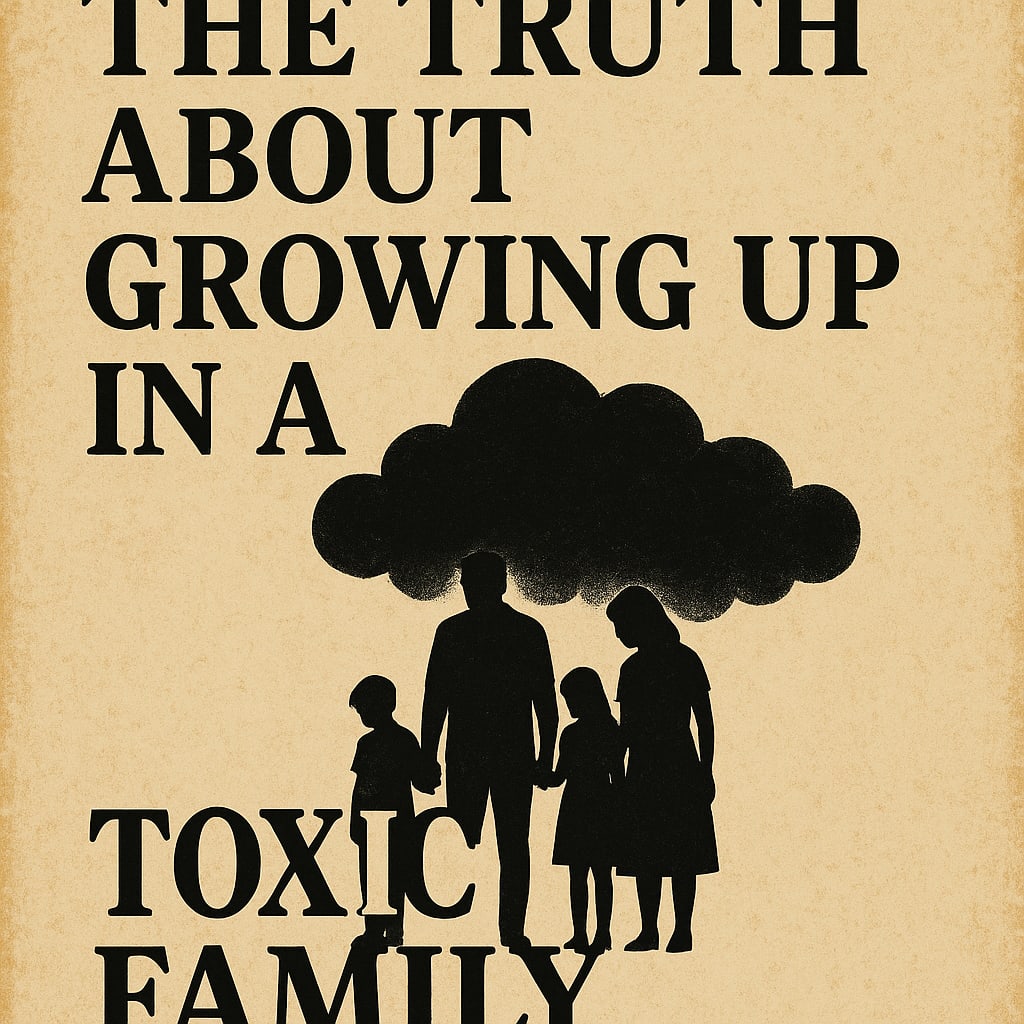
There are wounds you can’t see. Wounds that don’t bleed or bruise, but live quietly beneath the surface. If you grew up in a toxic family, you probably know exactly what that means.
People often assume that toxic homes are filled with shouting, violence, or dramatic displays of dysfunction. Sometimes they are. But more often, the harm is subtle. It's in the silence. The manipulation. The unspoken rules. The twisted definitions of love. It's in the things that didn't happen—like being seen, heard, or protected.
I used to think my childhood was normal. After all, every family has its issues, right? I brushed off the anxiety, the shame, the feeling of never being “enough.” I told myself I was being too sensitive when my boundaries were mocked. I learned to make myself small, agreeable, invisible. That’s just how our house worked.
But here’s the truth no one talks about: growing up in a toxic family doesn’t always look like chaos. Sometimes, it looks like control disguised as concern. Sometimes, it sounds like “I’m only doing this because I love you,” even as your sense of self erodes. It can be wrapped in tradition, in culture, in religion. It can be masked by holidays and matching outfits and polite small talk at family gatherings.
What people don’t talk about is how guilt becomes a second skin. How even as an adult, you struggle to trust your instincts. You wonder if you’re overreacting. You second-guess every boundary you try to set. You feel selfish for protecting yourself—even though no one protected you.
Toxic families are skilled at denial. Often, they build a mythology around themselves. “We’re close,” they’ll say. “We’re just loud,” they’ll laugh. But under that surface is often a quiet, relentless erosion of identity. You're not allowed to disagree. Or if you do, you’re labeled disrespectful. Ungrateful. Difficult.
Many of us, when we leave these homes, enter adulthood carrying emotional landmines. We people-please. We stay silent in relationships to keep the peace. We feel deeply uncomfortable with praise or affection, even while craving it. We think love is supposed to be earned—not given freely.
One of the most painful truths? You might miss people who hurt you. You might long for the mother who never listened, or the father who dismissed your pain. Because for many of us, love and harm were so tightly intertwined that we can’t tell them apart.
And healing? It’s not a straight line. It’s uncomfortable. Lonely. Sometimes you have to grieve relationships that are still technically alive. You have to make peace with the fact that you may never get an apology. That they may never change. That closure might have to come from within.
But here’s another truth—one that doesn’t get said enough: you are allowed to walk away. You are allowed to protect your peace, even if it upsets the family dynamic. You are allowed to go no-contact, to set hard boundaries, to stop explaining yourself. You are allowed to love people from a distance—or not at all.
It doesn’t make you ungrateful. It doesn’t mean you don’t care. It means you finally do.
No one tells you how heavy the healing will feel at first. How unnatural it will be to speak up, to say no, to take up space. How strange it will feel to let yourself be loved without earning it. But in time, something shifts. You begin to notice when you're being emotionally manipulated. You stop apologizing for everything. You learn to trust your gut.
And eventually, you build something better.
A chosen family. A peaceful home. Relationships built on mutual respect, not fear or control. You begin to see your own worth—not based on how useful or compliant you are, but just because you exist.
I’ve learned that healing isn’t about pretending the past didn’t happen. It’s about finally telling the truth about it. It’s about breaking the silence. And for many of us, that’s the bravest thing we’ll ever do.
So if you’re reading this and it resonates, know this: You are not broken. You are not too much. You are not imagining it.
You are allowed to choose peace over loyalty. You are allowed to unlearn the lies you were raised on. And you are allowed to write a new story—one where you are safe, loved, and free.
And that truth? That’s the one worth holding on to.
About the Creator
Keep reading
More stories from Anwar Jamil and writers in Families and other communities.
The Quiet Exit: Confession of a Former People-Pleaser
There are parts of my past that I look back on and barely recognize. Not because they were dramatic or traumatic, but because they were so quiet—so subtle—that I almost didn’t notice how much of myself I was giving away. I said “yes” to everything. Smiled when I didn’t feel like it. Nodded in agreement when I disagreed. Offered help when I was exhausted. And always, always put others’ comfort before my own.
By Anwar Jamil7 months ago in Confessions
Wise~Guys
— Look Behind what's in Front of You ~ Make Good Choices — Hey, So how you Doin'..! Made~Men — Mobster Movies romanticise a distinctive, elegant appearance, impeccable attire style, along with the 'Families' expressive lingo. Making their 'Bones' gave them Panache — with vintage fedoras, tailored pin-striped suits, mirror-polished wing-tip shoes adorned with tassels; with their 'Gun Moll' gorgeous dates on their arms.
By Jay Kantor18 days ago in Families
Silver Screen Magic with Mae West
American actress and singer Mae West became a popular film actress during the Great Depression. She started entertaining in vaudeville, then performed on Broadway, and finally went to Hollywood. She signed up with Paramount Pictures and made her debut in the 1932 film “Night After Night.” She also starred in musicals, comedies, and crime dramas. The American Film Institute named her one of the best classic Hollywood actresses.
By Rasma Raisters5 days ago in Geeks



Comments
There are no comments for this story
Be the first to respond and start the conversation.