

As I slowly opened my eyes, the cold seeped into my skin as I felt it sink into my little bones as we were told to get up from our beds. The thin blanket that was covering me barely covered my toes and would not cover my shoulders, making me scrunch up my legs to my stomach to draw in the warmth of my body. I was thinking a little while longer, so as not to disturb the warmth that held me.
We dressed hurriedly to put on the muslin dresses and stockings that we each had to wear in this place. We looked the same, with mushroom type haircuts, that we all seemed to bear witness with memories of powder that they put in our hair and burned our eyes and seeped a little into our mouths. Braids that fell to the floor in thumps, as if dying from being cut from our bodies. I would never forget the taste of it, the feel of it, all the while these women in black robes, with unsmiling faces and deeply distressed eyes looked at me with what looked like disdain. I never asked to be here and only wanted to go home.
We lined up to the washroom where we were able to do our business, peeing into ice, and then standing in line as the first of the girls would crack the ice to the basin so that we could wash our hands with cold lye soap in even colder water. The one brought out a small black book and wrote with a small little pencil.
It brought back memories of the times we would walk to the lake, as my brother would use the chisel and break open the lake and make a hole for us to, as we all took turns with pails to fill up the barrels, to bring home water.
This water was dirty and smelled. The black-robed woman would use a stick to usher us like cattle and would reach out when there were whimpers and crying at not moving fast enough. The other girls were terrified of them. They were a scary kind of people and in my little mind, I could not remember a time when my parents would ever be mean. My dad would tell stories in our learning, as he and mom taught us how to survive, how-to live-in winter, and how to cherish family.
As a family, we helped each other as mom and dad would skin the moose, or the deer, and would hang the meat to dry, handing each of us a piece to include us in the process. It helped us learn the ways of feeding our family. My brothers tended the fire, where it was not too high, more smoke than anything, in which they made sure it stayed that way all day. My brothers who made sure as little ones, minded what they were doing as we listened to the hissing sound the meat made, as it let go of its moisture. My mom used to call me “kii-ishikwe” … 'little crazy one’ when I would tell her that I heard the meat crying.
I was jolted by a “whack” of the stick to my back, and the black-robed lady said something in a language I did not understand. As she stood me in front of an older black-robed lady, she brought out a little black book with a small, tiny pencil and wrote in it as they spoke in their language. They ignored my crying from the hit that I received and seemed forgetful that the black-robed lady hit me. I could not understand them, and they seemed angrier and their faces contorted when I would not respond or would not say anything. The other little girls would not look at me, as I searched their faces for help. In my tears from that day on, I learned to hide and stifle the cries that would be a result of a “whack”, or “hit from a hand”, or a “push forward” because I was walking too slow, or not fast enough, “a slap” for speaking my language, or not speaking at all.
In my efforts to go to sleep, where the cold made me shiver more from the night, I imagined that I was in front of the fire in our home. The warmth of our home.
She whispered in my ear, “my beautiful little one”, as she pulled me in close. She covered me in the goose down quilt she had made for each of us, and all the love in the world spilled over in my smile for her. She bent over and kissed my forehead and hugged me as she tucked the blanket around my body, and the love I saw in the fire-lit night of her dark black eyes, enveloped me. Her face was calm, and she did not speak, but no words needed to be said as she gazed upon my face and stroked my hair away from my face. She was my mom, and her breathe alone was warmth to my soul. She always told me that I was born in the spring, when the new buds formed on the trees as they grew from small to large green leaves that wrestled in the wind, calling my name as they danced “to and fro” with the swaying of the limbs.
In my thought of her, or was it a dream, where we were rudely awakened to the bells, they wrang, or the yells they produced to wake us up each morning. The black-robed lady walked by and looked at me and said some words as she took out her little black book and wrote in it with her little, small pencil, that quickly disappeared into the black robe that hung on her like a cape in the wind. Those things were thick as well, and sometimes I thought, we needed those as well to keep warm, where it would not let the cold seep out, but quickly thought, their coldness would not seep out either.
The days turned into weeks and months, as we did the same thing every day. Day in and day out we did the same thing, and when the weather would turn warm, the geese would fly overhead to let us know of spring. The seagulls arrived, then the crows, as we watched them fly over this place. They would not stop here, and why would they. This place was death.
A time of hunting and watching for geese at the lake. We watched the sun come up, my dad and I, as it came up over the horizon of the lake, turning purple to blue, as it went through the leaves, and made their skeletons appear like little streams and lakes through green. My dad lit his cigarette, and puffed a bit, and said a few words under his breathe. I knew he was offering prayers to Creator, for a good hunt this morning. I was lucky to be here. I wanted to be here.
We all walked in line to the big church and through the bars of the fence and the gates I could see in the distance the tipis of families that had come to be closer to their children. Moms and dads were not able to see their kids any time but had to wait for ‘breaks” in the school time to speak or visit. The Indian Agent showed them where they could camp, telling the Priest things in his ear, who also could take out a little black book, that would disappear under his black coat. I knew I would not see my mom and dad there, as we lived in the bush about a mile away in a cabin.
My dad built our home, with my uncles. A cabin of one room where beds were made of pine boughs and logs that my dad cut from the bush. Branches of needles that poked through the muslin bags that my mom carefully pulled and stuffed to make as bedding, lined with goose down feathers that made it soft. The quilts she made from old clothing, and hand sewn with care, with goose and duck down as well. She seemed to know everything. At night, in the lamp firelight, she would pull the canned peaches from the cellar, and open it and give us all a piece. She would make us powdered milk from the sack in the drawer, with rainwater and love. At least, in my young mind I know that is what happened.
The days seemed to slow. I was starting to speak a little of their language and knew some of the words and short sentences they would use, such as, “get up”, “hurry up”, don’t be dumb”, “never have I ever”, or “you little dirty savage.”
They constantly took out their little black books and wrote with their little, tiny pencils, and would look at us in certain ways, writing. In my thoughts, at night, when we were finally alone in our own little beds, in our own little spaces, I cried alone, and cried in silence, because, if those black-robed women heard you, it seemed you somehow pay for it in a painful way; for the tears that fell out of your eyes. It was terrifying for me as I tried to think of my mom and dad and did not want to forget them. I did not want to forget the times we spent on the lake fishing, or when we would help cut up the elk or the moose that my dad would bring home. I would never complain again I thought. I would never speak badly at doing things for them. I silently sobbed under my pillow, wishing that all the love I felt for them would take me away from here.
The silence was comforting as my dad dipped the paddle in and out of the water, letting it trickle to make droplets of dreams that enlarged with each touch. I would watch as the canoe cut through the water, and I would put my hand in the cool refreshing liquid, and let my hand get used to its coldness. I imagined pickerel and pike, swimming near the canoe, trying to race us as we paddled on. Not a sound was heard, and the water was so calm it made reflections of my face on its surface, as we ventured forward, to home. As I glanced back at my dad, he had a somber face, a calm weathered kind face. He looked at me and pointed towards the north, just over the bend, we saw our home.
I opened my eyes slowly, dreaming, I think. My old, tired eyes blinked in the new morning dawn. These days were much harder to wake, much harder to sit up. It has been over 50 years since I had thought vividly of the school. Fifty years of memories that had tried to bury deep within my heart. At one time, alcohol saved me, but now it does not. I was never good at being around people; and when the mail came that day, it took me a while to fathom that the money the Residential School Legacy had sent me was enough.
I did not want any of it.
In my mind, it was a pittance in comparison to what I had gone through in that school. The 20 thousand thoughts of every moment of the whole time I was in there from 5 years old to the age of 16. Twenty thousand awful sounds of screaming, crying, strapping, hitting, yelling, sobbing, and silence that we each endured throughout our time there.
Written in a little black book. We were not alone as we had one another, but we were alone from our families, and then nothing.
The End
Justina McKay
About the Creator
Keep reading
More stories from writers in Families and other communities.
Wise~Guys
— Look Behind what's in Front of You ~ Make Good Choices — Hey, So how you Doin'..! Made~Men — Mobster Movies romanticise a distinctive, elegant appearance, impeccable attire style, along with the 'Families' expressive lingo. Making their 'Bones' gave them Panache — with vintage fedoras, tailored pin-striped suits, mirror-polished wing-tip shoes adorned with tassels; with their 'Gun Moll' gorgeous dates on their arms.
By Jay Kantor24 days ago in Families
The Kind-Hearted Friend
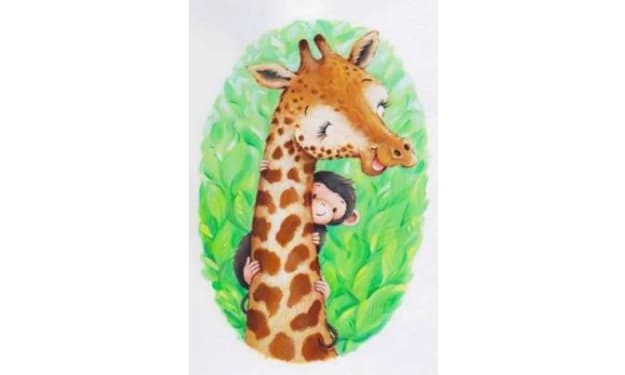
In a lush forest, there lived a troop of monkeys. Among this troop were two young monkeys who were notorious for their mischievous behavior. Their constant pranks and antics had even exhausted their parents, who often scolded them for their wildness. In the same forest, there was a young giraffe, a gentle and innocent creature, known for his simplicity and good nature. One day, while grazing on the green grass, the young giraffe wandered into a part of the forest where the mischievous monkey duo was busy plucking leaves and fruits from the trees to eat.
By Sudais Zakwan3 days ago in Families
Five—One Grounding
Five—Locked in a perpetual battle against my failing senses and reason, I fight to survive, to get through; I am afraid of... nothingandeverythingallatonce—...—my mouth is dry, and my muscles seize up... what can I see? I can see the birdcage and birds; I can see the watercolour my beautiful wife painted many years ago and unlocked her journey into art; I can see the empty mug of tea as it sits perilously on the arm of the sofa; how many is that now? Three down, two to go; I can also see a jackdaw on the roof of our neighbour's house across the road and a bookcase of potential—Five things you can see.
By Paul Stewart6 days ago in Poets



Comments
There are no comments for this story
Be the first to respond and start the conversation.