
The Beauty of Slow Days: Why Doing Less Can Mean Living More
A reflection on embracing unhurried living in a world obsessed with speed.
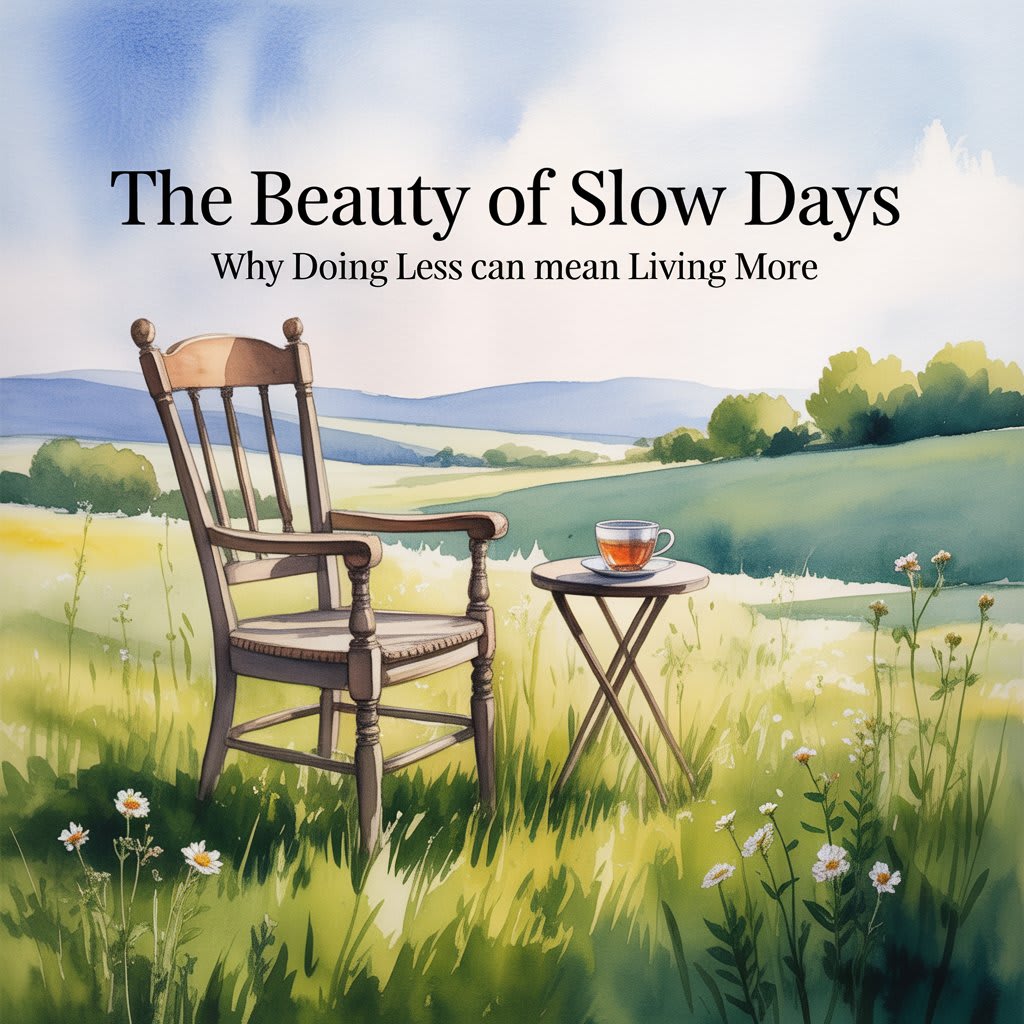
In a world that worships busyness, the idea of “slowing down” can feel almost rebellious. We’ve been conditioned to measure our worth by how much we produce, how fast we respond, and how many items we check off a never-ending to-do list. The faster we move, the more successful we must be—at least, that’s the story we’ve been told.
But here’s the truth that quietly lingers beneath the noise: some of life’s richest moments don’t happen in the rush. They unfold in the stillness—the mornings where coffee steam curls in the sunlight, the afternoons where you lose track of time reading on the porch, the evenings where you sit and listen to rain.
Slow days are not wasted days. In fact, they might just be the most valuable ones of all.
Why We’re Afraid to Slow Down
The pace of modern life is relentless. Emails, notifications, meetings, messages—our minds are constantly occupied. Even our leisure time often turns into a race: binge-watching a whole series in one weekend, rushing through a vacation itinerary, speed-walking through a museum because we “have more to see.”
Many of us are afraid of slowing down because we’ve equated stillness with laziness. Society has taught us to be productivity machines, not human beings. If we’re not producing something tangible, we feel guilty.
Slowing down also forces us to confront things we might be avoiding—our feelings, our thoughts, our dissatisfaction with certain parts of life. Constant busyness is a convenient distraction.
But here’s the irony: by filling every moment, we often miss the very experiences that make life worth living.
The Magic of Slow Days
Slow days give us permission to simply be. They’re not about idleness; they’re about intentional presence. Here’s what they offer:
1. Space for Reflection
When life slows down, your thoughts have room to stretch out. You notice the patterns in your behavior, the direction you’re heading, and whether it’s truly where you want to go. Reflection is the birthplace of self-awareness, and self-awareness is the key to living a life that feels authentic.
2. Deeper Connection
When you’re not rushing, conversations unfold differently. You listen without glancing at the clock. You linger over dinner with friends, soaking in their stories. You give your full attention to the people who matter most—and they feel it.
3. Heightened Appreciation
A slow day sharpens your senses. You notice the smell of freshly baked bread at the bakery, the intricate patterns on a butterfly’s wings, the way afternoon light paints the walls golden. Small things stop being background noise and start being treasures.
4. Gentle Creativity
When your mind isn’t overloaded, creativity flows naturally. You might pick up a paintbrush, scribble poetry in a notebook, or hum a song without forcing yourself to be “productive.” It’s in the gaps that inspiration often sneaks in.
The Science Behind Slowing Down
This isn’t just a romantic notion—there’s science to back it up. Studies on mindfulness and “flow” states show that slowing our pace helps reduce stress hormones like cortisol, improves focus, and boosts overall well-being.
Slower living also aligns with the concept of deep work—a state of distraction-free concentration that produces meaningful results. Constant rushing scatters our attention, while slow, deliberate engagement allows us to fully immerse in whatever we’re doing.
What a Slow Day Can Look Like
There’s no single formula for a slow day—it’s about tuning into what makes you feel grounded. Here’s one possible rhythm:
Morning
Wake without an alarm, letting your body decide when it’s rested.
Make a cup of tea or coffee and sip it without scrolling through your phone.
Watch the sunrise or simply listen to the sounds of your neighborhood waking up.
Afternoon
Take a walk without a destination—just notice what you see.
Prepare a meal from scratch, enjoying the textures, colors, and smells.
Spend an hour reading, writing, or sitting quietly in a park.
Evening
Call someone you haven’t spoken to in a while.
Watch the sunset without photographing it—just let your eyes drink it in.
Light a candle, play soft music, and let your mind wander before bed.
The Barriers to Slow Living (and How to Overcome Them)
Slowing down sounds wonderful, but real life has deadlines, bills, and responsibilities. So how can we make space for slow days without abandoning our obligations?
Start Small – You don’t need to take a week off to experience a slow day. Begin with a slow hour: put away your devices, sip tea, and let your mind rest.
Set Boundaries – Learn to say no to commitments that don’t align with your values. Protecting your time is protecting your peace.
Prioritize What Matters – Slowing down isn’t about doing nothing; it’s about doing what’s important without the rush.
Redefine Productivity – Count joy, rest, and connection as accomplishments too.
Why Doing Less Can Mean Living More
When we strip away the excess, we realize that the things that matter most—love, peace, joy, connection—don’t demand speed. They demand attention.
Doing less doesn’t mean giving up on ambition or goals. It means refusing to let life become a blur. It’s about focusing on quality over quantity—choosing the experiences, people, and activities that truly enrich your life.
When we live slower, we notice more, we feel more, and we become more present for the moments we can never get back.
The Courage to Be Slow
Choosing a slow day in a fast-paced world takes courage. It means resisting the pressure to perform every second. It means valuing your inner world as much as your outer achievements.
And maybe most importantly, it means trusting that you are enough—whether or not you’ve “done” enough.
Slow days teach us that life isn’t a race to the finish line. It’s a series of moments, each one an opportunity to breathe, notice, and truly live.
So the next time your schedule feels overwhelming, consider this:
Cancel a plan. Take a walk. Watch the clouds. Let the world spin without you for a little while.
You might be surprised at how much more alive you feel when you finally slow down.
About the Creator
Keep reading
More stories from Aiman Shahid and writers in Families and other communities.
Dancing with Discomfort: How I Learned to Grow Outside My Comfort Zone
Introduction: The Allure of the Known For most of my life, I clung to comfort like a lifeline. I liked knowing what was coming next, staying where I felt safe, and avoiding anything that stirred up anxiety. My comfort zone felt like a warm blanket on a cold day — cozy, predictable, and easy. The problem? It was also a cage.
By Aiman Shahid5 months ago in Families
Wise~Guys
— Look Behind what's in Front of You ~ Make Good Choices — Hey, So how you Doin'..! Made~Men — Mobster Movies romanticise a distinctive, elegant appearance, impeccable attire style, along with the 'Families' expressive lingo. Making their 'Bones' gave them Panache — with vintage fedoras, tailored pin-striped suits, mirror-polished wing-tip shoes adorned with tassels; with their 'Gun Moll' gorgeous dates on their arms.
By Jay Kantor18 days ago in Families




Comments
There are no comments for this story
Be the first to respond and start the conversation.