
Dancing with Discomfort: How I Learned to Grow Outside My Comfort Zone
Exploring why discomfort is the secret ingredient for personal growth and how embracing it can transform your life.
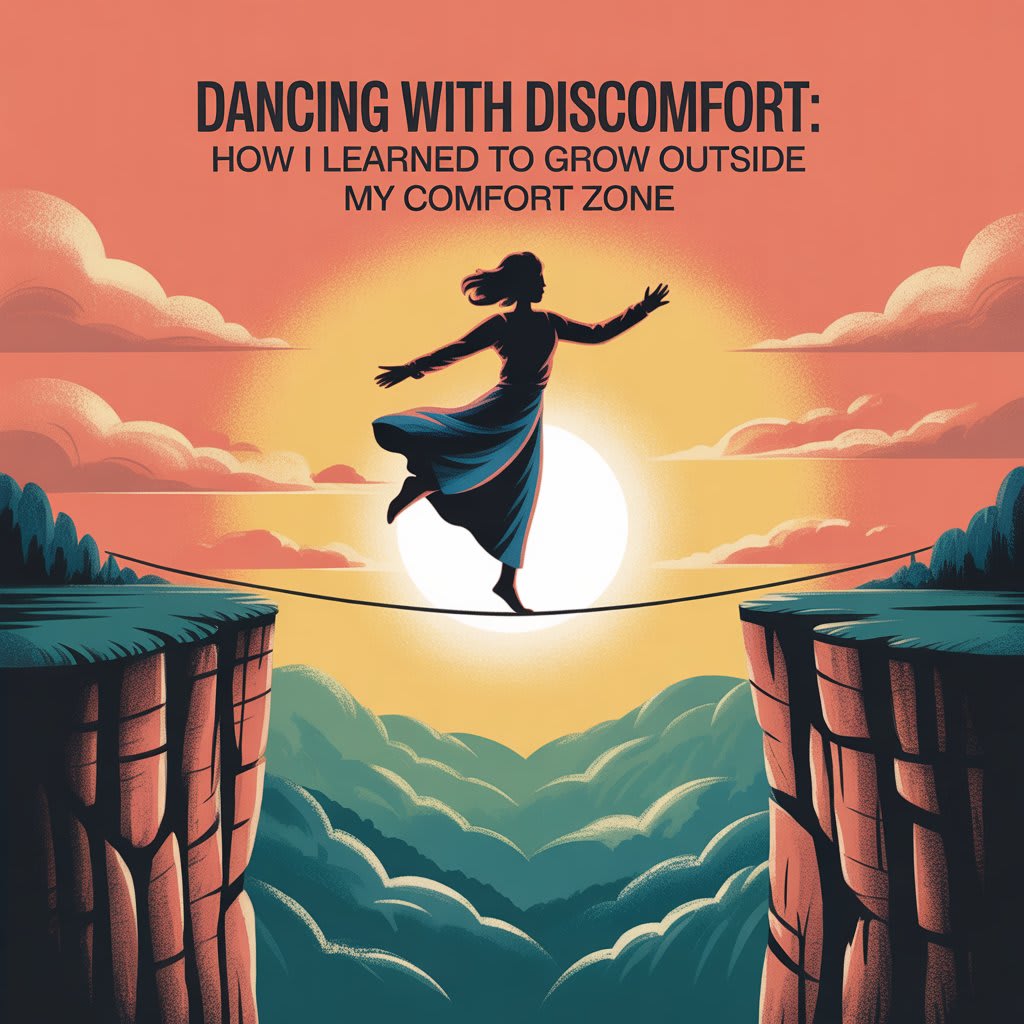
Introduction: The Allure of the Known
For most of my life, I clung to comfort like a lifeline. I liked knowing what was coming next, staying where I felt safe, and avoiding anything that stirred up anxiety. My comfort zone felt like a warm blanket on a cold day — cozy, predictable, and easy. The problem? It was also a cage.
It took me years to realize that my comfort zone wasn’t just keeping fear out; it was also keeping growth, opportunity, and self-discovery out. The very walls I built to protect myself were also holding me back from becoming who I was meant to be.
“Dancing with discomfort” became my way of describing what happened when I stopped treating fear as a warning sign and started treating it as an invitation.
The Myth of Safety in Comfort
We often think comfort equals safety. And to some extent, it does — staying in familiar territory means fewer risks. But over time, I realized that “safe” can also mean stagnant. Life inside the comfort zone becomes a loop: same actions, same results, same limits.
The irony is that life outside my comfort zone wasn’t as dangerous as I imagined. Yes, there were moments of awkwardness, mistakes, and self-doubt. But the risks I feared most — humiliation, rejection, failure — were almost never as bad as I built them up to be in my mind.
Comfort feels like protection, but sometimes it’s just fear in disguise.
Discomfort as a Teacher
The turning point came during a time when life gave me no choice but to face discomfort. A job change, a move to a new city, and the sudden need to build a social network from scratch pushed me far from what I knew.
At first, I resisted. I longed for my old routines and familiar faces. But slowly, I began to notice something: every time I leaned into the discomfort, I grew.
Awkward networking events taught me how to start conversations from scratch.
Taking on a new role I wasn’t “ready” for taught me resourcefulness and resilience.
Navigating a different city taught me independence and confidence.
The discomfort wasn’t punishing me — it was shaping me.
The Science Behind the Stretch
Psychologists talk about the “optimal anxiety zone” — a sweet spot where you’re just uncomfortable enough to stretch yourself but not so overwhelmed that you shut down. In this zone, your brain is learning, adapting, and creating new pathways.
That’s why growth feels uncomfortable — your mind and body are literally rewiring to handle new challenges. Discomfort is evidence of expansion. Without it, we remain in the well-worn grooves of our old habits.
My First Dance with Discomfort
I remember one moment clearly: being asked to give a short speech in front of a group I barely knew. Public speaking was one of my biggest fears. I wanted to say no. Every instinct told me to escape. But I said yes — mostly because I didn’t have time to think up an excuse.
My hands shook. My voice wavered. My heart raced. But when it was over, something unexpected happened — I didn’t feel embarrassed. I felt proud. That moment planted a seed: maybe the discomfort wasn’t a sign I was failing; maybe it was a sign I was growing.
Building a Relationship with Discomfort
Dancing with discomfort doesn’t mean diving headfirst into your worst fears without preparation. It means practicing small, consistent steps outside your comfort zone so you build confidence along the way.
Here’s what worked for me:
Start Small
I began with micro-challenges: speaking up in meetings, trying a new hobby, striking up a short conversation with a stranger.
Reframe Fear
Instead of thinking, “I’m scared, so I shouldn’t do this,” I started thinking, “I’m scared, so I should do this — because it means I care.”
Focus on Growth, Not Perfection
Discomfort often comes with mistakes. I learned to treat them as part of the process instead of proof I wasn’t good enough.
Celebrate the Wins
Each time I leaned into discomfort, I wrote it down. Seeing those moments add up made me realize how far I’d come.
The Gifts Discomfort Gives
Over time, discomfort stopped feeling like an enemy and started feeling like a dance partner. It brought gifts I didn’t expect:
Confidence — Not the fake, “I’ve got it all together” kind, but the deep knowing that I can handle uncertainty.
Resilience — The more I faced discomfort, the quicker I bounced back from challenges.
Connection — Some of my closest friendships began with awkward first conversations I almost avoided.
Opportunities — Saying yes to discomfort often led to unexpected doors opening in my career and personal life.
When Discomfort Becomes Too Much
It’s important to say that not all discomfort is good. Some situations cross into harmful territory. The goal isn’t to throw yourself into trauma or burnout — it’s to stretch just enough to grow.
If discomfort starts to feel like constant panic, exhaustion, or dread, it’s a sign you’ve stepped too far too fast. The dance works best when you push your limits gradually, so you stay in that optimal growth zone.
Discomfort as a Lifelong Practice
I used to think I would “get over” discomfort — that one day I’d be fearless. But the truth is, discomfort never fully disappears. Instead, you just learn to dance with it better.
Every new chapter — a promotion, a relationship, a creative project — comes with its own brand of nerves. Now, instead of avoiding those feelings, I welcome them. They tell me I’m moving toward something that matters.
Conclusion: Why I Keep Dancing
Dancing with discomfort has taught me that growth isn’t found in the easy places. It’s found in the shaky voice during a speech, the awkward first attempt at something new, the moments when you’re not sure you can do it but you try anyway.
My comfort zone will always be there when I need to rest. But life, in all its messy, unpredictable beauty, happens outside of it. And I’d rather keep dancing — even if I miss a few steps along the way — than stand still in safety.
If you’re reading this wondering whether you should take that leap, try that thing, say that scary yes… consider this your sign. Discomfort isn’t your enemy. It’s your partner in becoming the person you’re meant to be.
About the Creator
Keep reading
More stories from Aiman Shahid and writers in Families and other communities.
Loving Without Losing Myself: The Art of Staying Whole in Relationships
There’s a quiet kind of heartbreak no one talks about—the kind that happens when you love someone so deeply, you forget how to love yourself. Not because they asked you to, and not because the love was bad or toxic, but because somewhere in the process of giving, caring, accommodating, and adjusting, you stopped seeing yourself as someone worth protecting too.
By Aiman Shahid6 months ago in Families
Wise~Guys
— Look Behind what's in Front of You ~ Make Good Choices — Hey, So how you Doin'..! Made~Men — Mobster Movies romanticise a distinctive, elegant appearance, impeccable attire style, along with the 'Families' expressive lingo. Making their 'Bones' gave them Panache — with vintage fedoras, tailored pin-striped suits, mirror-polished wing-tip shoes adorned with tassels; with their 'Gun Moll' gorgeous dates on their arms.
By Jay Kantor18 days ago in Families




Comments
There are no comments for this story
Be the first to respond and start the conversation.