

The sound of John Lennon softly intoning “Out The Blue” echoed through the tiny apartment. She hummed along, occasionally singing.
Her mother’s passing the month before had slowly settled into her past. She had packed up the mementos that meant the most to her, selling most of the rest of the houseful of furniture and odds and ends. The one piece of furniture she had determined to keep was a small, beautiful desk that had belonged to her maternal grandmother, whom she had never known. It was a special piece for her mother, given a place of honor in her living room, and Liv knew she would never let it go. She had found a place for it, and though it didn’t really go with her minimalist décor, she felt great comfort in having it there.
She had to rearrange things a bit to make room and keep things flowing, but she stood back, satisfied with her morning’s work. She wiped the piece down thoroughly with the beeswax, lemon oil, and lavender polish she brought from her mother's house to bring the shine back, making sure to open the drawers and the drop-leaf desktop to get all the edges. One drawer seemed to be stuck, so she got down on her knees to discover the issue.
“It seems to be stuck, but I know I emptied it before I moved it from Mom’s house,” she muttered to herself. She jiggled the drawer back and forth gently and then pushed it back in and pulled it out of the desk. Behind it was a black notebook.
“Well, I wonder where this came from?” She pulled the notebook out and saw more paper and an ornate letter opener. She pulled them out carefully and sat back on the floor looking at her finds.
The letter opener was brass with a peacock design on the handle. It was quite beautiful and shone softly in the weak sunlight coming in the north-facing windows. “I never saw this at Mom’s,” she said to herself. The dog looked up expectantly, then as she saw her mistress engrossed in the papers and other items, lay her head down to continue her nap. There would be no walk anytime soon.
Liv looked at the black notebook. There was nothing on the cover or spine to indicate what it was supposed to be. She opened it to see elegant handwriting on the pages, far too large and loopy to be her mother’s, whose handwriting was neat, compact, and sans embellishment. She began to read . . .
“Today, I received bad news. My father succumbed to the sickness that has ravaged their community for months. Consumption took first his active bonhomie, then his broad good humor, and finally, his life. I do not know how Mother will manage without him. I must go to her to help her with arrangements.
“I made all haste to get to my mother, encountering first one obstacle then another. After two anxious days, I was able to get to her and help with arrangements for Father’s wake and burial. She was, as I feared, distraught at his loss. She was even more consumed with fear that she herself would fall prey to the illness and leave me an orphan in this world. I assured her that she was worrying needlessly, and that Father would not want her to burden herself with such thoughts. I set about contacting the local undertaker to make arrangements to recover his body from the sanatorium for the wake.”
Wow, Liv thought. I wonder when this happened? I wonder who wrote this book? It sounds a little old-fashioned to be my grandmother’s story. Maybe it was her mother’s? She read on.
There was a break of some time before the next entry.
“Adjusting to life back home has taken some time. It is hard going from independence back to my family home. She acts as if I have not been living on my own and wants to direct my every move. This chafes my spirit.”
Liv smiled. She had felt some of those same emotions six months ago when she had moved in with her mother to care for her in the final days of her life. She had tried not to take it personally—she loved her mother and was happy to be there to care for her—but it was as if her independence had never been.
She read through snippets of daily activities, moments of frustration, lighthearted descriptions of outings, and social visits. The author’s name was Violet (Vi to her friends), and her mother’s name was Rose. Violet was familiar, it was her great-grandmother’s name. Rose would have been her great-great-grandmother. She read some more, finally coming to blank pages. She felt a soft nudge at her elbow and looked up to see Lucy’s soulful eyes and wagging tail. The light in the windows was nearly gone. She had been engrossed in the story she had discovered for hours and had no sense of time passing.
After a brief walk in the cold twilight of a February day, she came back in, fed Lucy and herself, and determined to clean up the mess in her small living room before getting ready for bed. She gathered the other items that had been stuck in the back of the drawer and as she picked up the notebook, an envelope fell out. It was tucked, rather than sealed, so she opened it, expecting more correspondence, but instead found several official-looking certificates.
“I wonder what these are,” she mused, turning them over and reading the ornate script.
She saw a small card in the envelope. It was a business card for a bank in a city about an hour away from her. There was a notation on the back in the same elegant cursive—the name and address of a law firm.
“Huh. I wonder if they’re still in business. What do you think, Lucy girl? Let’s Google it!” She picked up her phone and typed the name of the firm in the search bar. “BINGO!” she yelled. Lucy looked up, startled. Liv jotted down the information, determined to call in the morning.
The next day, she got up eager to call and find out what she could about the documents. The call was answered crisply by a receptionist, as she realized that the person whose name was on the card would have been dead for decades. She almost hung up but decided to try to find out what she could.
“Good morning. I have an unusual query to make and I hope someone can help me. I found an old business card with the name Ronald Kettering and your firm name. I think it’s pretty old, but it would have had something to do with my great-grandmother Violet Moore, or her mother Rose Moore. It was in an envelope along with some old bonds of some sort. Is there anyone who could check your archives and get back to me?” The receptionist put her on hold. Minutes passed and the elevator music was beginning to repeat. She was on the verge of hanging up when the call was answered by a woman who identified herself as Amanda Livingston.
“What did you say your name was again?” she asked Liv.
“Well, my name is Liv Elliston, but the persons who might have had business with your firm would have been Rose or Violet Moore. Or it could have been Nathaniel Moore, my great-great-grandfather.”
“Hold a moment, please.”
Liv sighed, settling back in her chair by the small desk.
After another few minutes, the woman came back on the phone. “Where did you say you were located?” she asked.
“I’m in Frankfort,” Liv replied, “about an hour away from you. Did you find any records relating to my family?”
Ms. Livingston replied, “Yes, we have quite a file on your family. Is it possible for you to bring the documents to our office?”
“Sure thing,” replied Liv. “When would you like me to bring them? I’m on leave right now from my job as a photojournalist, so anytime works for me.”
“Can you come in this afternoon? I think we may have some good news for you,” replied Ms. Livingston. “We’re at the same address on your card. When you get here, just tell the receptionist you’re here to see me.”
“Great,” replied Liv, “I look forward to seeing you.”
Excited and wondering what good news they could have for her from nearly 100 years ago, she walked Lucy, showered and dressed, put the notebook and envelope in her bag, and set off for Louisville.
She parked in the busy downtown and walked to the address on the card. It was a beautiful building and she found herself wishing she’d brought her camera along to capture the nuances of beautiful architecture all around her. She walked in and announced herself to the receptionist who motioned her to a seating area and called for Ms. Livingston.
Amanda Livingston came down the stairs into the ornate lobby with a smile. Liv stood, slightly surprised--Ms. Livingston was easily in her 60s or 70s, though she had sounded much younger on the phone. She was ushered into a small conference room off the lobby.
“Did you bring the documents?” she asked. Liv nodded, pulled the envelope and notebook out of her bag, and laid them on the table. “Wonderful! Can you tell me how you came to be in possession of these items?”
Liv began the story of her mother’s passing and the small desk that had come down in the family to her. She explained the stuck drawer and mentioned the black notebook and the glimpse into a time long ago, but right there in that city, detailed in her great-grandmother’s writings.
Ms. Livingston took the envelope and opened it, spreading the documents out on the table. “Do you know what these are?” she asked Liv softly.
“No, they look like bonds of some kind, but not savings bonds. I had some of those growing up, and these are quite different. What are they?” Liv asked.
Ms. Livingston drew a breath. “They are bearer bonds. We have records of their assignment going back several decades. I want to have one of our officers look and verify that they are what I think they are. I’ll be right back with him. Please stay right here!”
She left, shutting the door softly behind her. Liv sat looking at the bonds on the table in front of her. “What the heck is this about?” she thought. She really wished she could call her mother to talk to her about it. It all seemed very mysterious.
Ms. Livingston came back into the room with a distinguished-looking man. He introduced himself to Liv. “Hello, Ms. Elliston. I’m Joshua Kettering.” He held out his hand to her, and she stood up in shock to take the hand he offered. “Yes,” he said with a smile, “I’m one of those Ketterings.” The name on the marquee was Kettering and Sons, LLC.
“You’ve caused quite a commotion in the firm,” he said. “Those bonds have been missing for many years. We thought they must have been lost or destroyed. It is good luck that you found them.”
She looked from Ms. Livingston to Mr. Kettering, who were both smiling broadly. “I don’t understand. What are they? Do they have any value?” she asked.
“Oh, yes, they certainly do,” he replied. “These bonds are bearer bonds, meaning that anyone who presented them to us could collect on their value. But by your records, you are a direct descendent of Nathaniel Moore, who was the original owner. And today is your lucky day—the face value of these bonds is $20,000!”
About the Creator
Karen Ellis
Woman, mother, nana, warrior with the battle scars to prove it.
Keep reading
More stories from writers in Families and other communities.
Wise~Guys
— Look Behind what's in Front of You ~ Make Good Choices — Hey, So how you Doin'..! Made~Men — Mobster Movies romanticise a distinctive, elegant appearance, impeccable attire style, along with the 'Families' expressive lingo. Making their 'Bones' gave them Panache — with vintage fedoras, tailored pin-striped suits, mirror-polished wing-tip shoes adorned with tassels; with their 'Gun Moll' gorgeous dates on their arms.
By Jay Kantor21 days ago in Families
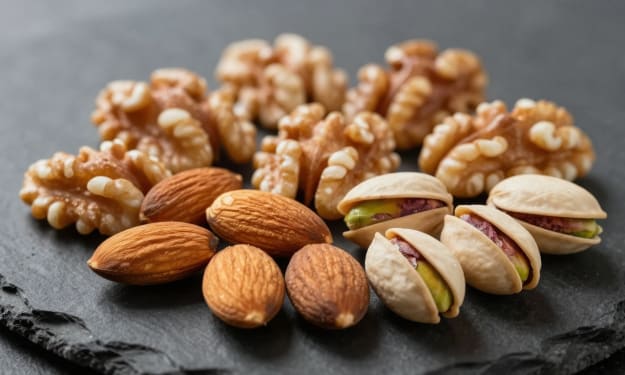
Men who eat nuts tend to have better quality sperm
Peak Potency: How a Daily Nut Habit Elevates Male Sperm Quality Male fertility rates have dropped in recent years. Many couples struggle to conceive, and men often overlook their role in this challenge. Your diet can make a big difference here. Nuts stand out as a simple fix. They pack antioxidants and healthy fats that support better sperm quality. Think of them as fuel for your reproductive system. Studies show men who eat nuts regularly see real gains in sperm health. If you're planning a family or just want peak vitality, adding nuts could be your smart move.
By Story silver book 4 days ago in Families
Autonomy Is The Real Privilege
Good morning, freedom-seekers! Today we’re gonna be looking at autonomy. A strange word, I know; one many would probably look at blankly and run away from on sight. We’re gonna figure out what it actually means, consider how it’s achieved, and decipher just how deeply most of us are tangled up in dependence without realising it.
By That ‘Freedom’ Guya day ago in Humans


Comments
There are no comments for this story
Be the first to respond and start the conversation.