
My Mother’s Password Was Always My Name
It took me years to realize the digital breadcrumb trail she left for me.

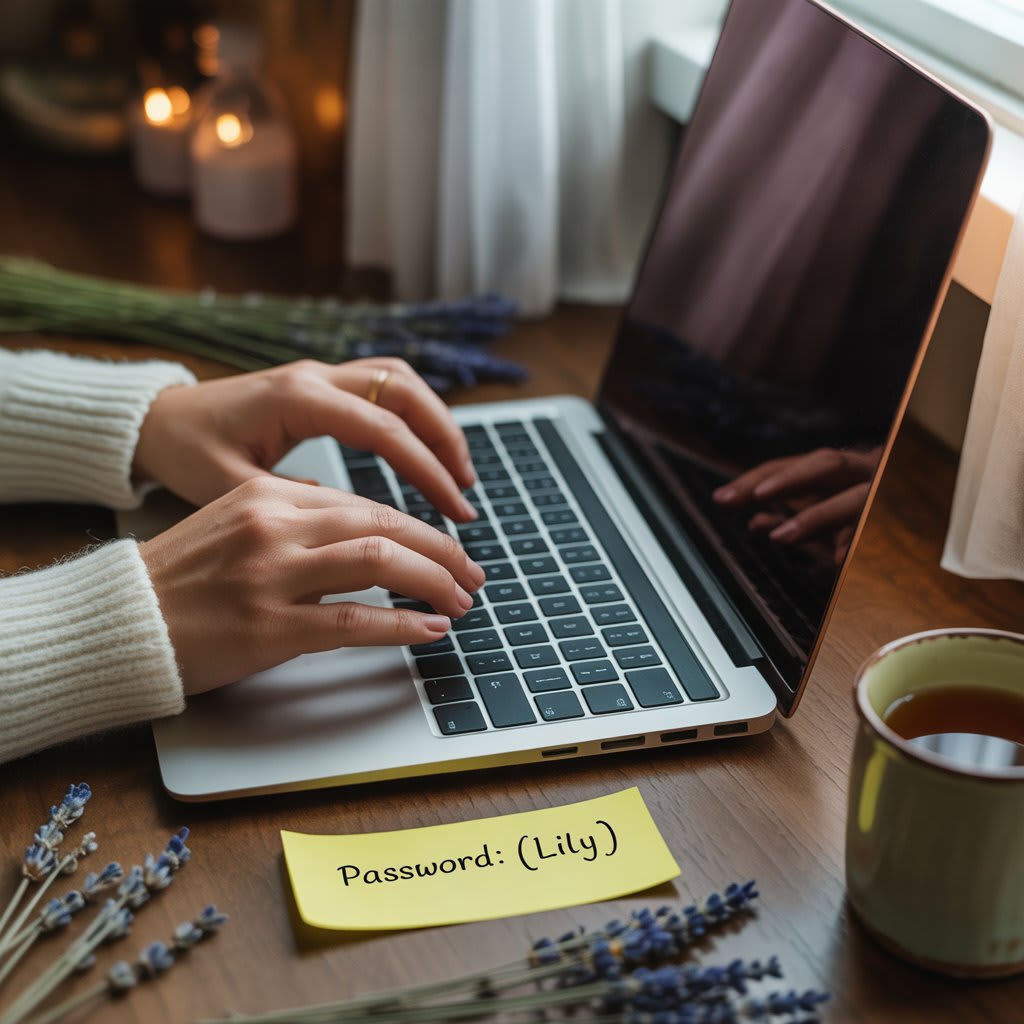
When I was 14, I helped my mother set up her first email account. She wasn’t tech-savvy, but she wanted to learn so she could stay connected — to my school, our relatives, and maybe, deep down, to me. When the time came to choose a password, she turned to me and asked, “Can I use your name?”
I laughed. “That’s not very secure, Mom.”
She smiled and typed my name anyway, adding a few numbers to make it work. “You’re my safest place,” she said quietly.
Back then, I didn’t think much of it. I was too busy being a teenager — brushing off her hugs, rolling my eyes at her silly jokes, and constantly feeling like she was invading my space. She asked too many questions. She worried too much. She cared too loudly.
Over the years, her accounts multiplied. Gmail, Facebook, online shopping sites, even streaming platforms. Every time she forgot a password, she’d call me. And every time I helped her reset it, she’d grin sheepishly and ask, “Can I use your name again?” I’d groan. “Mom, use something stronger. Add a symbol. Something only you would remember.”
But she’d always go back to my name.
When I moved away for university, our calls became less frequent. She didn’t want to disturb me, she said. I told myself she was just giving me space, and I was too focused on assignments, friends, and deadlines to notice the change in her tone, her memory, her pauses on the phone.
Then, one day, she called and said, “What’s your name again, sweetheart?”
I froze. I laughed nervously, thinking she was joking.
But she wasn’t.
A few doctor visits later, the diagnosis came: early-onset Alzheimer’s.
The world shifted beneath my feet.
I moved back home. I needed to be there — not just out of duty, but because I realized I didn’t want to miss even one more day with her. I found sticky notes all over the house: reminders to brush her teeth, feed the cat, take her pills. Notes with names and faces. My name, written in different handwriting styles, pinned to the fridge, stuck on her mirror.
She was trying so hard to hold on.
One afternoon, I needed to log into her laptop. I clicked “Forgot Password,” ready to recover it through her phone.
But then I stopped and typed my name.
The screen unlocked instantly.
I stared at the monitor for a moment, tears welling up. Even as her memory slipped through her fingers, she had kept me as her anchor — her digital lifeline. My name was still her safe word.
Inside her documents folder, I found a file titled “For You.”
I opened it, expecting maybe a list of grocery items or saved passwords. But it was a letter. To me.
“If one day I forget your name, know that I never forgot who you are to me.
You are my heart, my reason, my best decision.
Every password I’ve ever made was your name — because if I ever got lost in this world or in my own mind, I wanted your name to bring me back home.”
I couldn’t hold the tears anymore.
There it was — her love, captured not in grand gestures or expensive gifts, but in something as simple and overlooked as a password. She had left me a breadcrumb trail, encoded in every login and every reset. A legacy only I would understand.
Now, every time she looks at me, sometimes she remembers. Sometimes she doesn't. Sometimes she asks, “Who are you?” And sometimes, she smiles faintly and says, “You feel like someone important.”
But occasionally, on the best days, I’ll walk into her room and say, “Hi, Mom.”
She’ll blink, study my face, and whisper with a crooked smile, “My password.”
And that’s enough.
Because in that moment, I know: a part of her still remembers me — not with her mind, but with her soul.
About the Creator
Musawir Shah
Each story by Musawir Shah blends emotion and meaning—long-lost reunions, hidden truths, or personal rediscovery. His work invites readers into worlds of love, healing, and hope—where even the smallest moments can change everything.
Keep reading
More stories from Musawir Shah and writers in Families and other communities.
My Father’s Voice Inside the Broken Radio
The old radio had been sitting in our attic for years—dusty, broken, and forgotten. It belonged to my father, who passed away when I was only twelve. I remember how he used to tune in every evening, smiling as the soft crackle of old jazz filled the room. After he died, the radio went silent. So did our home.
By Musawir Shah6 months ago in Families
Wise~Guys
— Look Behind what's in Front of You ~ Make Good Choices — Hey, So how you Doin'..! Made~Men — Mobster Movies romanticise a distinctive, elegant appearance, impeccable attire style, along with the 'Families' expressive lingo. Making their 'Bones' gave them Panache — with vintage fedoras, tailored pin-striped suits, mirror-polished wing-tip shoes adorned with tassels; with their 'Gun Moll' gorgeous dates on their arms.
By Jay Kantor20 days ago in Families



Comments
There are no comments for this story
Be the first to respond and start the conversation.