
What Is the Workflow of Hospital Management Software?
Hospital Management System
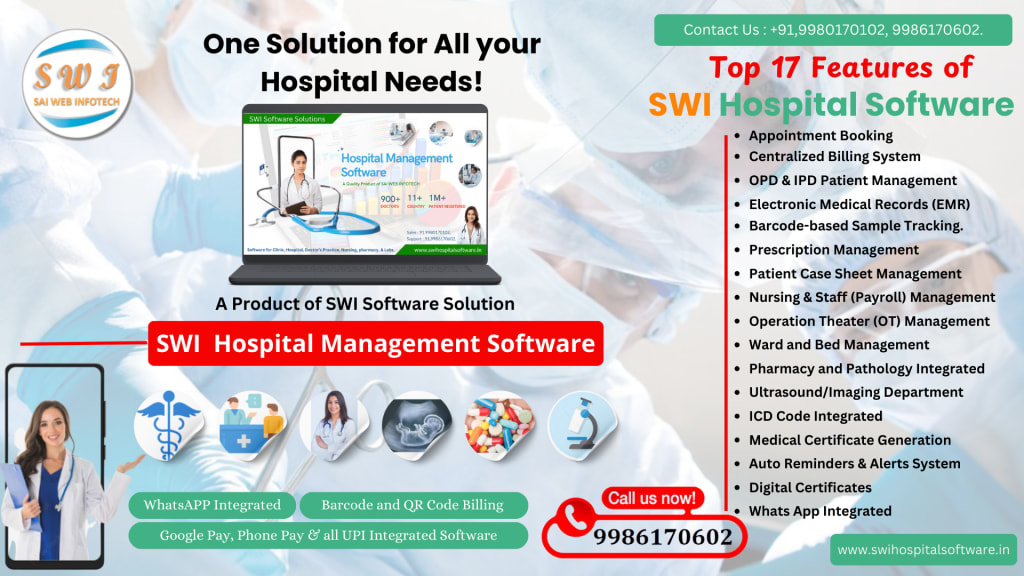
In today's fast-paced world, the healthcare industry is continuously evolving, with a focus on improving patient care, reducing costs, and increasing operational efficiency. One of the most significant advancements in this transformation is the implementation of a Hospital Management System (HMS). A robust and efficient HMS serves as a backbone for modern healthcare organizations, streamlining processes, and enabling healthcare providers to deliver superior care. In this article, we will explore the importance of a Hospital Management System, how it works, and its benefits to both healthcare providers and patients.
What is a Hospital Management System (HMS)?
A Hospital Management System (HMS) is a comprehensive software solution designed to manage and automate a wide range of hospital operations. From patient registration and appointment scheduling to billing, inventory management, and staff coordination, HMS integrates all aspects of hospital management into a single platform. This centralized system facilitates seamless communication, enhances data accuracy, and improves workflow efficiency.
An effective Hospital Management System is designed to cater to both small clinics and large multi-specialty hospitals, offering scalability and flexibility. It helps healthcare professionals streamline administrative tasks, reduce manual errors, and focus more on patient care.
Key Features of a Hospital Management System
Patient Registration and Management: One of the first steps in any healthcare service is patient registration. An HMS simplifies this process by allowing healthcare providers to store and manage patient information digitally. This feature enables quick access to medical histories, treatment plans, and records, which are crucial for informed decision-making.
Appointment Scheduling: Managing patient appointments can be a logistical challenge, particularly in large hospitals. An HMS allows patients to book appointments online, view available time slots, and receive automated reminders. For healthcare providers, this ensures a well-organized schedule, reducing wait times and improving patient satisfaction.
Billing and Payments: Hospital billing can be a complex process involving multiple services, insurance claims, and payments. With an HMS, all billing information is managed efficiently, ensuring transparency, accuracy, and timely payments. The system can also generate invoices and process insurance claims, reducing administrative burden and enhancing financial management.
Inventory Management: Hospitals require a constant supply of medical equipment, pharmaceuticals, and consumables. The inventory management module in an HMS tracks stock levels, manages orders, and even forecasts future needs. This ensures that hospitals never run out of critical supplies and that resources are optimally utilized.
Staff Management: Managing hospital staff, including doctors, nurses, and administrative personnel, can be challenging. HMS solutions include features for scheduling, attendance tracking, and performance management. By automating these tasks, hospitals can improve staff efficiency and maintain a high level of care.
Electronic Health Records (EHR): An HMS integrates Electronic Health Records (EHR) to keep patient data digital, organized, and easily accessible. This ensures that healthcare providers have real-time access to patient histories, diagnoses, treatments, and lab results, making it easier to provide personalized and timely care.
Reporting and Analytics: Data-driven decision-making is crucial in healthcare. A Hospital Management System provides in-depth reports and analytics on hospital performance, patient outcomes, financial status, and more. These insights help healthcare administrators identify areas for improvement, allocate resources efficiently, and make informed decisions.
Benefits of a Hospital Management System
Improved Operational Efficiency: One of the most significant advantages of an HMS is the improvement in operational efficiency. By automating routine tasks such as patient registration, appointment scheduling, and billing, healthcare providers can streamline their workflow. This reduces the risk of human error, cuts down administrative costs, and allows healthcare professionals to focus more on patient care.
Enhanced Patient Care: With all patient data stored in one place and easily accessible, doctors and healthcare providers can deliver more personalized and timely care. The integration of Electronic Health Records (EHR) allows for accurate diagnoses, faster treatment, and better follow-up care.
Cost Reduction: An HMS helps reduce overhead costs by automating processes and improving resource utilization. For example, inventory management features ensure that hospitals don’t overstock on supplies, saving money while preventing stock outs of critical items. Additionally, the billing system ensures that hospitals can quickly process insurance claims and patient payments, reducing the time spent on administrative tasks.
Better Communication and Collaboration: Effective communication between hospital staff is critical for delivering quality care. HMS enables seamless communication between departments, doctors, nurses, and patients. It also provides a centralized platform for sharing patient information, reducing miscommunication and enhancing collaboration among the healthcare team.
Regulatory Compliance: Healthcare facilities are required to comply with numerous regulations, including data privacy laws like HIPAA (in the U.S.). An HMS ensures that all patient data is securely stored and accessed only by authorized personnel, helping hospitals meet regulatory requirements and avoid costly fines.
Scalability: A good Hospital Management System is scalable, meaning it can grow with the hospital. Whether it’s adding new departments, accommodating more patients, or expanding to new locations, an HMS can be easily adapted to meet the changing needs of the healthcare facility.
Conclusion
In the era of digital healthcare, a Hospital Management System is no longer a luxury but a necessity for healthcare institutions aiming to provide high-quality care, enhance operational efficiency, and improve patient satisfaction. By streamlining various administrative and clinical processes, an HMS helps hospitals focus on what truly matters: delivering exceptional patient care. As healthcare continues to evolve, implementing a robust and efficient Hospital Management System will be key to staying ahead in the competitive landscape and meeting the growing demands of patients and healthcare professionals alike.
About the Creator
The Interview That Tested More Than Skills
The interview was scheduled for ten in the morning, but I arrived at the building an hour early. I didn’t want to risk being late, not today. This opportunity meant more than just a job. It felt like a doorway to a future I had been quietly working toward for years. As I sat in the lobby, watching people pass by with confident strides, I realized how small the moment looked from the outside—and how enormous it felt on the inside.
By NAIB REHMAN5 days ago in Education
From Bullion to Numismatic: How to Identify and Grade Modern U.S. Commemorative Coins
For over eight years as a Senior Numismatic Analyst, I've witnessed countless collectors reach a fascinating crossroads. They start with bullion coins—valuable for their weight in gold or silver—but eventually feel drawn to coins with a story. This is where the world of modern U.S. commemorative coins opens up, blending precious metal with historical narrative, artistic beauty, and the intricate craft of numismatic grading. Shifting your focus from pure metal content to a coin's condition, rarity, and design is the journey from an investor to a true collector. This guide will equip you with the knowledge to confidently identify, evaluate, and grade these modern treasures.
By Laura Bennett2 days ago in Education
Self Help: Grifters' Gospel
On Self-Help, Snake Oil, and the Illusion of Change Psychology professionals and students can be imagined on two opposite sides of a line called self-help books: likely a larger group opposes pop-science and step-by-step manuals filled with talk of success, journaling, and not giving a f**k; others love them, but they aren’t many.
By Avocado Nunzella BSc (Psych) -- M.A.P 5 days ago in BookClub




Comments
There are no comments for this story
Be the first to respond and start the conversation.