
From Bullion to Numismatic: How to Identify and Grade Modern U.S. Commemorative Coins
Let's learn how to identify and grade modern us commemorative coins

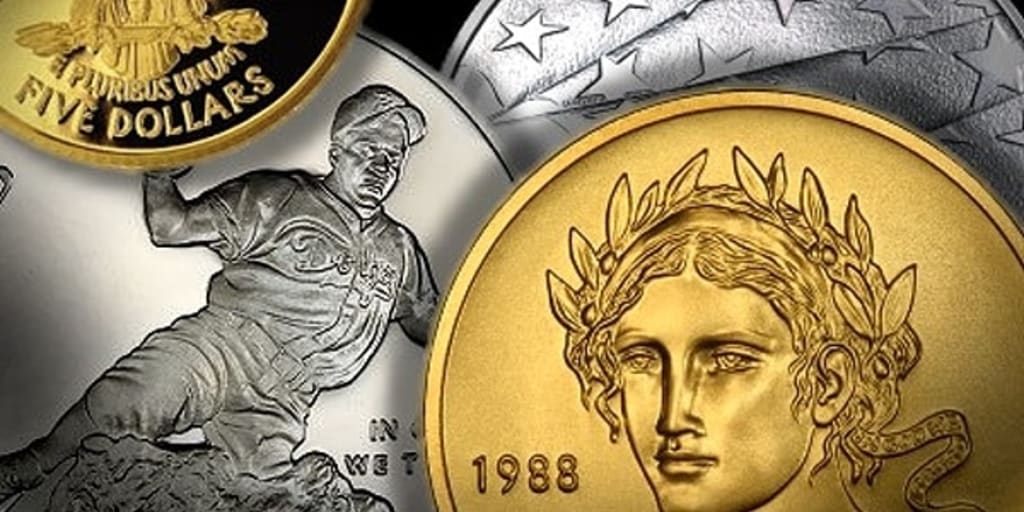
For over eight years as a Senior Numismatic Analyst, I've witnessed countless collectors reach a fascinating crossroads. They start with bullion coins—valuable for their weight in gold or silver—but eventually feel drawn to coins with a story. This is where the world of modern U.S. commemorative coins opens up, blending precious metal with historical narrative, artistic beauty, and the intricate craft of numismatic grading. Shifting your focus from pure metal content to a coin's condition, rarity, and design is the journey from an investor to a true collector. This guide will equip you with the knowledge to confidently identify, evaluate, and grade these modern treasures.
Distinguishing Bullion from Numismatic: A Fundamental Mindshift
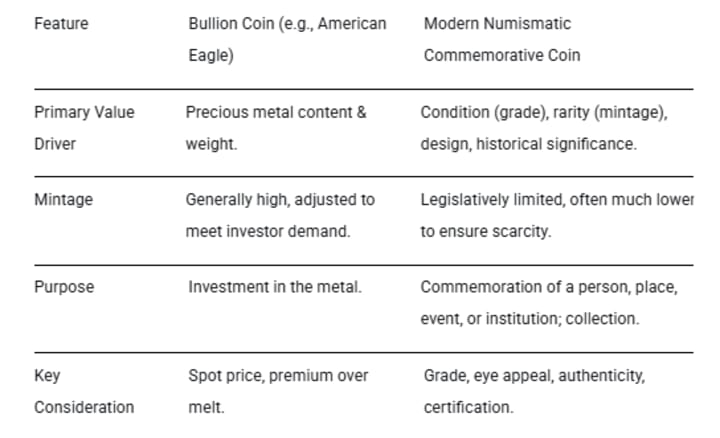
The first step is understanding the core difference between a bullion coin and a numismatic commemorative. A bullion coin, like the American Eagle, derives its primary value from its precious metal content (e.g., one ounce of .999 fine silver). Its price fluctuates closely with the spot market, and while condition matters, it's secondary.
A modern commemorative coin, issued by the U.S. Mint since 1982, carries a face value and is legal tender, but its true worth is numismatic. Its value is a complex equation of limited mintage, historical significance, artistic design, and, most critically, its state of preservation. A pristine specimen can be worth many multiples of its metal value, while a damaged one may trade for little more than bullion.
Identifying Your Modern Commemorative: Key Features to Decode
Modern commemoratives come in various denominations (half dollars, dollars, and even higher) and metals (clad, silver, gold). Identification is your first task.
Theme & Inscriptions: Every commemorative honors a specific subject. Look for inscriptions naming the person (e.g., "George Washington"), event ("1992 Olympic Games"), or institution ("United States Capitol"). The year on the coin is the year of issue, not necessarily the year of the event.
Mint Mark: This small letter indicates where the coin was struck: P (Philadelphia), D (Denver), S (San Francisco), or W (West Point). Mint marks can significantly affect rarity, as production is often divided between facilities.
Finish: Modern commemoratives are primarily issued in two finishes:
Proof (PF): Struck with specially polished dies on polished planchets, resulting in a mirror-like background with frosted, sculpted designs. These are made specifically for collectors.
Uncirculated (MS): Struck using the standard method for circulation coins but handled with care and sold directly to collectors. They lack the proof's mirror finish but should have no wear from circulation.
A key insight from my experience: When you first examine a potential commemorative, ignore the design's beauty for a moment. Focus solely on the highest points of the relief—the cheek of a portrait, the crest of an eagle's wing. Any sign of rubbing, dullness, or color change on these points is the first and most telling sign of wear, instantly moving the coin out of the top grading tiers.
The Art and Science of Grading: The Sheldon Scale Explained
Grading is the systematic assessment of a coin's condition. The universal language of grading is the Sheldon Scale, a 1-to-70 numerical system where 70 represents perfection. For modern commemoratives, which are typically collected in pristine states, you will almost exclusively deal with grades from 60 (Mint State/Uncirculated) to 70 (Perfect).
Understanding the Tiers for Modern Commemoratives:
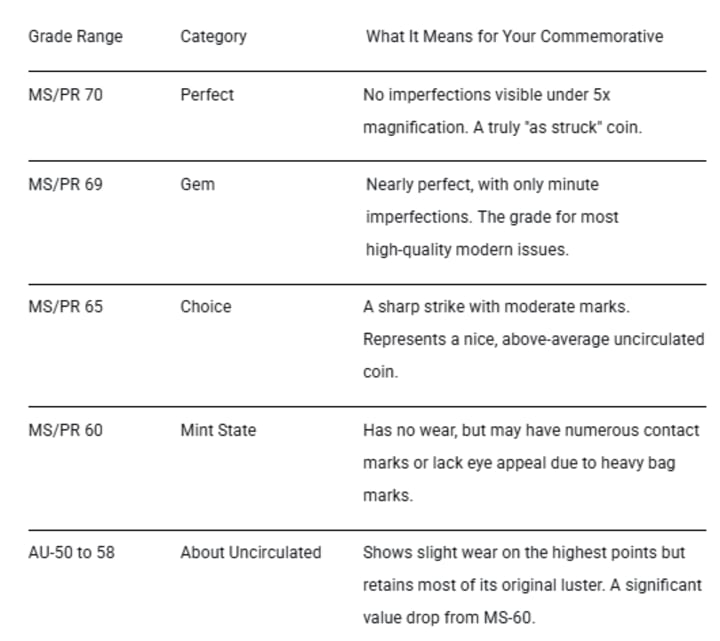
Critical grading factors include strike quality (are all design details sharp?), surface preservation (scratches, hairlines, spots), luster (the coin's original, unbroken "skin" of light reflection), and eye appeal (the subjective "wow" factor).
A Step-by-Step Guide to Personal Examination
Before relying on any third-party grade, develop your own examination skills.
Use Proper Lighting: Never use harsh, direct light. A halogen lamp or a high-intensity pinpoint source is ideal, as it rakes across the surface, revealing hairlines, bag marks, and subtle wear that floodlights hide.
Check for Wear: Under good light, slowly tilt the coin. Examine the highest points for any break in luster or texture. On a silver coin, wear shows as a dull gray; on gold, a dull, dark gold.
Inspect the Fields: The flat, open areas (fields) are canvases for imperfections. Look for hairlines (especially critical on proof coins), deep scratches, or carbon spots.
Evaluate Eye Appeal: Do you find the coin attractive? Is the toning (if present) even and pleasing, or blotchy and distracting? Are any marks in prominent "grade-sensitive" areas like a portrait's cheek? A coin can be technically graded MS-65 but have poor eye appeal, affecting its marketability.
Strategic Integration: For the serious collector, the final step for any valuable modern commemorative is professional certification. Services like the Numismatic Guaranty Company (NGC) and the Professional Coin Grading Service (PCGS) provide expert grading, encapsulate the coin in a tamper-evident holder (a "slab"), and guarantee its authenticity and grade. This is the industry standard for establishing value and liquidity. For a quick reference before a deep dive, consulting an online coin identifier can provide a solid starting point for mintage figures and design details.
Avoiding Common Pitfalls and Building a Focused Collection
The modern commemorative market is vast. Avoid buying randomly. Instead, choose a focus: a specific series (e.g., all National Park quarters), a metal type, or a theme that resonates with you. This creates a more meaningful and manageable collection.
Be wary of paying excessive issue premiums directly from the Mint for new releases, as many modern coins trade for less on the secondary market soon after. Most importantly, preserve your coins correctly. Never handle them with bare fingers; use cotton gloves. Store them in archival-quality holders, away from PVC-based plastics which can cause irreversible chemical damage.
As you grow your collection, remember the wisdom of numismatic author Scott Travers: "Knowledge is more than power; in the case of rare coins, it also can mean enormous profit". Your educated eye is your most valuable asset, transforming you from a casual buyer into a discerning collector who can truly appreciate the artistry and history in each piece.
FAQ: Your Questions on Modern Commemoratives Answered
How important is professional grading (slabbing) for modern commemoratives?
For any coin you value over $100 or plan to eventually sell, professional grading is highly recommended. It provides an objective grade, guarantees authenticity, and makes the coin more liquid and valuable in the marketplace. For less valuable coins in original Mint packaging, it may not be cost-effective.
What's the difference between a "Proof" (PR) and a "Specimen" (SP) strike?
A Proof is the highest quality strike, with deeply mirrored fields and frosted devices. A Specimen (SP) is a hybrid—often a coin struck with a special finish for a mint set that is sharper than a standard uncirculated coin but doesn't fully meet the proof standard.
Where is the best place to research mintage figures and current values?
The U.S. Mint's website publishes official mintage data. For values, refer to the "Red Book" (A Guide Book of United States Coins) for a baseline, but always check recent auction results on sites like Heritage Auctions to see actual market prices.
I hope this guide serves as a comprehensive resource for your journey into modern commemoratives. If you have a specific series or coin you'd like to explore in more detail, feel free to ask
About the Creator
Laura Bennett
Numismatist and data science expert passionate about uncovering the stories behind historical coins through analytics. Bachelor’s degree in Archaeology and a Master’s in Data Science from Harvard University. https://coin-identifier.com/
Keep reading
More stories from Laura Bennett and writers in Education and other communities.
Buffalo Nickels: How to Decipher Worn Dates and Identify Valuable Full Horn Specimens
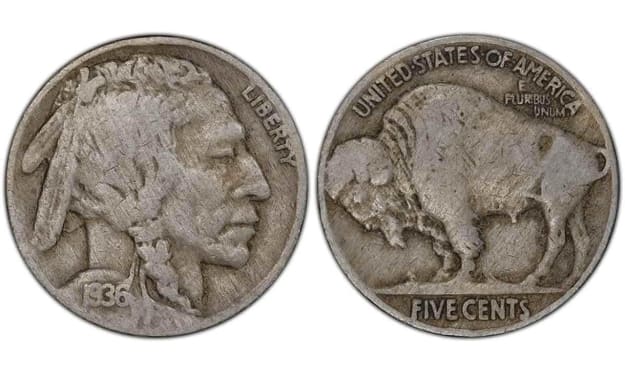
For over eight years as a Senior Numismatic Analyst, I have seen no coin humble a new collector quite like the Buffalo Nickel. Minted from 1913 to 1938, its design by James Earle Fraser is a masterpiece of American art—but also one of the most notoriously problematic for identification. The date, positioned on a raised area of the design, wears away with astonishing speed in circulation. This has created a vast sea of "dateless" Buffalo Nickels, hiding a few key-date treasures within. Furthermore, the high points of the design, particularly the bison's horn, serve as the ultimate test of a coin's condition and value. This guide will give you the techniques to read those worn dates and teach you why finding a "Full Horn" specimen is a collector's triumph.
By Laura Bennetta day ago in Education
Built to Last: How Smart Leaders Design Businesses for Long-Term Sustainability
This understanding also encourages leaders to examine the relationship between profitability, responsibility, and long-term value creation. As they study emerging trends, they identify risks linked to resource depletion, regulatory changes, and shifting societal priorities. This recognition prompts them to act early and make decisions that balance economic performance with sustainable impact. As leaders adapt their vision to reflect these realities, they position their companies for steady growth in an unpredictable world.
By Alexander Schiftera day ago in Education



Comments
There are no comments for this story
Be the first to respond and start the conversation.