
What is Project Quality Management?
By focusing on Project Quality Management, organizations can improve customer satisfaction, reduce rework and defects, enhance project performance, and achieve successful project outcomes.
Project Quality Management plays a crucial role in ensuring the overall success of a project. By implementing effective quality management processes, organizations can minimize risks, enhance customer satisfaction, and deliver high-quality outcomes that meet stakeholder expectations.
To achieve project quality, it is essential to establish a comprehensive quality management plan early in the project lifecycle. This plan outlines the specific quality objectives, criteria, and measures that will be used to assess the project's success. It also identifies the roles and responsibilities of project team members in managing and ensuring quality.
Quality assurance activities focus on proactively preventing quality issues by implementing robust processes, methodologies, and standards. This involves conducting regular reviews, audits, and inspections to identify any deviations or non-compliance with established quality standards. By addressing potential issues early, organizations can avoid costly rework and maintain project progress.
Quality control activities involve ongoing monitoring and verification to ensure that project deliverables and outcomes meet the defined quality standards. This includes conducting tests, inspections, and measurements to identify and rectify any defects or deviations. Continuous monitoring enables project teams to take corrective actions promptly and make necessary adjustments to maintain quality.
A key aspect of Project Quality Management is fostering a culture of continuous improvement. By promoting a learning mindset, project teams can collect feedback, capture lessons learned, and implement corrective actions to enhance project processes and outcomes. This iterative approach allows for the identification of recurring issues, bottlenecks, and areas for improvement, leading to increased project efficiency and effectiveness over time.
It's important to note that Project Quality Management is not a one-time activity but a continuous process throughout the project lifecycle. Regular communication, collaboration, and stakeholder engagement are crucial to ensuring that quality objectives are met and that any changes or deviations are addressed in a timely manner.
By prioritizing Project Quality Management, organizations can gain a competitive edge by consistently delivering high-quality projects. Quality outcomes not only satisfy customers and stakeholders but also contribute to organizational reputation, customer loyalty, and overall project success.
Project Quality Management is a discipline within project management that focuses on ensuring that a project meets the desired quality standards and requirements. It involves the processes, techniques, and activities that are employed to plan, control, and improve the quality of project deliverables and outcomes. By obtaining PMP Certification, you can advance your career as PMP. With this course, you can demonstrate your expertise in extensive knowledge of Project Management concepts highlighted in the PMBOK Guide - 7th Edition which is aligned with the latest PMP Exam Content Outline, and many more critical concepts among others.
The main objectives of Project Quality Management include:
1. Defining Quality Standards: This involves establishing clear and measurable quality standards and requirements for project deliverables, products, and services. It ensures that all stakeholders have a shared understanding of the expected level of quality.
2. Quality Planning: This process involves determining the quality objectives, identifying the quality criteria, and developing a plan to achieve the desired level of quality. It includes defining quality assurance activities, quality control measures, and quality metrics that will be used to assess the project's progress and outcomes.
3. Quality Assurance: Quality assurance activities focus on preventing defects or errors from occurring by implementing processes, methodologies, and standards. It involves conducting reviews, audits, and inspections to ensure compliance with established quality standards and requirements.
4. Quality Control: Quality control activities involve monitoring and verifying that project deliverables meet the defined quality standards. This includes conducting inspections, tests, and measurements to identify and rectify any deviations or non-conformances.
5. Continuous Improvement: Project Quality Management promotes a culture of continuous improvement by encouraging lessons learned, feedback loops, and corrective actions. It aims to identify areas for improvement, address quality issues, and enhance processes, practices, and outcomes.
Project Quality Management is typically implemented throughout the entire project lifecycle, from initiation to closure. It involves collaboration among project stakeholders, including the project manager, team members, customers, and other relevant parties. Effective communication and coordination are critical to ensure that quality requirements are clearly understood and met.
Various tools and techniques can be employed in Project Quality Management, such as quality checklists, process analysis, statistical sampling, quality control charts, and quality audits. Additionally, industry-specific quality standards and frameworks, such as ISO 9001, may be applicable and provide guidance for managing project quality.
By focusing on Project Quality Management, organizations can improve customer satisfaction, reduce rework and defects, enhance project performance, and achieve successful project outcomes. It emphasizes the importance of delivering high-quality products and services that meet or exceed stakeholder expectations.
About the Creator
The Unique Case of Alma Mater TV
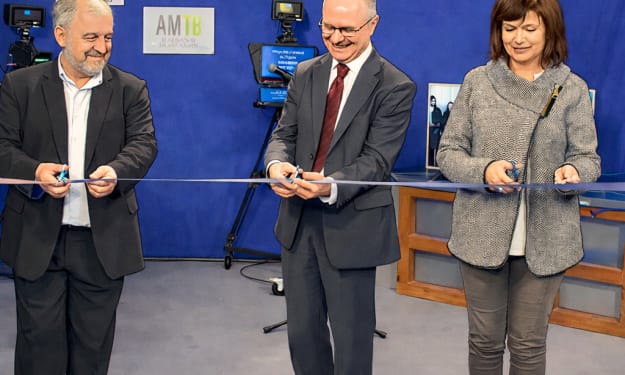
(A Review of Charmaine Voigt's Dissertation on Practical Media Training) Abstract This review examines the Bulgarian case study of Alma Mater TV as discussed in Charmaine Voigt's doctoral dissertation College Television: Practical Media Training in US and German Higher Education. While Voigt's work focuses primarily on Anglo-American and German contexts, the Bulgarian example stands out as an exceptional and largely unmatched model of student television in Europe. Alma Mater TV, based at the Faculty of Journalism and Mass Communication at Sofia University 'St. Kliment Ohridski', functioned not merely as a training platform but as a fully operational public-facing television project. Students produced and aired original programmes on Bulgaria's largest national broadcasters without censorship or editorial interference, while simultaneously participating in the creation of a European student television network. This review argues that Alma Mater TV represented a globally unique pedagogical and institutional experiment whose decline resulted not from structural failure but from a lack of strategic vision at the university leadership level. Particular attention is paid to the decisive roles of Professor Svetla Bozhilova and Professor Peter Ayolov in establishing and sustaining this model.
By Peter Ayolova day ago in Education
Why Understanding the Problem Matters More Than the Stack
Modern software development places extraordinary emphasis on tools. New frameworks promise productivity, new languages promise safety, new architectures promise scale. Engineers debate stacks with near-ideological intensity. Yet many of the most expensive failures in software have nothing to do with poor technology choices. They stem from something more fundamental: a shallow understanding of the problem being solved.
By Gustavo Woltmanna day ago in Education



Comments
There are no comments for this story
Be the first to respond and start the conversation.