Gustavo Woltmann
Bio
I am Gustavo Woltmann, artificial intelligence programmer from UK.
Stories (29)
Filter by community
The Role of Intuition in Expert Programming. AI-Generated.
In discussions of software engineering, expertise is often framed in terms of explicit knowledge: algorithms, data structures, distributed systems theory, or design patterns. While these are necessary foundations, they do not fully explain high-level performance. Expert programmers routinely make correct architectural, debugging, and design decisions with minimal conscious deliberation. This phenomenon is best understood as intuition—rapid, experience-driven pattern recognition operating beneath deliberate analytical reasoning.
By Gustavo Woltmanna day ago in Education
Difference Between "Working" and "Correct" Software. AI-Generated.
Software is often described as “working” when it executes without crashing, produces output, or satisfies a visible user flow. In practice, this definition is minimal. A system can respond to inputs, pass basic tests, and even serve customers while still being fundamentally flawed. “Working” software is operational, not necessarily sound. It reflects the absence of immediate failure rather than the presence of correctness.
By Gustavo Woltmann19 days ago in Education
Why Understanding the Problem Matters More Than the Stack. AI-Generated.
Modern software development places extraordinary emphasis on tools. New frameworks promise productivity, new languages promise safety, new architectures promise scale. Engineers debate stacks with near-ideological intensity. Yet many of the most expensive failures in software have nothing to do with poor technology choices. They stem from something more fundamental: a shallow understanding of the problem being solved.
By Gustavo Woltmannabout a month ago in Education
Why Great Developers Think Like Scientists. AI-Generated.
To inexperienced developers, debugging often feels like a frustrating phase that interrupts “real” work. To great developers, it is the work. Debugging is less about fixing errors and more about understanding systems. It requires curiosity, discipline, and patience—the same traits that define good scientific thinking. The best developers do not guess; they investigate.
By Gustavo Woltmann2 months ago in Education
What Code Style Reveals About Personality. AI-Generated.
Programming is often framed as a purely technical discipline, governed by logic, efficiency, and correctness. Yet anyone who has read enough code knows that software is also a form of writing. Beyond functionality, code carries tone, structure, and intent—subtle signals that reflect how a programmer thinks, communicates, and relates to others. In this sense, code style can reveal as much about personality as prose.
By Gustavo Woltmann2 months ago in Humor
Why Documentation Is a Leadership Skill, Not a Chore. AI-Generated.
In many organizations, documentation is treated like leftover work. Something to be done “when there’s time.” Something junior developers are asked to handle. Something postponed until after the real work ships.
By Gustavo Woltmann2 months ago in Writers
Low-Code Doesn't Mean Low-Skill. AI-Generated.
For decades, software development carried an aura of exclusivity—an elite discipline reserved for those who mastered complex programming languages, algorithms, and architectural patterns. To build digital products, businesses relied on teams of deeply specialized engineers who wrote code line by line, meticulously crafting systems from the ground up. But over the past few years, a major shift has taken hold: the rise of low-code and no-code platforms.
By Gustavo Woltmann3 months ago in Writers
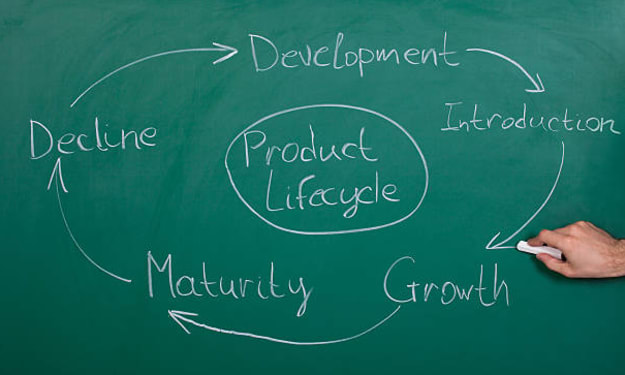
Lifecycle of a Feature. AI-Generated.
Most users only see the surface of a software feature—the button, the animation, the interface that “just works.” But behind every feature lies a long, winding, and often chaotic journey. What starts as a simple idea eventually becomes part of a product’s story, evolves through countless revisions, and sometimes outlives the people who built it. Features aren’t static objects. They have life cycles, personalities, and even histories.
By Gustavo Woltmann3 months ago in Lifehack
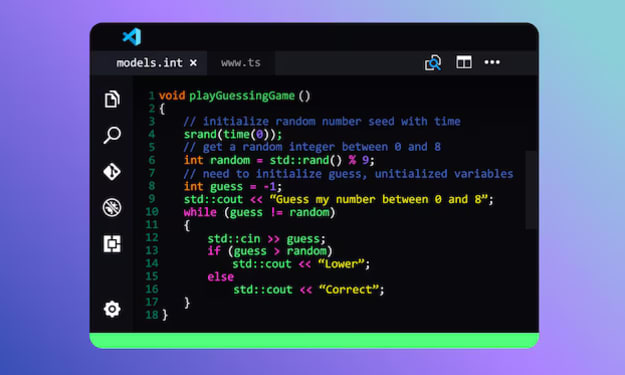
How to Design Code That Explains Itself. AI-Generated.
Writing good code isn’t just about getting it to work — it’s about making it understandable. The best code doesn’t need long comments or explanations; it reveals its purpose through structure, naming, and simplicity. “Self-explanatory code” is not a luxury. It’s a habit that saves time, reduces bugs, and makes collaboration easier.
By Gustavo Woltmann4 months ago in Motivation
Decision Fatigue in Software Development. AI-Generated.
In software development, every day is a series of decisions—what framework to use, which design pattern fits best, how to name a function, or when to refactor code. These choices, while seemingly small, accumulate over time, leading to what psychologists call decision fatigue. Developers often underestimate how mentally taxing constant decision-making can be, and how it subtly erodes productivity, creativity, and code quality.
By Gustavo Woltmann4 months ago in Poets
Will Visual Programming Ever Replace Text-Based Code?. AI-Generated.
For decades, programmers have written lines of text—symbols, commands, and structures that make machines come alive. Yet, as technology evolves, a new paradigm has emerged: visual programming. These are tools and environments that let developers build applications by connecting blocks, dragging components, and using flow diagrams instead of typing commands.
By Gustavo Woltmann4 months ago in Education
The Rise of Code as Infrastructure. AI-Generated.
Over the past decade, software development has undergone a fundamental transformation—not just in how applications are built, but in how the very systems that run them are managed. The rise of Infrastructure as Code (IaC), GitOps, and related practices has blurred the once-clear line between software development and infrastructure management.
By Gustavo Woltmann5 months ago in Writers