
What is high-functioning anxiety, and how do individuals identify it and cope with it effectively?
high-functioning anxiety
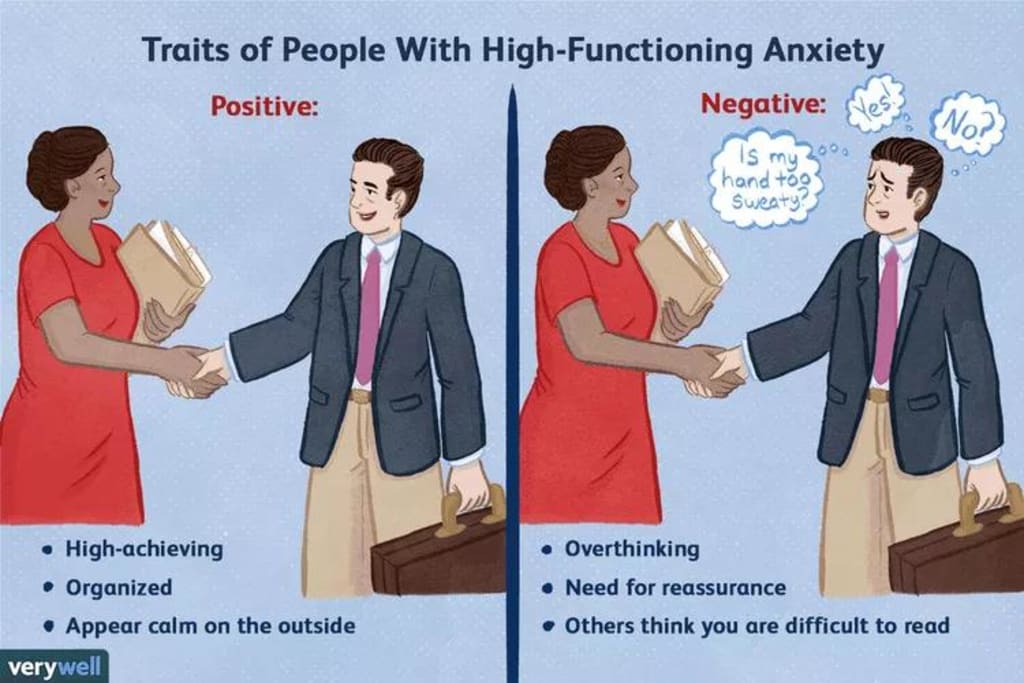
In our culture of achievement, individuals who appear to be on top of things, productive, and cool are greatly admired and complimented. But behind the high degree of success, numerous individuals are struggling silently with so-called high-functioning anxiety—a condition more of inner suffering behind a mask of competence.
Unlike generalized anxiety disorder (GAD), in which overt impairment in daily function is the rule, high-functioning anxiety does not always show as anxiety to others. Rather, it might look like overachievement, ambition, or being "the responsible one." But inwardly, it is draining mentally and painful emotionally.
This in-depth overview sheds light on what high-functioning anxiety is, how one can detect its subtle warning signs, and most importantly, how one can manage it with compassion and active mental health management.
Educating Yourself about High-Functioning Anxiety
High-functioning anxiety is not a clinical DSM-5 diagnosis, but it's a widespread phenomenon among mental health professionals and victims.
It is worry that is buried beneath the surface of an apparently successful, capable, and well-functioning individual. They may meet or exceed expectations at work and in life but accomplish this as they battle persistent worry, fear of failure, brooding, and self-doubt.
Because their anxiety does not seem to affect performance—and sometimes even improves it—they oftentimes do not get treatment until they reach a breaking point, such as burnout or a panic attack.
Common Traits and Symptoms of High-Functioning Anxiety
While every individual's experience is unique, these are the normal emotional, behavioral, cognitive, and physical symptoms of high-functioning anxiety:
Emotional Symptoms
Chronic worry or fear, even when everything is going well
Fear of disappointing others
Feeling "never good enough," in spite of achievements
Guilt over taking time off or saying no
Constant self-criticism or perfectionism
Cognitive Symptoms
Racing thoughts or excessive overthinking about decisions
Struggling to relax or "shut off" the mind
Catastrophic thinking (assuming worst-case outcome)
Mental exhaustion due to internal pressure
Behavioral Symptoms
Overcommitting and inability to set boundaries
Procrastination followed by frantic productivity (last-minute urgency)
People-pleasing or saying "yes" to maintain peace
Constant checking, rechecking, or over-preparation
Using productivity as a coping technique
Physical Symptoms
Muscle tightness, jaw tension
Fatigue or insomnia
Stomach issues (nausea, IBS)
Headaches
Shallow breathing or tight chest
Ironically, high-functioning anxiety people actually appear calm, serene, and composed. This discrepancy between inner unrest and outer serenity makes it particularly hard to notice—and easy to ignore.
Causes of High-Functioning Anxiety
There are some potential reasons for high-functioning anxiety:
Perfectionistic Upbringing: Homes that prioritize achievement over emotional well-being may internalize the need to always succeed.
Childhood Anxiety: Untreated or unsupported childhood anxiety may develop into functional overachievement patterns.
Personality Traits: Highly conscientious, detail-oriented, and empathetic personalities may be more at risk.
Cultural or Social Pressures: Cultures that promote "hustle culture" and productivity can socialize anxiety behaviors.
Unresolved Trauma or Fear of Failure: Fear serves as a motivational stimulus that propels action but also perpetuates relapsing stress.
Knowledge of these roots is not for assigning blame but for illuminating why worry can take hold in such insidious ways.
Why High-Functioning Anxiety Often Goes Unnoticed
Because it is masked by ability and accomplishment, high-functioning anxiety is frequently overlooked by others—and even by the very people experiencing it. Praise of their work reinforces the anxious patterns. For example:
Working late in the office is seen as dedication, not avoidance of anxiety
Over-preparation is encouraged, not considered perfectionism out of fear
Putting others first is called kindness, not fear of rejection or conflict
As a result, high-functioning anxious people can be made to feel invisible and alone. They might fear being "found out" or judged for their distress, perpetuating isolation and self-doubt.
Practical Strategies to Manage High-Functioning Anxiety
Identifying high-functioning anxiety is the first step toward living with it successfully. Following are several achievable steps in reducing anxiety and reclaiming emotional balance:
1. Name and Recognize the Anxiety
Labeling what you're going through is supportive and strength-giving. Many people with high-functioning anxiety minimize their pain for fear that it's "not that bad" or "just who I am." Acknowledging anxiety creates space for healing.
2. Break the Perfectionism Cycle
Perfectionism generates fear. Practice moving away from perfection towards progress. This may be done by:
Having realistic expectations
Accepting mistakes as a marker of growth
Celebrating effort over outcome
Moving to merciful inner talk instead of self-criticism
Remember: done is often better than perfect.
3. Set Boundaries—And Keep Them
Practice saying "no" without shame. Boundaries are about protecting your energy and mental space. Start small by setting boundaries on work time, social engagements, or digital communication. Each boundary is an exercise in self-respect and sustainability.
4. Mindfulness and Breathwork
Mindfulness helps ground you in the present moment and calm the anxious brain. Simple practices include:
Regular 5–10 minute meditations
Box breathing (inhale–hold–exhale–hold for 4 counts each)
Body scans to release tension
Mindful awareness can break the pattern of overthinking and clear the mind.
5. Challenge Anxious Thoughts
Use cognitive-behavioral techniques to challenge and reframe distorted thinking. Ask yourself:
What's the evidence for this fear?
Is there an alternative way of viewing this?
How would I respond to a friend if they said this to you?
Writing them down makes the worry real and relieves mental weight.
6. Build a Balanced Schedule
Many high-capacity individuals overwork at the expense of rest. Establish balance with:
Scheduled downtime
Non-productivity based hobbies
Time to detox from screens
A consistent sleeping and eating schedule
Your mind and body need rest to function at their best.
7. Seek Professional Assistance
A trained therapist—particularly one who is versed in treating high-functioning anxiety—can help access underlying fears, improve coping, and rework inner stories driving overachievement.
Cognitive behavioral therapy (CBT), Acceptance and Commitment Therapy (ACT), and psychodynamic therapy are some of the therapies that can be particularly helpful.
8. Redefine Success and Self-Worth
Anxiety causes self-worth to get pinned to performance. Begin to break this by exploring:
Who am I apart from what I achieve?
What do I care about, not just pleasing others?
Can I place as much value on rest, play, and relationships as I do on work?
Basing self-worth on inner values, not external accomplishments, liberates and protects against anxiety.
Long-Term Healing: It's Not About Doing More, But Being More
Ironically, the cure for high-functioning anxiety isn't to "do" more—it's often to do less, but intentionally. Slowing down, resting, and honoring your feelings are not acts of weakness. They're acts of bravery.
Healing from high-functioning anxiety involves shifting from survival mode to being present, doing to being, and external validation to internal peace.
Final Thoughts: You Deserve Peace, Not Just Productivity
If you see yourself here—if your mind is racing while your face is smiling, if your success hides your weariness—know that you are not alone. High-functioning anxiety is real. And it's okay to want more than success. You deserve peacefulness, joy, connection, and rest.
Getting help is not weakness—it's a brave, beautiful step toward wholeness.
For professional mental health counseling and compassionate therapy, visit:
https://www.delhimindclinic.com/
https://www.craftcmsdeveloper.in/
It's all right to reach out to me if you want your Craft site altered or just discuss your Craft project. You can enjoy a free consultation with me!
About the Creator
Keep reading
More stories from Naveen Garg and writers in Education and other communities.
How does trauma affect mental health, and how is successful healing accomplished from it?
How does trauma affect mental health, and how is successful healing accomplished from it? One of the most deep and complex influences on mental health is trauma. Whether a single traumatic incident or an extended series of experiencing abuse, neglect, or threat, trauma inscribes itself deeply in the mind and body. It has the power to alter how a person learns to navigate the world, engage with others, and view themselves. Understanding trauma's effects—and how to heal from it—is essential for anyone who has endured suffering or is supporting a loved one through the recovery process.
By Naveen Garg6 months ago in Education
Co-Parenting in the Digital Age
Co-Parenting in the Digital Age: Shared Circles, Alerts, and Neutral Tech Tools Modern co-parenting requires a modern toolkit. Beyond shared calendars, technology offers powerful ways to foster cooperation, ensure consistency, and prioritize your child's safety. The right digital approach can reduce conflict and create a more stable environment for everyone.
By Olivia Martinez2 days ago in Education
10 Unconventional but Highly Effective Ways to Learn French Faster
Most people who want to learn French all start in the same place. Grammar books, rules, written exercises, conjugation tables, structured courses, and the reassuring feeling of “making progress.” Yet after months, sometimes years, many are still unable to hold a real conversation. They hesitate, translate in their head, search for words, lose confidence, and eventually conclude that French is simply too complicated for them.
By Bubble Chill Media about 19 hours ago in Education
Do You have a Support Network?
Life is harder when you’re on your own. Human beings are social creatures, and we usually feel better when we have support from a strong social network around us. For most people, it’s our families that hold us together like glue.
By Elizabeth Woodsabout 19 hours ago in Psyche


Comments
There are no comments for this story
Be the first to respond and start the conversation.