
What if you spent 5 seconds on uranus
Exploring the Icy Oddball of Our Solar System – From Diamond Rain to Toxic Gases

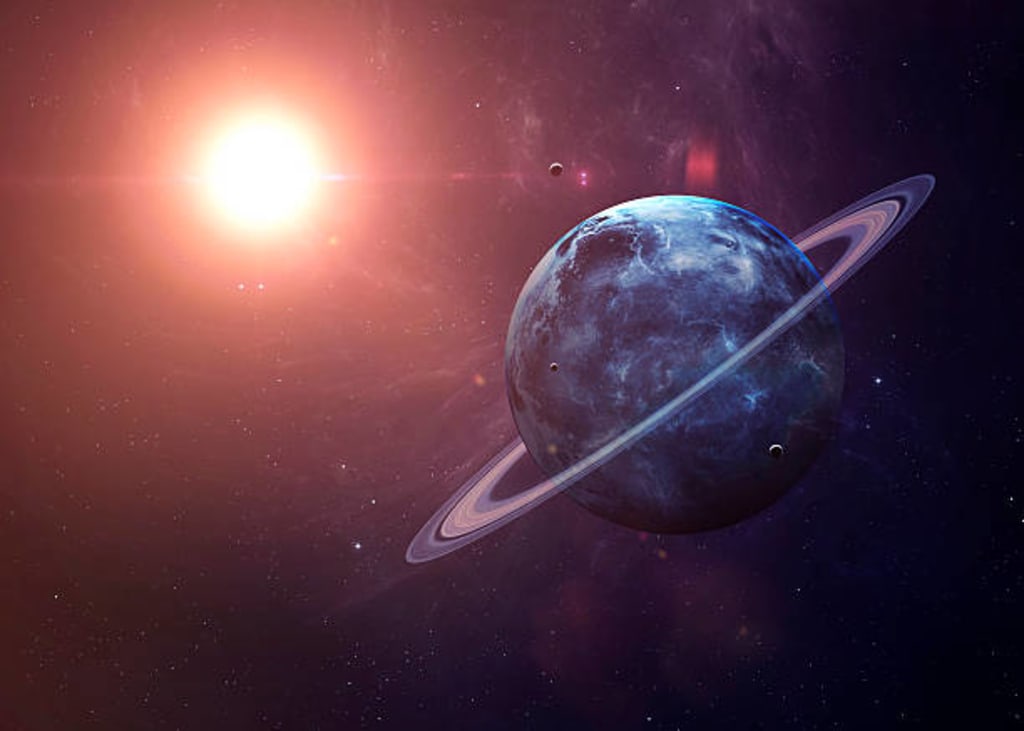
If you were envisioning a leisurely stroll on Uranus, you've got it all wrong. Let's begin anew. Are you prepared to embark on a journey to the outer reaches of our solar system and explore the quirkiest planet in our cosmic neighborhood? This mission will take you into uncharted territory, so brace yourself for a frigid, turbulent, and rather odorous adventure. Your objective: to spend a mere 5 seconds on Uranus and return, if you can.
Traveling to Uranus would be a lengthy and peculiar odyssey. First, you'd need to spend a decade aboard a spacecraft hurtling towards the outer fringes of the solar system. If you're fortunate, you might even pass by Jupiter and Saturn on your way. Be sure to pack ample supplies of food and fuel. However, there are some essential facts you should know about this enigmatic world.
Uranus is not a solid, rocky planet like Earth; instead, it's an ice giant, akin to Neptune. It also possesses the unique distinction of being the sole planet in our solar system that rotates on its side. It rotates quite rapidly; a single day on Uranus is merely 17 Earth hours. Of course, you wouldn't survive that long on the planet; it's an inhospitable environment.
Once you've arrived at your destination, you'll face the challenge of getting up close to this massive blue planet. You might need to navigate past the rings of Uranus – yes, Uranus has 13 rings. These rings lack the grandeur of Saturn's stunning rings; the outer rings are bright and conspicuous, while the inner ones are narrow and shadowy. Navigating this segment of the journey requires utmost care.
As you journey through the dusty rings of Uranus, you'll witness its magnificent blue atmosphere up close, a sight that has never been observed by humans before. Take a moment to appreciate the uniqueness of Uranus, the oddball of our solar system.
You might wonder why no one has ever attempted to land on Uranus. Well, that's because Uranus lacks a solid surface; it's essentially a swirling mass of toxic gases compressed around a small icy core. Oh, and let's talk about why those gases on Uranus are so noxious.
The reason Uranus has a foul odor is that its upper atmosphere contains hydrogen sulfide, a stinky and toxic gas. Inhaling it would be a terrible idea, as it could make you faint and even prove fatal. It would have been useful to know this before you embarked on your journey.
After descending through the noxious uppe clouds of Uranus, you'd find yourself in an atmosphere comprised of 82% hydrogen, 15% helium, and a trace of methane. Methane gas is responsible for the bluish-green haze surrounding Uranus, as it absorbs red spectrum light.
The atmosphere on Uranus is incredibly dense. Once you pass through its upper layer, you'd stop falling and start "swimming" through the atmosphere. As you dive deeper, you'd encounter frozen gas crystals pelting you, although the temperature would gradually rise.
However, it's important to note that the atmosphere is far from warm. The temperature would still be a bone-chilling -208°C. As you venture deeper, you'd experience temperatures around -153°C. But things are about to get even stranger.
Suddenly, you'd find yourself in a downpour of diamond rain. Yes, on Uranus, it literally rains diamonds. This happens due to the high methane content in Uranus' atmosphere. Under extreme pressure, methane molecules break apart and crystallize into diamonds.
What makes this even more challenging is the ferocious winds, with gusts reaching speeds of up to 900 km/h – that's three and a half times stronger than a Category 5 hurricane on Earth.
Your struggles continue as you're confronted with the increasing pressure. Uranus has an atmospheric pressure 100 times greater than Earth's sea level. You're now approaching the mantle, but there's not much in the way of solid structures on Uranus. The mantle consists of water, ammonia, and methane ice. It's pitch black, and thanks to the extreme gravity, you'd be completely immobilized. The cold would persist.
The greatest concern, however, is the rapidly increasing pressure as you approach the planet's core. It would crush you before you ever reached the core. In this extreme pressure environment, your carbon-based body might transform into diamonds and descend into the core, a spectacular yet unfortunate way to conclude this one-way journey into Uranus.
So, with this vivid description of the perils and peculiarities of Uranus, it's clear that there are far more inviting destinations in our solar system for a 5-second mission. Where should you explore next? How about a place adorned with methane lakes and offering a splendid view of Saturn in the sky? But that's a story for another time.
About the Creator
Info Wave
Your source for the latest insights, updates, and knowledge. 🌐 Stay informed with us!"
Learn Golf the Smart Way: A Clear Path for New Players
Golf is often seen as a demanding sport, but it does not have to be confusing or intimidating. Many people want to learn golf for fun, fitness, or social reasons, yet they feel unsure about where to start. The truth is that golf becomes enjoyable when you focus on the fundamentals and take steady steps forward. This article is designed to help new players understand the game in a practical, straightforward way, especially those seeking golf basics for beginners that are easy to follow and apply on the course.
By Dr. Shawn Kellera day ago in Education




Comments
There are no comments for this story
Be the first to respond and start the conversation.