
Unraveling the Legacy of Ancient Egypt: A 3000-Year Odyssey
Ancient Egypt
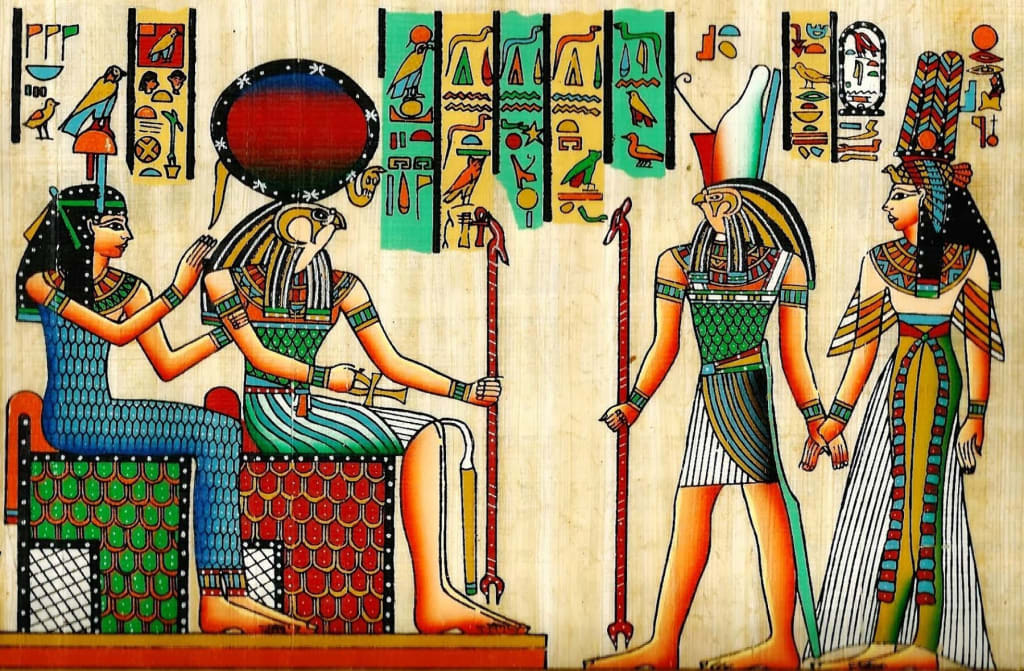
The ancient Egyptian civilization, a testament to human endurance and ingenuity, endured for more than 3,000 years, leaving an indelible mark on history. At its zenith, ancient Egypt reigned as one of the world's most powerful and iconic civilizations, with a domain stretching from modern-day Syria in the north to Sudan in the south. But before it became an empire, it was a collection of small, independent city-states flourishing along the Nile River in North Africa.
These city-states were divided into two regions, named in relation to the flow of the Nile: Upper Egypt in the south, upstream, and Lower Egypt in the north, downstream. Around 3100 BC, these two regions united to form a single Egyptian state that would stand the test of time.
The history of ancient Egypt can be divided into three major periods of prosperity known as the Old, Middle, and New Kingdoms, interspersed with two periods of instability labeled the First and Second Intermediate Periods. Guiding the Egyptian people were a succession of approximately 300 rulers, often referred to as pharaohs. Interestingly, "pharaoh" was never the ruler's formal title; it became synonymous with the ruling individual in modern times, thanks to its use in the Hebrew Bible.
These rulers, who were not always men or of Egyptian origin, were considered protectors of the people and acted as divine intermediaries between humanity and the hundreds of gods they worshipped. Upon their passing, ancient Egyptians believed that these rulers ascended to godhood.
Preparing for the afterlife was a central aspect of these rulers' lives, leading to the construction of elaborate tombs, including the awe-inspiring pyramids at Giza and underground mausoleums in the Valley of the Kings. These tombs were filled with a wealth of items, from gold jewelry to food and pets, that the rulers believed they would need in the afterlife. The process of mummification, embalming the deceased's body and wrapping it in linen, was also crucial for the journey to the gods.
The enduring structures like the Great Pyramids serve as testaments not only to the religious significance but also to the innovation and cultural prowess of the ancient Egyptians. Their achievements extended beyond religious practices into mathematics and written language.
Mathematics played a pivotal role in their civilization, enabling them to understand and manipulate their world with unprecedented precision. They developed a unique measurement system called the cubit, crucial for designing colossal structures like the Great Pyramid. In addition, the Egyptians created a solar calendar featuring 365 days in a year and divided the day into 24 hours, integrating mathematics and astronomy into their daily lives.
Furthermore, the ancient Egyptians excelled in surveying land along the Nile River, a skill vital for the construction of dams, canals, and irrigation systems that facilitated agriculture and prosperity in the Nile Valley.
In the realm of language, the ancient Egyptians devised various written scripts to describe the world around them. The most renowned is hieroglyphic writing, which featured over 700 pictorial characters and adorned monuments and pottery for decorative and ceremonial purposes. Later, hieratic writing emerged as a more functional form of cursive, written in ink on another Egyptian innovation, papyrus, derived from the papyrus plant flourishing along the Nile River.
Papyrus allowed the Egyptians to communicate and record information more efficiently, contributing to their administrative prowess and cultural diffusion over millennia.
Despite its glorious history, ancient Egypt eventually met its end through a series of invasions, including those by the Persian Empire in the 4th century BC and the Roman Empire around 30 BC.
Few civilizations can claim such a remarkable lifespan, spanning over 3,000 years, marked by linguistic and mathematical innovations, spiritual and religious practices, and extensive political and military achievements. Ancient Egypt set a high standard for all civilizations that followed, leaving a lasting legacy that continues to shape our understanding of the past and our aspirations for the future.
About the Creator
Keep reading
More stories from Pieter Lemmer and writers in Education and other communities.
Exploring the World of Ants with Dr. Corrie Moreau
In a cozy office nestled within the heart of the Field Museum in Chicago, a conversation unfolded, driven by curiosity and a shared passion for the tiny creatures that often go unnoticed in our daily lives—ants. Dr. Corrie Moreau, a renowned curator specializing in ants, had invited her colleague, Emily, for a unique encounter with these remarkable insects.
By Pieter Lemmer2 years ago in Earth
The One Lighting Move That Instantly Makes Your Photos Look Better
Photography advice often focuses on complex settings, advanced editing, or buying better equipment. While those things can help, they often distract from something far more powerful and immediate. One simple lighting habit can dramatically improve almost every photo you take, whether you’re shooting with a phone or a professional camera.
By Kelln Small6 days ago in Education
Managing Anxiety During Exams: A Student’s Guide
Exams are one of the most common sources of stress for students at every level. Even the most prepared individuals often feel nervous before or during a test. Exam anxiety is natural — it’s the body’s way of preparing for a challenge — but excessive stress can interfere with focus, memory recall, and overall performance. Understanding the causes of anxiety and learning effective coping strategies can make a significant difference. This guide provides practical, evidence-based techniques to manage stress before, during, and after exams.
By Games Mode On7 days ago in Education
Affection and Healing for Yourself
During the night of the last quarter moon, I gathered my ritual supplies. I carefully handled the chunk of black tourmaline that would protect me from your overall negative and narcissistic energy. I carefully walked the house with my stick of selenite in hand, asking the universe to cleanse our working space.
By Alisha Wilkins ✒️🦋🖋️6 days ago in Fiction




Comments
There are no comments for this story
Be the first to respond and start the conversation.