
Thomas Alva Edison - Biography and Accomplishments
Learn about the life, inventions, and legacy of Thomas Alva Edison, one of the most prolific inventors in history who developed devices such as the phonograph, motion picture camera, and practical electric light bulb, and who shaped the modern world.

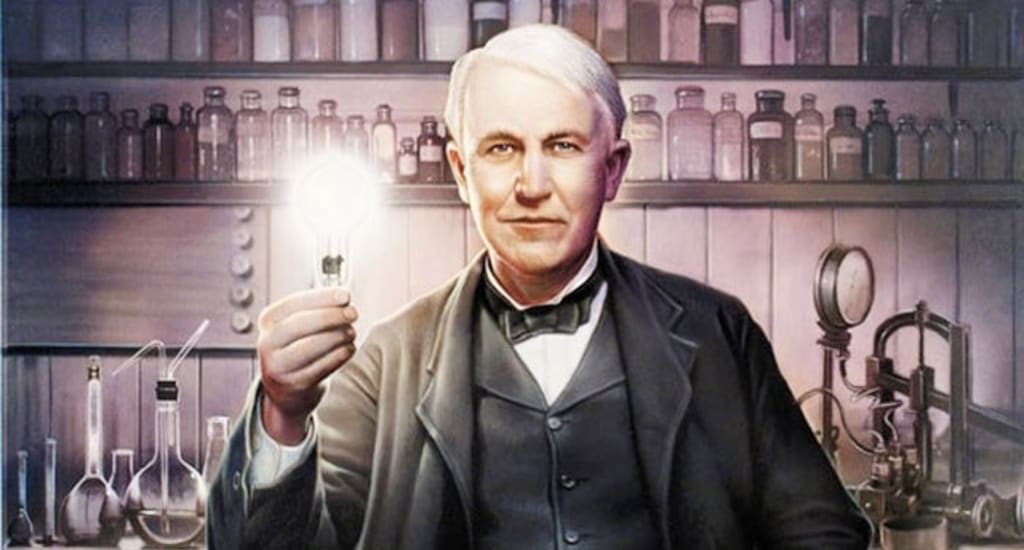
Thomas Alva Edison (February 11, 1847 – October 18, 1931) was an American inventor and businessman who is considered one of the most prolific inventors in history. He held over 1,000 patents for his inventions, including the phonograph, the motion picture camera, and the electric light bulb.
Edison was born in Milan, Ohio, and grew up in Port Huron, Michigan. He had very little formal education, but he was a voracious reader and taught himself through reading and experimentation. He began his career as a telegraph operator, but he soon became interested in inventing and opened his own laboratory in Menlo Park, New Jersey, in 1876.
One of Edison's most famous inventions was the phonograph, which he developed in 1877. It was the first device capable of recording and playing back sound, and it revolutionized the music industry. Edison also developed the first motion picture camera in 1891, which led to the birth of the film industry.
Edison is perhaps best known for his work on the incandescent light bulb. He didn't invent the light bulb, but he developed a practical and commercially viable version that could be used in homes and businesses. He worked on this project for years, experimenting with different materials and designs, before finally coming up with a bulb that could last for up to 1,200 hours.
Edison was a highly successful businessman as well as an inventor, and he founded the Edison Electric Light Company in 1878 to market and sell his inventions. He also helped establish the first electric utility company, which brought electricity to homes and businesses.
Edison's legacy as an inventor and businessman is enormous. He helped shape the modern world and laid the foundation for many of the technologies we use today. His work has had a lasting impact on fields such as telecommunications, transportation, and entertainment.
Some additional information about Thomas Edison includes:
Edison was a prolific inventor, with over 1,000 patents to his name. In addition to his famous inventions, he also developed innovations in fields such as telegraphy, mining, and cement production.
Edison was a firm believer in the power of hard work and persistence. His famous quote, "Genius is one percent inspiration and ninety-nine percent perspiration," reflects his belief that success comes from hard work and determination.
Edison was also known for his direct and sometimes confrontational personality. He was a shrewd businessman and was not afraid to take on competitors or criticize his rivals.
Despite his many successes, Edison also experienced some failures in his career. One notable example was his attempt to develop a new type of battery, which ended up costing him a great deal of money and damaging his reputation.
Edison was married twice and had six children. His second wife, Mina Miller Edison, was a talented musician and inventor in her own right.
Edison was an early supporter of renewable energy sources, such as solar and wind power. He believed that these technologies could one day replace fossil fuels and provide a sustainable source of energy for the world.
Edison died at the age of 84 in West Orange, New Jersey. He was one of the most celebrated inventors of his time and his legacy continues to be felt today.
Here are some additional interesting facts about Thomas Edison:
Edison was a prolific inventor and held patents in various countries around the world, including the United States, Canada, and the United Kingdom.
He was a key figure in the development of the modern research laboratory. Edison's laboratory in Menlo Park, New Jersey, was one of the first facilities dedicated solely to scientific research and experimentation.
Edison was an early advocate for the use of direct current (DC) electricity, while his rival, George Westinghouse, was promoting the use of alternating current (AC) electricity. The "War of Currents" between the two sides became a major controversy in the late 1800s.
Edison was known for his unconventional work habits. He often worked long hours, sometimes staying up all night, and took naps during the day. He also had a habit of taking walks to clear his mind and generate new ideas.
In addition to his many inventions, Edison was also an accomplished entrepreneur. He founded several companies over the course of his career, including General Electric and the Edison Phonograph Company.
Edison was a prolific writer and left behind numerous notebooks and diaries. These documents offer insights into his creative process and reveal the extent of his experimentation and innovation.
Edison was a celebrity in his own time and was frequently featured in newspapers and magazines. He was also a popular subject for early motion pictures, and many films were made about his life and work.
Edison was a lifelong learner and remained curious about the world around him until the end of his life. He once said, "I have not failed. I've just found 10,000 ways that won't work." This attitude of persistence and experimentation remains an inspiration to inventors and innovators today.
About the Creator
Best Laptop for Kids
In today’s digital age, laptops have evolved from luxury gadgets to essential tools especially for children. Whether it’s for online classes, educational games, creative projects, or safe exploration of the internet, having the right laptop can play a crucial role in your child’s learning and development.
By Print Freyabout 7 hours ago in Education


Comments
There are no comments for this story
Be the first to respond and start the conversation.