
The Unpredictable Fury
Understanding Earthquakes and Their Occurrence
Introduction:
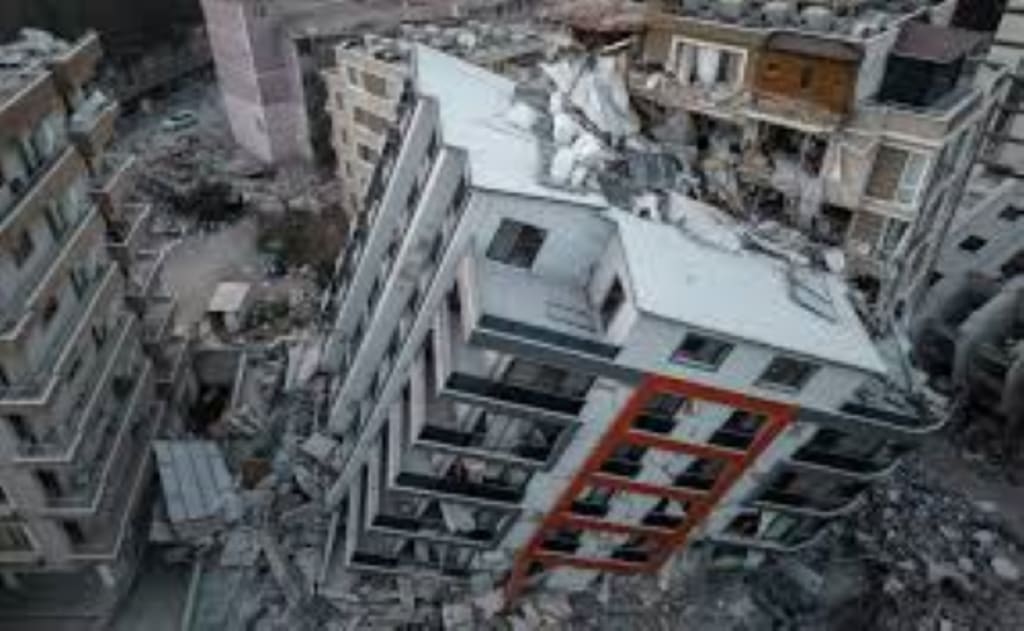
Earthquakes are one of nature's most powerful and destructive phenomena, capable of unleashing immense devastation in mere seconds. These seismic events occur when the Earth's crust experiences sudden and violent movements, causing the ground to shake and tremble. While the exact timing and location of earthquakes remain largely unpredictable, scientists have made significant progress in understanding the underlying causes behind these cataclysmic events.
The Earth's Dynamic Nature:
To comprehend why earthquakes occur, it is essential to recognize that our planet is in a constant state of change. The Earth's lithosphere, comprising rigid tectonic plates, is in perpetual motion, albeit at a very slow pace. These plates float atop the semi-fluid asthenosphere, and as they interact with each other, tremendous stress accumulates along their boundaries.
Tectonic Plate Boundaries:
The majority of earthquakes take place at the boundaries where tectonic plates meet. These interactions occur in three primary ways:
1. Convergent Boundaries: When two plates collide, the leading edge of one plate is forced beneath the other in a process called subduction. This collision generates immense pressure, leading to seismic activity. These subduction zones are known for their subduction earthquakes, which often result in significant damage and tsunamis.
2. Divergent Boundaries: In contrast to convergent boundaries, divergent boundaries witness the plates moving apart. Magma rises from the mantle to fill the gap, creating new crust. However, as the plates separate, they occasionally get stuck. When the accumulated stress overcomes the friction, the plates lurch forward, resulting in earthquakes. These events are usually less intense compared to subduction earthquakes.
3. Transform Boundaries: At transform boundaries, plates slide horizontally past one another. The friction between the plates leads to a gradual accumulation of stress, which is eventually released in the form of an earthquake. The San Andreas Fault in California is a prime example of a transform boundary.
The Role of Faults:
Faults, fractures in the Earth's crust, play a significant role in the occurrence of earthquakes. The accumulated stress along plate boundaries causes rocks to bend and deform. When the stress exceeds the strength of the rock, it fractures along a fault line, allowing the stored energy to be released in seismic waves. These waves radiate outwards, shaking the ground and causing the characteristic tremors associated with earthquakes.
Magnitude and Intensity:
Scientists use various methods to measure and characterize earthquakes. The magnitude of an earthquake, typically measured using the Richter scale or moment magnitude scale (Mw), quantifies the total energy released during an earthquake. Each unit increase on the scale represents a tenfold increase in the amplitude of the seismic waves. On the other hand, the intensity of an earthquake, often measured using the Modified Mercalli Intensity (MMI) scale, reflects the effects experienced by people and structures at a particular location.
The Unpredictability Factor:
Despite our understanding of the causes and mechanisms behind earthquakes, predicting when and where they will occur with precision remains a considerable challenge. Earthquake occurrence is highly complex and influenced by numerous factors, such as historical seismic activity, fault characteristics, and local geological conditions. While scientists employ seismometers, GPS measurements, and other monitoring techniques to track plate movements and identify potential earthquake zones, accurate short-term predictions are still beyond our current capabilities.
Conclusion:
Earthquakes are a natural consequence of the Earth's dynamic nature, driven by the constant movement and interaction of tectonic plates. Although we have made great strides in unraveling the underlying mechanisms behind earthquakes, predicting these events with pinpoint accuracy remains elusive. As we continue to advance our understanding of seismic activity, our ability to mitigate the impact of earthquakes
About the Creator
Keep reading
More stories from Ayan Bhatti and writers in Education and other communities.
Unmasking Corruption
Introduction: Corruption, a pervasive and destructive social issue, infiltrates societies worldwide, eroding trust, undermining institutions, and perpetuating inequality. From embezzlement and bribery to nepotism and fraud, corruption takes various forms and inflicts significant harm on both the public and private sectors. This article explores the multifaceted nature of corruption, its far-reaching consequences, and the imperative for concerted efforts to combat this deep-rooted problem.
By Ayan Bhatti3 years ago in Criminal
Entering the Golden Alchemical Door to Teaching and Healing
It starts with love . . . Entering the Golden Door: Who Am I? Going through cancer treatments with chemo, a strange thing happened, for I started to forget things, even who I am because my wife ghosted me and my friends would have nothing to do with me. Without human contact, you forget what it means to be human. I am a professor at a university, but I forgot what I taught. . . .
By WILD WAYNE : The Dragon King7 days ago in Education
ISO 9001 in Abu Dhabi: What Auditors Check Most Often (Simple Checklist)
If your business is based in Abu Dhabi, an ISO 9001 audit can feel stressful for one simple reason, it’s not only about “having a system.” It’s about proving that your system is working in real daily operations.
By Umar Quality Jounal2 days ago in Education



Comments
There are no comments for this story
Be the first to respond and start the conversation.