
The Story of Afghanistan's President
The Story of Afghanistan's President
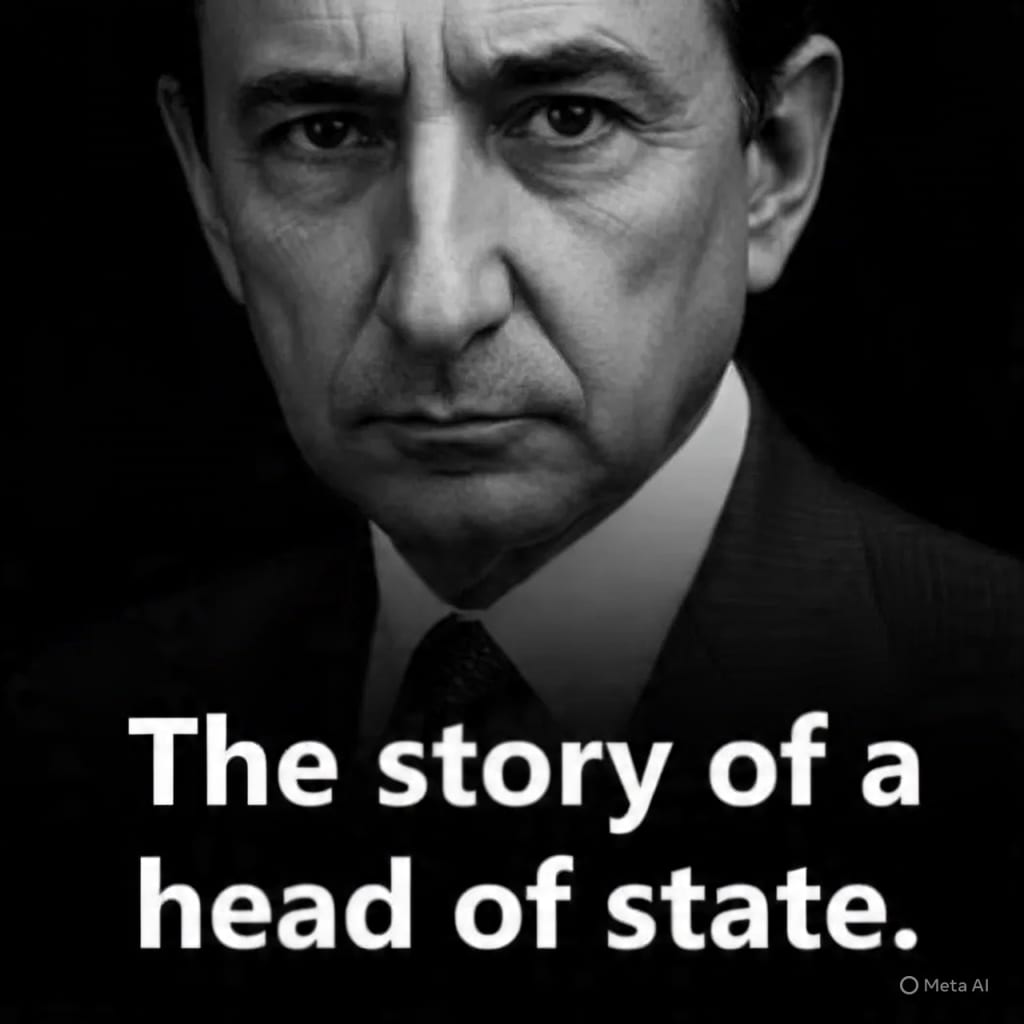
The Story of Afghanistan's President
He sat alone under the quiet of dawn, the stillness crushing him like lead. Outside his window, Kabul's rooftops stretched cold and quiet, most of them marred by war, wind-tattered banners, and phantasms of dreams deferred. He, a strong and hidden man, heard the pulse of the country—unbalanced, silent, trembling.
This is the tale of *Hasan Akhund*, the Prime Minister decreed in the Taliban regime, but never really the "president" proper. In the new Afghanistan, real power resides in the *Supreme Leader*; and Akhund is nothing more than a pivot between the visible and hidden, a figurehead with whispers of power running through every power corridor.
---
A Quiet Rise to Power
He was born in a poor neighborhood in Kandahar, the son of devout families, memorizing scripture before ever learning the details of governance. As a youth, amidst ash and fire of war, he learned to speak not boisterously, but with conviction. When the Taliban initially appeared in the 1990s, his lean frame and stern eyes propelled him into insider circles. In the midst of instability of regime collapse and insurrection, he survived not through posturing, but by fidelity and endurance.
When the Americans withdrew in 2021 and the Taliban captured Kabul, everyone waited for there to be drama reorganizations. In fact, the old guard returned, and Hasan Akhund emerged from the shadows to be named Prime Minister—"interim," they insisted. But by August 2025, he was confirmed permanent in a ceremony that drew scant attention but was rich in symbolism. [1]
He never requested charismatic speeches or viral moments. He bartered in decrees and quiet power. Where others boasted and whipped into a lather, he maneuvered through a web of clerics, provincial governors, and tribal elders. The halls of power never echoed with his voice but were weighed with his nod.
---
The Unseen President in a Shadow State
To call Akhund a president would be an abomination. In the Taliban government, *Hibatullah Akhundzada*, the Supreme Leader, is kingmaker, judge, and last word. But in the eyes of many Afghans, Akhund is the face of authority: he signs decrees, hosts diplomats, presides over ministries. He is the public face of a secret government.
He carries the burden of promises nobody else asked him to promise. Economic constraint, withholding women's rights, global ostracism—these are all at least partially on his shoulders. His offices have dark monitors showing empty clinics, closed girls' schools, empty streets where once bustled markets. He walks through these corridors humbly aware that each broken marble floor and smashed window is a testament to the failures he now has to face.
However, he possesses a narrow legitimacy: the trust of the factions in the Taliban, a tenuous thread holding factions together. Should that trust desert him, he would fade as did so many others before him.
---
A Single Dawn, A Silent Plea
One morning, he was on the balcony of the PM house, watching dust blow in the streets of Kabul. An eight-year-old girl wrapped in a tattered shawl climbed up stairs against the wall. She carried a bag of bread loaves to share with her brothers and sisters. The image struck him: a wrenching contradiction between power and hunger. He recalled his childhood, when his mother struggled over one loaf.
He muttered a prayer, then pledged to fight for subsidies. A minister then suggested raising taxes instead. He did not. He reasoned: "If a child must choose between food and school, we have failed."
But such are the rare moments. Most often, he sits behind piles of papers, hearing debate about pipelines, taxes, trade with neighbors—all while parents outside his gates decide whether to eat or buy coal.
---
The Weight of Silence
Whispers of dissent, of external pressure and sanctions. He must walk a tightrope of narrow supports. Diplomats demand signals of reform; insurgents hunger for firmness; clerics demand ideological purity. One misstep and there is accusation: of weakness or treachery.
Some grumble that he is a puppet. Others insist that he wields more authority than admitted. The truth lies somewhere in between—in what he signs on paper, in mobs he addresses, in months he works through without mishap.
---
Legacy Yet to Be Written
History will judge him harshly—or maybe in astonishment. Will he be recalled as custodian of a tenuous regime? Or as a cautious caretaker who rescued Afghanistan from further darkness?
In his last years, if he steps down, his successors will debate: Did he sell out his nation or merely lose against the force of the times?
Until such a time, he stays in the morning sunlight, listening to the silent breath of the nation, trying to soothe the storm with hushed judgments, hoping that someday his act of humility will be understood.
About the Creator
Sowing Strength: How Farmer Training Breaks the Cycle of Hunger
A single factor rarely causes hunger. It is the result of interconnected challenges, including poverty, weak agricultural systems, climate change, and limited access to education. Although global food production is sufficient to feed the world’s population, millions of people still struggle to secure enough nutritious food. In many cases, those most affected by hunger are farmers themselves—individuals who work the land daily but lack the training needed to farm efficiently and sustainably.
By Convoy of Hope8 days ago in Education
SEO Education: 5 Steps to Start a Career in SEO
Is SEO still worth learning? Where should you start? It’s a fair question. And it comes up almost daily. Google updates feel constant. AI shows up directly in search results. Advice from three years ago already looks shaky. For someone new, SEO can feel unstable, maybe even risky as a career bet.
By Iryna Podliesna5 days ago in Education


Comments
There are no comments for this story
Be the first to respond and start the conversation.