
Sowing Strength: How Farmer Training Breaks the Cycle of Hunger
How Farmer Training Programs Are Breaking the Cycle of Hunger Worldwide


A single factor rarely causes hunger. It is the result of interconnected challenges, including poverty, weak agricultural systems, climate change, and limited access to education. Although global food production is sufficient to feed the world’s population, millions of people still struggle to secure enough nutritious food. In many cases, those most affected by hunger are farmers themselves—individuals who work the land daily but lack the training needed to farm efficiently and sustainably.
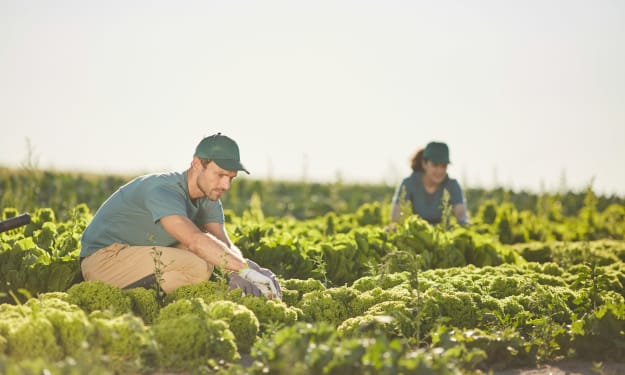
Empowering farmers through training has proven to be one of the most effective and lasting responses to food insecurity. Training strengthens agricultural knowledge, improves productivity, and builds resilience against economic and environmental shocks. Rather than offering temporary relief, farmer education creates long-term solutions by enabling people to feed themselves and their communities. When farmers are equipped with skills and confidence, agriculture becomes a powerful force for ending hunger.
Hunger Begins Where Knowledge Is Limited
In many food-insecure regions, hunger is not caused by a lack of land or labor, but by limited access to agricultural knowledge. Farmers often rely on traditional practices that no longer work under modern conditions. Soil depletion, changing weather patterns, and new pest threats require updated approaches that many farmers have never been taught.
Training addresses these gaps by introducing practical, locally relevant solutions. Farmers learn how to improve planting techniques, manage soil nutrients, and protect crops more effectively. As their understanding grows, so does their ability to produce consistent harvests. This stability at the farm level reduces household hunger and strengthens the broader food supply.
Turning Farming Into a Skilled Profession
For generations, farming has been viewed as labor-intensive work rather than a skilled profession. This perception limits investment in education and discourages innovation. Without training, farmers are often unable to maximize the potential of their land or respond effectively to challenges.
Agricultural training reframes farming as a knowledge-based profession. Farmers gain technical expertise and decision-making skills that allow them to plan strategically rather than react to problems. This professionalization of farming leads to higher productivity, better resource management, and increased respect for agriculture as a viable pathway out of poverty and hunger.
Sustainable Practices That Preserve Food Sources
Short-term increases in food production mean little if they come at the cost of long-term sustainability. Unsustainable farming practices can degrade soil, reduce water availability, and threaten future harvests. Without training, farmers may unknowingly damage the resources they depend on.
Training promotes sustainable agriculture that balances productivity with environmental care. Farmers learn practices such as crop rotation, soil conservation, and efficient water use. These methods protect ecosystems while maintaining strong yields. Sustainable farming ensures that today’s solutions do not become tomorrow’s problems, creating lasting food security.
Climate Adaptation Through Education
Climate change has intensified the uncertainty farmers face. Unpredictable rainfall, extreme heat, floods, and droughts disrupt growing seasons and increase the risk of crop failure. Farmers without training are often unable to adapt, increasing the likelihood of hunger when conditions worsen.
Agricultural education equips farmers with tools to manage climate risks. Training introduces climate-resilient crops, diversified farming systems, and adaptive planting schedules. Farmers learn how to anticipate changes rather than respond too late. This resilience helps stabilize food production even as environmental conditions become more challenging.
Strengthening Local Food Availability
Food security depends heavily on strong local food systems. Communities that rely on distant supply chains are vulnerable to disruptions caused by conflict, economic instability, or natural disasters. Training farmers strengthens local production and reduces these risks.
As farmers improve productivity, local markets benefit from a steady supply of food. This increases access to fresh, affordable products and reduces reliance on imports or aid. Strong local food systems help communities feed themselves during crises, reinforcing food security at the grassroots level.
Income Stability and Food Access
Hunger is closely linked to income insecurity. Even when food is available, families without stable earnings may struggle to afford it. Farmer training that includes business and financial education helps address this issue by improving income stability.
Educated farmers learn how to manage costs, reduce waste, and access better markets. Training also encourages cooperative models that strengthen bargaining power and access to credit. Increased income allows farming households to purchase nutritious food year-round, reducing vulnerability to hunger during lean seasons.
Nutrition as a Core Training Priority
Food security is not only about having enough food but also about having the right food. Many communities suffer from malnutrition due to diets lacking essential nutrients. Farmer training plays a critical role in addressing this issue by promoting nutrition-focused agriculture.
Training encourages farmers to diversify crops and include nutrient-rich foods such as fruits, vegetables, legumes, and protein sources. Farmers also learn proper storage and handling techniques to preserve food quality. Improved nutrition strengthens health outcomes, particularly for children and vulnerable populations.
Empowering Women to Strengthen Food Systems
Women play a central role in agriculture and household nutrition, yet they often have limited access to training and resources. Addressing this inequality is essential for achieving food security. When women farmers are trained, the benefits extend far beyond individual farms.
Educated women are more likely to adopt improved practices and prioritize family nutrition. They often reinvest income in food, healthcare, and education. Empowering women through farmer training strengthens food systems, promotes equity, and accelerates progress toward ending hunger.
Engaging Youth in Sustainable Agriculture
The future of food security depends on the next generation of farmers. However, many young people leave agriculture due to limited opportunities and outdated training methods. Without youth involvement, food systems risk stagnation and decline.
Training programs designed for young farmers incorporate technology, sustainability, and entrepreneurship. These initiatives make agriculture more attractive and innovative. By equipping youth with modern skills, societies ensure continuity in food production and encourage fresh solutions to hunger.
About the Creator
Convoy of Hope
Convoy of Hope, founded in 1994, is a faith-based humanitarian organization that provides disaster relief, children’s meals, agricultural training, and support for women and families worldwide.
Website: https://convoyofhope.org
Keep reading
More stories from Convoy of Hope and writers in Education and other communities.
Can Training Farmers End Hunger?
What if one of the most powerful solutions to global hunger is not food aid, but knowledge? Around the world, millions of smallholder farmers grow the food that feeds their communities. Yet many of them struggle with low crop yields, unpredictable weather, poor soil quality, and limited market access. If farmers are at the center of food production, could empowering them with better skills be the key to ending hunger?
By Convoy of Hope11 days ago in Education
The Devastating Failure of Modern Education: Why Our Schools Are Producing Obedient Workers Instead of Critical Thinkers
The modern education system is fundamentally broken, not in the sense that it is failing to achieve its intended purpose, but rather in the more insidious sense that it is succeeding brilliantly at a purpose that no longer serves the needs of students, society, or the future we are rapidly hurtling toward, and this success in achieving outdated objectives while the world transforms around it represents one of the great institutional failures of our time, a failure with consequences that ripple through every aspect of contemporary life from economic inequality to political polarization to our collective inability to address existential challenges like climate change and technological disruption. The factory model of education that we inherited from the industrial revolution, designed explicitly to produce compliant workers who could follow instructions, tolerate boredom, and accept hierarchy without question, persists largely unchanged despite the fact that the factories it was meant to serve have either disappeared or been automated, and we continue to subject millions of children to a system that treats them as widgets to be processed through standardized procedures, measured against arbitrary benchmarks, and sorted into categories that will largely determine their economic and social outcomes for the rest of their lives.
By The Curious Writerabout 6 hours ago in Education
Generosity Without Boundaries: Advancing Equity Through Philanthropy
Philanthropy has always played a meaningful role in shaping societies and improving the lives of individuals in need. From supporting educational programs to funding healthcare initiatives, acts of giving have helped communities overcome many challenges. In today’s diverse world, however, philanthropy is taking on a deeper purpose. It is increasingly focused on equity—ensuring that resources and opportunities are distributed fairly among people from different backgrounds and circumstances.
By John Olin Killgore2 days ago in Education


Comments
There are no comments for this story
Be the first to respond and start the conversation.