
The Story Behind the Beloved School Prayer: “Lab Pe Aati Hai Dua Ban Ke Tamanna Meri”
How Allama Iqbal’s timeless prayer continues to inspire generations of children with faith, purpose, and the light of knowledge.

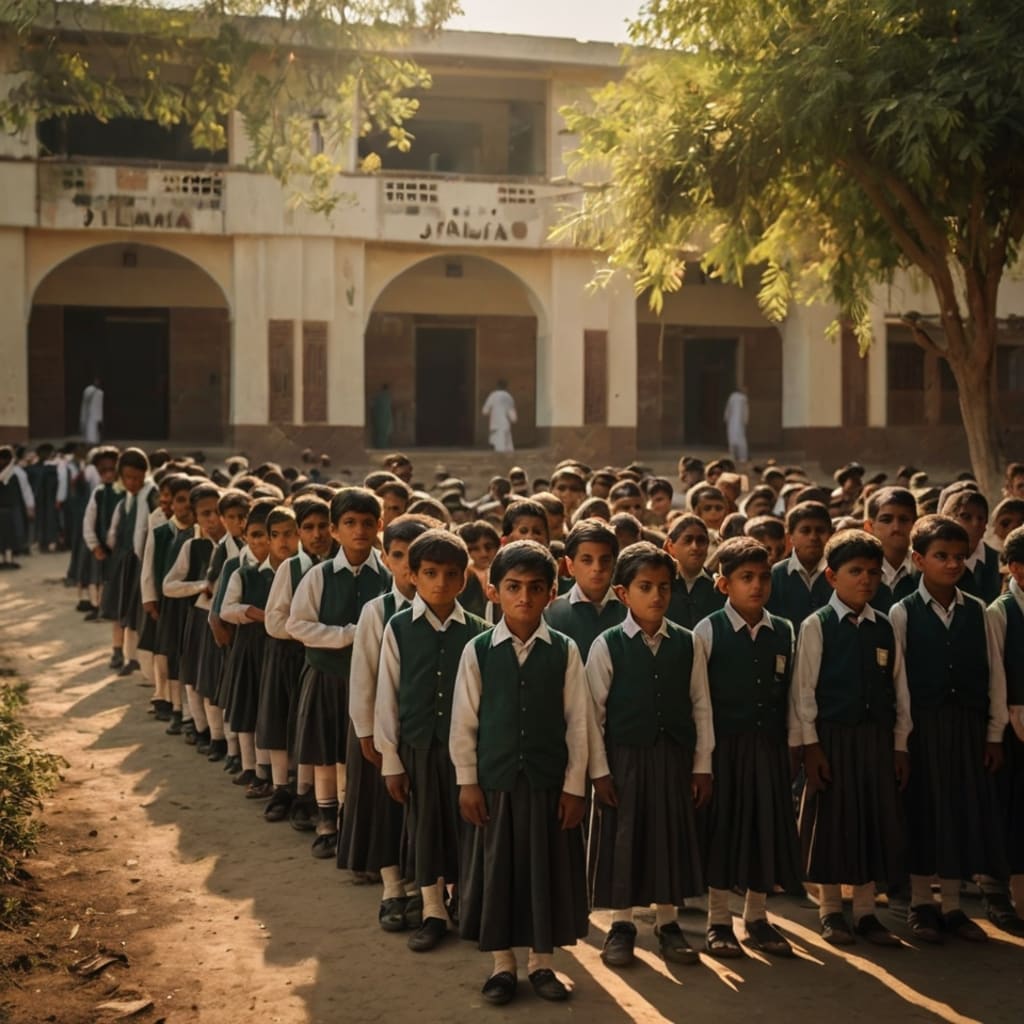
The Story Behind the Beloved School Prayer: “Lab Pe Aati Hai Dua Ban Ke Tamanna Meri”
BY: Khan
Every morning, countless children across Pakistan begin their school day with a beautiful prayer that fills the air with hope and devotion:
“Lab pe aati hai dua ban ke tamanna meri,
Zindagi shamma ki soorat ho Khudaya meri.”
(“My longing comes to my lips as a prayer,
O God, may my life be like a candle that burns and gives light.”)
Dear children, have you ever wondered who wrote this heartfelt prayer? Some of you might already know the answer, while others may not. So, let’s find out together.
This timeless and inspiring poem was written nearly a century ago by none other than our national poet, Dr. Allama Muhammad Iqbal — the great philosopher, thinker, and visionary who awakened the spirit of freedom among the Muslims of the Indian subcontinent.
The Poet Who Lit the Lamp of Hope
Dr. Allama Iqbal was born on November 9, 1877, in the historic city of Sialkot. From an early age, Iqbal showed remarkable intelligence, deep thought, and a strong sense of faith. He loved to recite the Holy Qur’an and would rise early each morning to read its verses with devotion. His life’s mission was to reform the Muslims of his time and awaken in them the desire for independence and self-respect.
Iqbal believed that true success comes through hard work, perseverance, and unshakable faith. Through his poetry, he inspired generations to rise from ignorance and weakness, to become strong, educated, and self-reliant. His message was not just for adults but for children as well, because he knew that the future of any nation depends on its young generation.
Iqbal’s Love for Children
Allama Iqbal loved children deeply. He saw them as the builders of tomorrow, the ones who would one day shape the destiny of the nation. He understood that proper guidance and moral training at a young age could help them grow into wise, confident, and righteous adults.
To instill good habits and moral values in children, Iqbal wrote many beautiful, simple, and meaningful poems. These poems were not only entertaining but also full of wisdom and life lessons. They taught children about kindness, honesty, courage, and faith in God—values that build strong character.
Some of his most famous poems for children include:
Bachay Ki Dua (A Child’s Prayer)
Hamdardi (Sympathy)
Makra Aur Makhi (The Spider and the Fly)
Pahaṛ Aur Gulehri (The Mountain and the Squirrel)
Gaye Aur Bakri (The Cow and the Goat)
Parinday Ki Faryad (The Bird’s Plea)
Bacha Aur Jugnu (The Child and the Firefly)
Each of these poems is filled with imagination, tenderness, and moral teaching. They gently guide children to understand the importance of compassion, self-respect, and striving for excellence.
All these poems were later included in his first collection of poetry, “Bang-e-Dra” (The Call of the Marching Bell) — a book that continues to inspire readers of all ages.
The Meaning Behind the Prayer
Let’s return to the famous prayer, “Lab Pe Aati Hai Dua Ban Ke Tamanna Meri.”
This poem is much more than just words recited in a morning assembly. It’s a heartfelt wish — a conversation between a child and God. The child prays for a life that brings light and goodness to others, just like a candle that burns to illuminate the world around it.
In the poem, Iqbal teaches children to live with purpose and selflessness. He wants them to grow into individuals who help others, spread knowledge, and bring positive change wherever they go. The prayer reflects the very essence of Iqbal’s philosophy — that a meaningful life is one dedicated to serving humanity.
A Poet Who Awakened a Nation
Beyond children’s poetry, Allama Iqbal also wrote powerful verses for adults, awakening the Muslims of the subcontinent to their lost glory. His poetry gave them hope, courage, and a sense of unity at a time when they had forgotten their strength.
Through his famous poems like “Shikwa,” “Jawab-e-Shikwa,” “Tulu-e-Islam,” and “Khudi,” he reminded Muslims of their spiritual identity and the greatness of their past. He taught that self-belief (Khudi) and faith in God are the true keys to success.
Iqbal’s message laid the intellectual foundation for the creation of Pakistan. His dream of a separate homeland for Muslims was later turned into reality by Quaid-e-Azam Muhammad Ali Jinnah, another great leader inspired by Iqbal’s vision.
Legacy That Lives On
More than a century has passed since Allama Iqbal wrote his poetry, yet his words remain alive in our hearts, especially in the hearts of children. His poems continue to echo in classrooms, assemblies, and homes across Pakistan and beyond.
Every time a child stands in school and recites,
“Lab pe aati hai dua ban ke tamanna meri,”
they are not just saying a prayer — they are continuing Iqbal’s dream. A dream of a generation that grows up with love, faith, and a burning desire to make the world a better place.
A Message for Today’s Youth
Allama Iqbal’s teachings are as relevant today as they were a hundred years ago. In a world full of distractions, his words remind us that true greatness lies in character, knowledge, and service to humanity.
So, dear children, the next time you recite Iqbal’s prayer at school, remember the man behind those words — a poet who loved you, believed in you, and saw in you the bright future of his nation.
Let your life truly become “a candle that gives light,” bringing warmth, knowledge, and goodness to all around you.
About the Creator
Most Sales Deals Fail Because Sellers Talk to the Wrong People
There is a quiet reason many sales conversations feel productive but go nowhere. Everyone leaves the call optimistic. Emails move back and forth. Documents get shared. Then momentum fades. Weeks pass. The deal stalls without a clear explanation.
By Armi Ponsica6 days ago in Education
My New Book is Finally Here
My poetry collection Beautiful and Brutal Things is done. It's actually done and finally published over 270 pages. Over a year of my life went into this book. More than a year, really. Long days at my computer, sometimes seven days a week because I couldn't stop even when I probably should have. Then two months of editing that felt harder than the writing itself. But it's finished, and I'm still standing, and the book is real.
By Tim Carmichael2 days ago in BookClub



Comments
There are no comments for this story
Be the first to respond and start the conversation.