
"The Rise and Fall of Qaum-e-Aad: A Tale of Power, Pride, and Punishment"
"When Strength Became Arrogance, and Arrogance Invited Destruction"
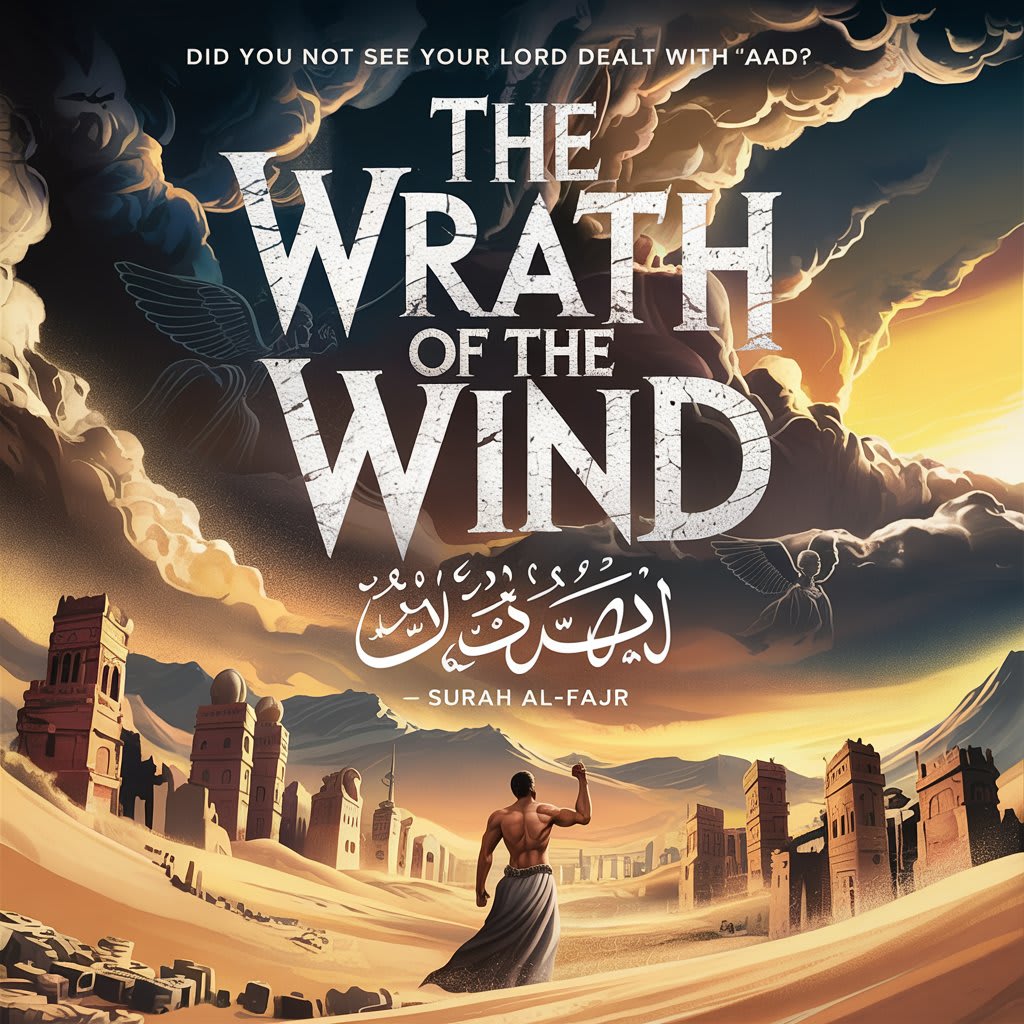
In the heart of the ancient desert, where sandstorms sing and time seems to stand still, once thrived a civilization whose grandeur echoed across generations — Qaum-e-Aad.
The people of Aad were mighty, not just in physical stature, but in ambition and strength. They lived in a city called Iram, often referred to as Iram Dhat al-‘Imad — Iram of the Lofty Pillars — a city unlike any seen before or after. Towering columns lined golden streets, lush gardens bloomed in the midst of barren lands, and canals of fresh water flowed beside palaces carved from marble. It was a marvel in the middle of the desert.
But with greatness came pride, and with pride came denial.
The Aad were proud of their achievements. They believed they had mastered the earth, controlled the skies, and conquered time. They built monuments not in the name of gratitude, but in honor of themselves. They bowed to no one, worshipped idols they had sculpted with their own hands, and mocked any voice that spoke of a power higher than theirs.
In their arrogance, they asked:
“Who is greater than us in strength?”
To guide them back to truth, Allah sent a prophet — a man named Hud (A.S.), noble in character and wise in word. He was one of their own, yet stood apart, chosen by the Almighty to awaken their sleeping hearts.
Hud (A.S.) stood in their marketplaces, entered their gatherings, and called out in sincerity:
“O my people! Worship Allah alone. You have no other god but Him. Will you not then fear Him?”
He reminded them of the blessings they enjoyed — fertile lands, strong bodies, and peace. He urged them to abandon their idols, to live with justice, and to bow in humility before the One who created them.
But the people of Aad were not ready to listen.
“You are nothing but a madman,” they said.
“A liar, just like those before you.”
“If what you say is true, then bring upon us the punishment you warn us about!”
Time passed. Hud (A.S.) warned them again and again. He spoke of divine wrath. He spoke of past nations who were destroyed by their arrogance. He reminded them that strength is a test — not a right. But they only mocked louder, more arrogantly than before.
Eventually, the heavens responded.
It started with a drought. The skies turned silent, withholding their rain. The ground dried and cracked. Their rivers shrank. Their crops failed. The once vibrant Iram began to fade.
Still, they remained defiant.
Then, on the horizon, a strange black cloud appeared. The people of Aad rejoiced, believing rain was finally returning.
“This,” they said, “is a cloud that will give us rain!”
But this was no mercy. It was wrath wrapped in wind.
The cloud was the beginning of a storm — not of water, but of violent, roaring wind. A wind unlike anything seen before. A wind that screamed like a thousand beasts, that tore through the land with unimaginable fury.
For seven nights and eight days, the storm raged.
Homes were uprooted. Palaces were flattened. Trees were ripped from the ground and tossed like twigs. The mighty men of Aad — who once laughed in pride — were hurled into the air like dry leaves, then crushed to the earth.
“We sent against them a screaming wind, violently raging, for seven nights and eight days — so that you could see people fallen, as if they were hollow trunks of palm trees.”
(Surah Al-Haqqah, 69:6-7)
When the storm ended, there was no Iram, no pillars, no laughter, no defiance. The land that once pulsed with life became a graveyard of forgotten pride. Not a single soul remained — except Hud (A.S.) and the few who believed in him. They were saved by the mercy of Allah and led to a new beginning elsewhere.
The ruins of Aad were swallowed by sand, but their story lives on — a lesson carved into time.
A Lesson for All Time
The story of Qaum-e-Aad is not a tale of ancient doom, but a mirror held up to every generation. Their downfall was not caused by a lack of resources, nor by war, but by a sickness of the heart: arrogance.
They mistook power for invincibility. They replaced worship with pride. They defied divine truth and mocked mercy. In doing so, they invited a punishment suited to their sin — not a sword or flood, but the very wind, the gentle breeze they once took for granted, turned into their destroyer.
The echo of Aad still whispers through the sands:
“Do not let your strength blind you.
Do not let your success deceive you.
For the One who gives, can take — without warning.”
About the Creator
Keep reading
More stories from writers in Education and other communities.
Healing the Hidden: Healthcare for the World’s Most Remote Populations
Across the globe, millions of people live in areas where access to healthcare is limited or nearly impossible. These communities, often tucked away in mountains, deserts, forests, or on distant islands, face challenges beyond the scope of ordinary medical care. Isolation, inadequate infrastructure, and shortages of trained medical professionals create a situation in which even basic health services are hard to obtain. Addressing these challenges requires creative solutions, collaboration, and a commitment to ensuring that no population is left behind.
By Baitulmaal5 days ago in Education
Autonomy Is The Real Privilege
Good morning, freedom-seekers! Today we’re gonna be looking at autonomy. A strange word, I know; one many would probably look at blankly and run away from on sight. We’re gonna figure out what it actually means, consider how it’s achieved, and decipher just how deeply most of us are tangled up in dependence without realising it.
By That ‘Freedom’ Guy4 days ago in Humans



Comments (1)
🌟 Comment: This story is a powerful reminder of how pride and arrogance can lead even the mightiest of nations to destruction. The way the tale of Qaum-e-Aad is brought to life here is both haunting and thought-provoking. The imagery of wind turning from a blessing to a punishment is deeply symbolic and beautifully written. It’s not just a historical account — it’s a timeless lesson for all of us today. Truly a story that echoes across centuries. Well done!