
The Open Road Russia’s Car Rental Transformation in 2026
How Mobility-as-a-Service Is Reshaping Car Rental
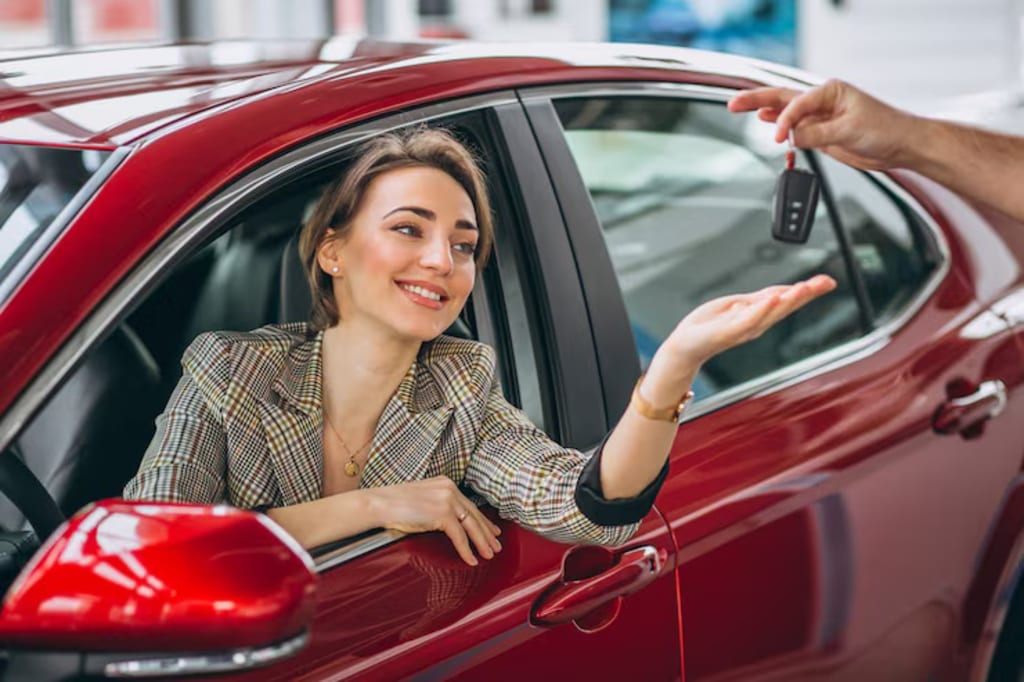
The vast expanse of Russia has always demanded mobility, but in 2026, the way Russians and visitors traverse this massive landscape has undergone a radical shift. The traditional car rental model, once dominated by global Western brands and paper-heavy contracts, has been replaced by a high-tech, digital-first ecosystem. Driven by a historic surge in domestic tourism, a total realignment of the automotive supply chain toward Eastern manufacturers, and the rise of "Super-Apps" that blend short-term car-sharing with long-term rentals, Russia car rental market is currently valued at over $2.52 billion. This "Rental Revolution" is not just about getting from point A to point B; it is about the democratization of the road in a post-sanctions economy where owning a car is becoming secondary to the convenience of renting one.
The Economic Surge: Domestic Tourism and the "Staycation" Boom
The primary engine behind the 2026 car rental boom is the unprecedented growth of Domestic Tourism. With international travel routes significantly altered, millions of Russians are choosing to explore their own backyard from the rugged mountains of the Altai to the sun-soaked resorts of Sochi and the historic "Golden Ring" cities. By early 2026, domestic tourism has seen a nearly 25% rebound, creating a massive demand for reliable transportation in regions that were previously underserved. Rental hubs are no longer confined to Moscow and St. Petersburg; we are seeing a proliferation of rental points in secondary cities and regional airports, catering to a new class of "Adventure Travelers" who prefer the flexibility of a self-drive holiday over a fixed tour bus.
This surge in demand has caught the eye of investors, pushing the market toward a healthy 8.14% CAGR (Compound Annual Growth Rate). Car rental companies are aggressively expanding their fleets to keep up, often leaning on the record 1.57 million new car registrations recorded in the previous year. For the rental operator in 2026, the focus has shifted from "Survival" to "Optimization." With interest rates remaining high, companies are utilizing advanced used-vehicle disposal programs to recycle capital and ensure that their fleets remain young and efficient. The result for the consumer is a wider variety of vehicles and more competitive pricing, as local champions like Delimobil, Rentmotors, and Yandex Drive compete for dominance in a market that is increasingly defined by the "Staycation" culture.
The Great Automotive Realignment: The Chinese Dominance
Perhaps the most visible change for anyone renting a car in Russia in 2026 is the make and model of the vehicles themselves. The once-ubiquitous European and American brands Volkswagen, Ford, and Renault have largely been replaced by a new generation of high-tech vehicles from China. Brands like Chery, Geely, Haval, and Changan now make up the backbone of the Russian rental fleet. In early 2026, these Chinese manufacturers have successfully captured the majority of the market, offering features that were previously reserved for "Luxury" tiers such as advanced driver-assistance systems (ADAS), large infotainment screens, and integrated AI at a "Compact" price point.
This realignment is not just about availability; it is about Technical Synergy. Most modern Chinese vehicles are designed with "Digital-First" architectures that integrate perfectly with Russian car-sharing and rental apps. For a rental company in 2026, maintaining a fleet of Geelys or Havals is significantly easier and cheaper than sourcing parts for aging Western models. This supply chain efficiency has allowed operators to keep daily rates surprisingly low, with economy class rentals in Moscow starting at around $17 to $20 per day. For the renter, this means they get to drive a brand-new, tech-heavy vehicle for a fraction of what a similar experience would cost in Europe or the US, turning the act of renting into an opportunity to test-drive the future of global automotive engineering.
The Hybrid Model: Where Rental Meets Car-Sharing
In 2026, the lines between "Traditional Rental" and "Car-Sharing" have almost entirely blurred. The Russian market has pioneered a "Mobility-as-a-Service" (MaaS) model that is now being studied globally. Platforms like Yandex Drive and Delimobil offer a seamless spectrum of services: you can rent a car for 15 minutes to cross town, or for 15 days to drive to the Ural Mountains, all through the same interface. This "Hybrid Model" has solved the biggest headache of traditional rentals the physical counter. By 2026, over 70% of rentals in major Russian cities are completed contactlessly. Your smartphone is your key, your contract, and your payment terminal.
This digital integration is supported by a massive leap in AI-Driven Logistics. AI models now predict demand at a granular level, moving cars around a city before the demand even peaks. For example, on a Friday afternoon in Moscow, AI algorithms ensure that a higher density of larger SUVs is available near residential districts for families planning weekend getaways. However, this tech-heavy approach has its challenges. In 2026, some renters have expressed frustration with AI-based damage detection systems high-resolution cameras and sensors that can automatically bill a user for a "ding" or "dent" that they might not have even noticed. This has led to a new demand for "Full-Protection" insurance packages, which have become a significant secondary revenue stream for rental operators.
Infrastructure and the Road Ahead: Challenges for 2027
While the industry is booming, the road to 2027 is not without its potholes. The primary challenge remains Infrastructure Development. While major highways between Moscow and Kazan or St. Petersburg are world-class, the road quality in more remote "Adventure" regions still lags behind. This has limited the expansion of rental fleets to more rugged, specialized 4x4 vehicles in those areas, which are more expensive to maintain. Furthermore, the Electric Vehicle (EV) Transition in Russia is moving at a slower pace than in Europe, primarily due to the vast distances and the extreme winter climates that can severely impact battery performance.
Despite these hurdles, the outlook for the Russian car rental sector is overwhelmingly positive. The government’s continued support for domestic tourism, combined with the technological agility of local players, ensures that the market will remain a cornerstone of the national economy. We are seeing the first signs of "Inter-Modal" travel packages, where a traveler can book a high-speed train ticket and a rental car at their destination through a single digital "Travel Passport." This level of integration is what will define the next phase of growth, turning the Russian car rental industry into a sophisticated, unified mobility network that serves both the daily commuter and the intrepid explorer.
Conclusion: A New Era of Mobility
As we look at the state of car rentals in Russia in 2026, the picture is one of a sector that has not only survived but thrived by embracing change. By pivoting toward domestic tourism, integrating with the Chinese automotive giant, and leading the world in digital mobility platforms, Russia has built a rental ecosystem that is resilient, affordable, and incredibly advanced. The "Silicon Road" of 2026 is one where the car is no longer a burden of ownership but a flexible tool for discovery. Whether you are a business traveler in Moscow or a family exploring the Altai wilderness, the message is clear: the open road in Russia has never been more accessible, and the future of how we drive it is already here.
About the Creator
Keep reading
More stories from Neeraj kumar and writers in Education and other communities.
The Chill Factor Russia Frozen Food Transformation in 2026
The global frozen food market has long been a barometer for urban lifestyle changes, but in 2026, Russia frozen food sector tells a unique story of resilience and self-sufficiency. Once a market heavily dependent on Western imports and global logistics, the Russian "Cold Chain" has undergone a radical domestic pivot. Driven by a surge in "Import Substitution," rising demand for convenience among the urban working class, and a renewed pride in local delicacies, the Russian frozen food market has reached a historic valuation of nearly $5.1 billion this year. This "Frozen Revolution" is defined by a shift from being a backup option for the freezer to becoming a gourmet, tech-driven solution for the modern Russian household.
By Neeraj kumarabout 5 hours ago in Education
Why Philly Schools Are Adding Mindfulness and Movement Programs
Walk into a classroom in South Philly, West Philly, or Germantown, and you’ll hear the same concerns from teachers: kids are distracted, overwhelmed, and carrying a lot more stress than they used to.
By Pete Nicholson3 days ago in Education
The Letter That Was Never Sent
In the quiet corner of an old town, where houses leaned gently toward one another as if sharing secrets, lived a man named Hamza. Hamza was known as a disciplined man — punctual, responsible, respected. He worked as an accountant in a private firm, kept his papers neat, his words measured, and his emotions carefully hidden behind polite smiles. People trusted him with money, deadlines, and serious matters. Yet no one knew what he trusted himself with. Regret. Every evening, after returning from work, Hamza unlocked a small wooden drawer beside his bed. Inside lay a bundle of letters tied with a faded blue ribbon. The paper had yellowed with time, the ink softened, but the words remained painfully clear. They were letters he had written to a woman named Ayesha. And never sent. Ayesha had once been the brightest chapter of his life. They met during university — in libraries, in corridors, in whispered conversations between lectures. She believed in him before he believed in himself. She read his early writings, encouraged his ambitions, imagined a future where their dreams walked side by side. But Hamza had been afraid. Afraid of commitment. Afraid of failure. Afraid of choosing love before security. When his family arranged a proposal from another household — practical, respectable, convenient — he did not protest strongly enough. He told himself that emotions fade, that stability matters more, that love is a luxury for the brave. Ayesha never argued. She only said quietly, “Some choices do not break hearts immediately. They break them slowly.” Then she left the city. Years passed. Hamza married, built a career, earned praise. His wife was kind, his life orderly, his future predictable. From the outside, everything looked successful. But inside him lived a persistent ache — not loud, not dramatic, just constant. Sometimes, late at night, he reread the unsent letters. I should have told you that you made me less afraid of the world. I should have said that loving you felt like coming home. I should have chosen courage once in my life. He never posted them. Not because he no longer cared — But because he cared too much. One winter evening, while organizing old files at the office, Hamza found a newspaper clipping folded carefully inside a forgotten folder. It announced a literary event in a nearby city. Among the invited speakers was a familiar name. Ayesha Rahman — Author and Educator. His breath paused. That night, sleep avoided him. Memories returned uninvited — her laughter, her patience, the way she listened as if every word mattered. After days of hesitation, Hamza decided to attend the event. Not to speak. Not to explain. Only to see whether time had softened what he never healed. The hall was modest but warm with voices and books. When Ayesha finally appeared on stage, Hamza almost failed to recognize her. She looked calmer now. Stronger. The same thoughtful eyes, but steadier, wiser. She spoke about writing, about loss, about how some experiences shape us silently for years before revealing their meaning. Her words were gentle, yet powerful — as if she had made peace with old wounds. Hamza listened with a tightening throat. After the session ended, people gathered around her. He waited at a distance, heart beating like a nervous student’s. When the crowd thinned, he stepped forward. “Ayesha,” he said quietly. She looked up. For a brief second, surprise crossed her face. Then recognition. Then something softer — acceptance, perhaps. “Hamza,” she replied calmly. “It’s been a long time.” They sat in a nearby café. Conversation came slowly at first — about work, writing, families, cities. Neither mentioned the past. Yet it hovered between them like a third presence. Finally, Ayesha spoke. “I once waited a long time for a letter that never came.” Hamza lowered his eyes. “I wrote many.” “I know,” she said gently. “You always did better with paper than with courage.” He smiled sadly. “I was afraid of choosing wrongly.” “And did choosing safely protect you from regret?” she asked, without bitterness. He did not answer. Before leaving, Hamza reached into his coat pocket and pulled out one folded letter — the oldest of them all. “I never sent this,” he said. “But I think… it belongs to you now.” She accepted it without opening. “Some letters,” she said softly, “are meant not to change the past, but to free the future.” That night, for the first time in years, Hamza returned home and found the drawer empty. He had burned the remaining letters. Not in anger. In release. Months later, something unexpected happened. Hamza began writing again — not letters this time, but stories. Stories about missed chances, quiet courage, slow forgiveness. He published anonymously at first, then openly. Readers connected with his honesty. Invitations followed — small workshops, talks, publications. He did not become famous. But he became lighter. One evening, he received an email from Ayesha. Your words have grown kinder, it read. I’m glad you finally learned to speak to yourself with mercy. Hamza closed his laptop and looked out the window. For the first time, regret no longer felt like a prison. It felt like a teacher. And he understood something that took him decades to learn: Some letters are never meant to be sent. Some loves are never meant to last. But every honest regret can become the beginning of a wiser life.
By Muhammad yaseen7 days ago in Education




Comments
There are no comments for this story
Be the first to respond and start the conversation.