
The Letter That Was Never Sent
A story about regret, forgiveness, and the courage to begin again
In the quiet corner of an old town, where houses leaned gently toward one another as if sharing secrets, lived a man named Hamza.
Hamza was known as a disciplined man — punctual, responsible, respected. He worked as an accountant in a private firm, kept his papers neat, his words measured, and his emotions carefully hidden behind polite smiles. People trusted him with money, deadlines, and serious matters. Yet no one knew what he trusted himself with.
Regret.
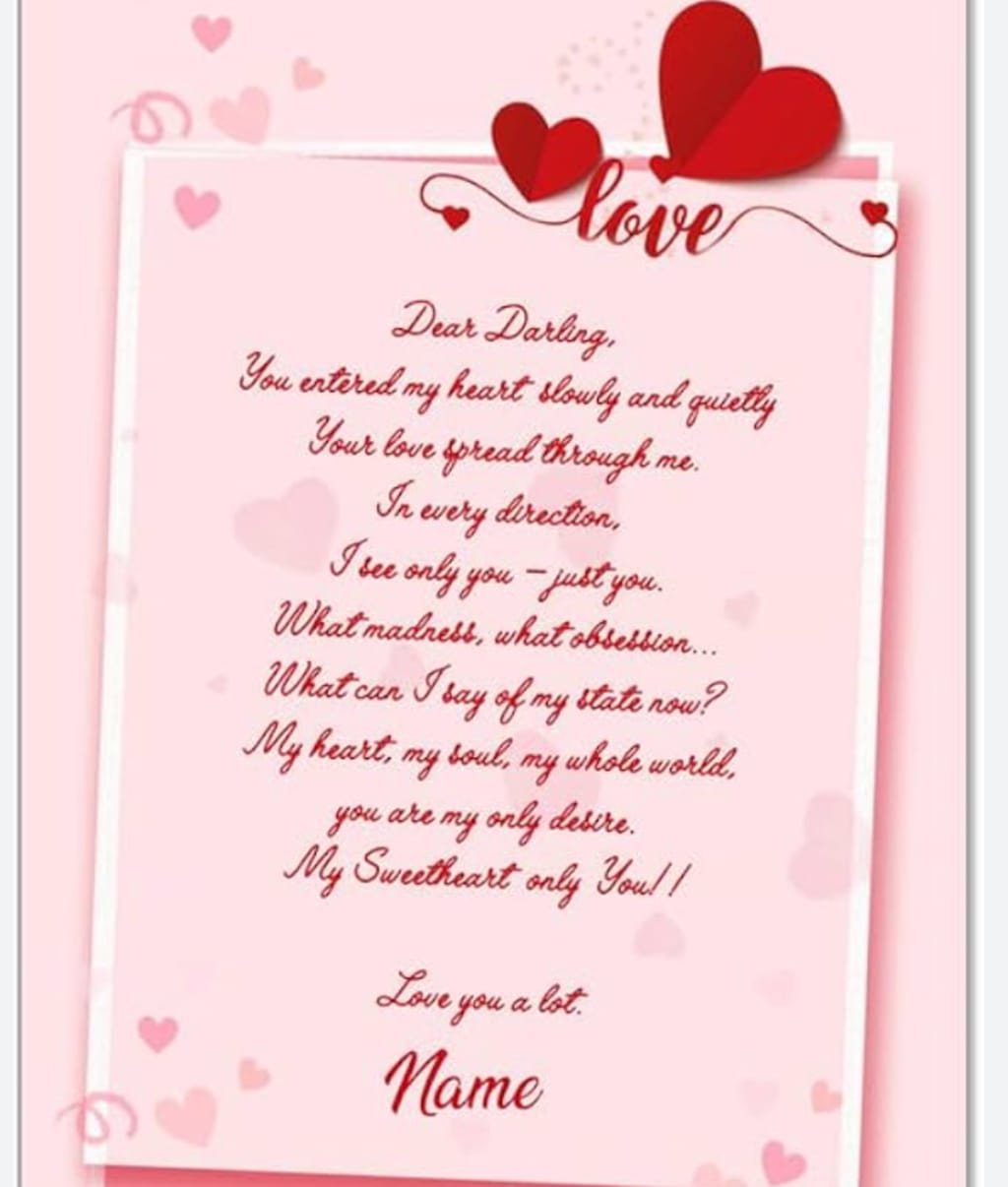
Every evening, after returning from work, Hamza unlocked a small wooden drawer beside his bed. Inside lay a bundle of letters tied with a faded blue ribbon. The paper had yellowed with time, the ink softened, but the words remained painfully clear.
They were letters he had written to a woman named Ayesha.
And never sent.
Ayesha had once been the brightest chapter of his life. They met during university — in libraries, in corridors, in whispered conversations between lectures. She believed in him before he believed in himself. She read his early writings, encouraged his ambitions, imagined a future where their dreams walked side by side.
But Hamza had been afraid.
Afraid of commitment.
Afraid of failure.
Afraid of choosing love before security.
When his family arranged a proposal from another household — practical, respectable, convenient — he did not protest strongly enough. He told himself that emotions fade, that stability matters more, that love is a luxury for the brave.
Ayesha never argued.
She only said quietly, “Some choices do not break hearts immediately. They break them slowly.”
Then she left the city.
Years passed.
Hamza married, built a career, earned praise. His wife was kind, his life orderly, his future predictable. From the outside, everything looked successful.
But inside him lived a persistent ache — not loud, not dramatic, just constant.
Sometimes, late at night, he reread the unsent letters.
I should have told you that you made me less afraid of the world.
I should have said that loving you felt like coming home.
I should have chosen courage once in my life.
He never posted them.
Not because he no longer cared —
But because he cared too much.
One winter evening, while organizing old files at the office, Hamza found a newspaper clipping folded carefully inside a forgotten folder. It announced a literary event in a nearby city.
Among the invited speakers was a familiar name.
Ayesha Rahman — Author and Educator.
His breath paused.
That night, sleep avoided him. Memories returned uninvited — her laughter, her patience, the way she listened as if every word mattered.
After days of hesitation, Hamza decided to attend the event.
Not to speak.
Not to explain.
Only to see whether time had softened what he never healed.
The hall was modest but warm with voices and books. When Ayesha finally appeared on stage, Hamza almost failed to recognize her.
She looked calmer now. Stronger. The same thoughtful eyes, but steadier, wiser.
She spoke about writing, about loss, about how some experiences shape us silently for years before revealing their meaning. Her words were gentle, yet powerful — as if she had made peace with old wounds.
Hamza listened with a tightening throat.
After the session ended, people gathered around her. He waited at a distance, heart beating like a nervous student’s.
When the crowd thinned, he stepped forward.
“Ayesha,” he said quietly.
She looked up.
For a brief second, surprise crossed her face. Then recognition. Then something softer — acceptance, perhaps.
“Hamza,” she replied calmly. “It’s been a long time.”
They sat in a nearby café.
Conversation came slowly at first — about work, writing, families, cities. Neither mentioned the past. Yet it hovered between them like a third presence.
Finally, Ayesha spoke. “I once waited a long time for a letter that never came.”
Hamza lowered his eyes. “I wrote many.”
“I know,” she said gently. “You always did better with paper than with courage.”
He smiled sadly. “I was afraid of choosing wrongly.”
“And did choosing safely protect you from regret?” she asked, without bitterness.
He did not answer.
Before leaving, Hamza reached into his coat pocket and pulled out one folded letter — the oldest of them all.
“I never sent this,” he said. “But I think… it belongs to you now.”
She accepted it without opening.
“Some letters,” she said softly, “are meant not to change the past, but to free the future.”
That night, for the first time in years, Hamza returned home and found the drawer empty.
He had burned the remaining letters.
Not in anger.
In release.
Months later, something unexpected happened.
Hamza began writing again — not letters this time, but stories. Stories about missed chances, quiet courage, slow forgiveness. He published anonymously at first, then openly. Readers connected with his honesty. Invitations followed — small workshops, talks, publications.
He did not become famous.
But he became lighter.
One evening, he received an email from Ayesha.
Your words have grown kinder, it read.
I’m glad you finally learned to speak to yourself with mercy.
Hamza closed his laptop and looked out the window.
For the first time, regret no longer felt like a prison.
It felt like a teacher.
And he understood something that took him decades to learn:
Some letters are never meant to be sent.
Some loves are never meant to last.
But every honest regret can become the beginning
of a wiser life.
About the Creator
Keep reading
More stories from Muhammad yaseen and writers in Education and other communities.
The Road That Taught Him Silence
In the small village where the mountains met the fields, mornings arrived quietly. The sun did not rise in a hurry there; it climbed slowly, as if respecting the stillness of the land. Birds were the first to greet the light, their soft calls weaving through the narrow lanes and mud-brick houses. Aamir had learned to wake before the village did. At first, this habit was forced. Sleepless nights, heavy thoughts, and restless dreams had pushed him out of bed before dawn. He did not know where to go, only that staying inside the house made his chest feel tighter, his breath shorter, his mind louder. One morning, without purpose, he stepped outside and began walking toward the path that lay between the barley fields and the low, blue mountains. That path soon became his silent companion. Every day, he walked there — sometimes quickly, sometimes slowly, sometimes stopping for long minutes to watch the wind bend the crops like a green ocean. The path was narrow and uneven, yet it carried him faithfully, never asking where he was going or why. In its quiet presence, he found a strange comfort. Aamir was not unhappy in the usual sense. He had food, family, and education. He taught children in the village school and was respected by many. Yet inside him lived a deep confusion — a soft but constant question: Am I becoming what I was meant to become? He had dreams once — of writing, of speaking beautifully, of guiding others not only through lessons but through life itself. But responsibilities had grown faster than courage. Slowly, without noticing, he had begun to doubt himself. And doubt, unlike pain, does not shout. It whispers. On one such morning, when the mist still clung to the fields like a thin veil, Aamir noticed footprints beside his own. They were not fresh, but they were regular — the marks of someone who walked the same road every day. A few minutes later, he found their owner. An old man sat on a flat stone near the edge of the path, a wooden staff resting beside him, a small flock of sheep grazing quietly nearby. His beard was silver, his clothes simple, and his eyes clear in a way that surprised Aamir. Those eyes did not seem tired by age; they seemed polished by time. “Peace be upon you,” Aamir greeted. “And upon you, peace,” the old man replied warmly. “You walk early.” “So do you,” Aamir smiled. The old man nodded. “The morning is honest. It shows you who you are before the world begins to tell you who you should be.” The words struck Aamir gently, like a leaf touching water. From that day onward, they met often. Sometimes they spoke, sometimes they shared long silences. The old man never asked many questions, yet somehow Aamir found himself speaking — about his students, his ambitions, his fear of wasting his abilities, his constant comparison with others who seemed more confident, more successful, more certain. One morning, Aamir confessed, “I feel as if I am standing still while the world moves ahead.” The old man watched the sheep for a moment, then said, “Have you seen a tree grow?” “Yes.” “Does it run to become tall?” “No.” “Yet it becomes tall.” Aamir smiled faintly. “But people judge trees by their height.” “They do,” the old man agreed. “But trees are not planted to impress people. They are planted to become themselves.” The sentence stayed with Aamir long after the walk ended. Days turned into weeks, and weeks into months. With each walk, something inside him shifted — slowly, almost invisibly. He began to notice small beauties he had ignored before: the way dew rested on grass like tiny mirrors, the rhythm of his own breathing, the calm dignity of the mountains that never hurried yet never failed to stand firm. One morning, Aamir arrived to find the stone empty. No sheep. No staff. No silver-bearded teacher. For several days, he returned at the same hour, hoping to meet the old man again. But the path remained silent, as if it had never known such a presence. Disappointment crept into his heart. On the seventh morning, as he walked farther than usual, he noticed a small bundle placed carefully beside the path. Inside it lay a worn notebook and a folded piece of paper. The note read: “To the one who walks with questions, Do not search for me again. I was only a mirror, not a guide. The road has taught you silence. Silence has taught you clarity. Now let clarity teach you courage. Remember: You are not late. You are not lost. You are simply growing underground.” Aamir sat there for a long time, holding the paper with trembling hands. That day, when he returned home, he opened his old notebooks, the ones where unfinished writings slept like forgotten seeds. For the first time in years, he wrote not to impress, not to compete, but to understand himself. He began to speak more gently to his students, not only teaching lessons, but listening to fears. He encouraged them to walk, to observe, to think, to trust their own pace. And every morning, he still walked the same path. The road never answered his questions directly. But slowly, quietly, it returned something far more precious: The belief that becoming oneself is not a race — It is a journey best taken in silence, With steady steps, And an honest heart.
By Muhammad yaseenabout 23 hours ago in Education
Turning a History Lesson Into an Escape Room Game
History is often taught through lectures, textbooks, and timelines — methods that can feel dry and distant. But what if students could experience history instead of just reading about it? One of the most engaging ways to do this is by transforming a history lesson into an escape room game. This interactive approach combines problem-solving, teamwork, and storytelling to make history memorable and exciting.
By Games Mode On6 days ago in Education
Ai Basics Everyone Should Know for the Future
Artificial Intelligence (AI) is no longer a distant concept reserved for scientists or tech companies. It’s already shaping how we work, learn, communicate, and make decisions. From recommendation systems on streaming platforms to AI assistants that help write emails, analyze data, or generate images, AI has quietly become part of everyday life.
By Anthony Bahamonde5 days ago in Education
Affection and Healing for Yourself
During the night of the last quarter moon, I gathered my ritual supplies. I carefully handled the chunk of black tourmaline that would protect me from your overall negative and narcissistic energy. I carefully walked the house with my stick of selenite in hand, asking the universe to cleanse our working space.
By Alisha Wilkins ✒️🦋🖋️5 days ago in Fiction


Comments
There are no comments for this story
Be the first to respond and start the conversation.