
The Chill Factor Russia Frozen Food Transformation in 2026
Convenience, Quality, and the Reinvention of Cold-Chain Food
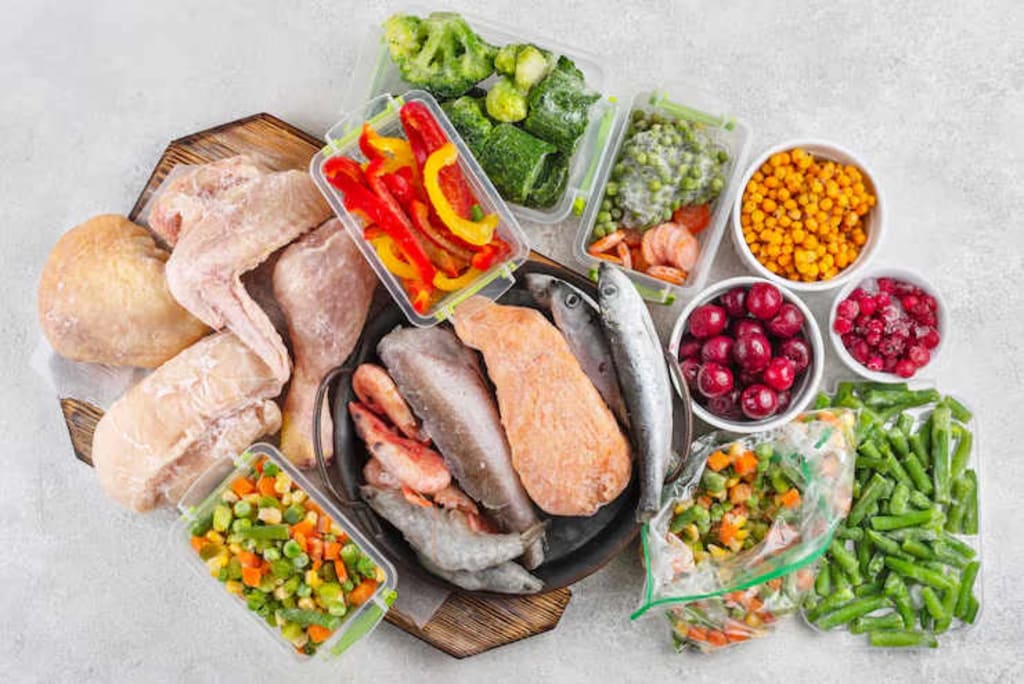
The global frozen food market has long been a barometer for urban lifestyle changes, but in 2026, Russia frozen food sector tells a unique story of resilience and self-sufficiency. Once a market heavily dependent on Western imports and global logistics, the Russian "Cold Chain" has undergone a radical domestic pivot. Driven by a surge in "Import Substitution," rising demand for convenience among the urban working class, and a renewed pride in local delicacies, the Russian frozen food market has reached a historic valuation of nearly $5.1 billion this year. This "Frozen Revolution" is defined by a shift from being a backup option for the freezer to becoming a gourmet, tech-driven solution for the modern Russian household.
The Economic Pivot Growth Amidst Supply Chain Shifts
The economic landscape of Russia's frozen food industry in 2026 is a study in adaptation. While international sanctions and trade barriers initially disrupted the supply of foreign frozen goods, the domestic industry has stepped in with unprecedented speed. Market projections for 2026 show that while imports have dipped by over 11% compared to previous highs, domestic production has surged to fill the gap. Russian enterprises, from agriculture giants like Miratorg to specialized processed food firms like Cherkizovo, are investing heavily in localized freezing and packaging infrastructure. This shift isn't just about filling empty shelves; it’s about "Technological Sovereignty" in the food chain, ensuring that from farm to freezer, the process remains entirely within the domestic ecosystem.
This economic growth is further bolstered by the rapid expansion of the Ready-to-Cook (RTC) and Ready-to-Eat (RTE) segments, which are currently growing at a CAGR of over 5%. The 2026 Russian consumer is increasingly time-poor but quality-conscious. With a record number of women in the workforce and a thriving urban middle class in cities like Moscow, St. Petersburg, and Kazan, the demand for high-quality, pre-prepared meals has skyrocketed. Frozen food is no longer seen as a "compromise" on nutrition; rather, advanced "Shock Freezing" technology (IQF) has convinced consumers that frozen produce can be just as fresh and nutrient-dense as its "fresh" counterparts. This trust has allowed the market to expand into premium categories, where a single frozen meal can command a price point previously reserved for mid-range restaurant dining.
The Return to Heritage: Pelmeni, Blinis, and National Pride
If there is one category that anchors the 2026 Russian frozen food market, it is Domestic Delicacies. While Western-style frozen pizzas and chicken nuggets remain popular, they have been eclipsed by a massive return to traditional Russian comfort foods. Pelmeni (meat-stuffed dumplings) and Blinis (Russian crepes) now account for nearly 17% of all processed frozen sales. In 2026, these products are being "Premiumized" manufacturers are using organic meats, farm-fresh fillings, and artisanal recipes to target a nostalgic yet discerning audience. This "Heritage Branding" allows companies to charge a premium while tapping into a sense of national pride and culinary authenticity that foreign brands simply cannot replicate.
This focus on heritage is also visible in the Frozen Meat and Poultry segment, which remains the largest part of the market. Russian consumers have a deep-seated preference for meat, and in 2026, frozen meat snacks and "on-the-go" protein options have become a staple. Companies like Conagra and Nestle, which once dominated these categories, have largely been replaced or absorbed by local players who have mastered the "local palate." We are seeing a surge in regional specialties such as Siberian venison dumplings or Caucasian-style frozen kebabs being marketed across the country. This regionalization of the freezer aisle has turned the supermarket into a culinary map of Russia, offering a level of variety that has fundamentally changed how the average family plans their weekly meals.
Technological Advancement: AI and Eco-Friendly Packaging
The "Frozen Future" of 2026 is being built on a foundation of Digital and Environmental Innovation. The integration of Artificial Intelligence (AI) into the "Cold Chain" logistics has been a game-changer. AI models now predict demand surges with incredible accuracy, allowing factories to adjust production cycles in real-time and reducing the massive waste traditionally associated with frozen logistics. Furthermore, "Smart Freezers" in supermarkets are now equipped with sensors that monitor temperature fluctuations at a granular level, ensuring that the "Cold Chain" is never broken from the factory to the consumer's basket. This level of technical precision has significantly improved the quality and shelf-life of products, further boosting consumer confidence.
Sustainability has also become a non-negotiable standard in 2026. As Russian consumers become more environmentally aware, there has been a massive shift toward Biodegradable and Recyclable Packaging. Traditional plastic containers are being phased out in favor of bagasse-based boxes and compostable films. The 2026 "Green Mandate" has forced manufacturers to rethink not just the food, but the footprint it leaves behind. This eco-conscious pivot is particularly popular among Gen Z and Millennial shoppers, who view their food choices as an extension of their values. In 2026, a brand that offers "Shock-Frozen, Locally Sourced, Eco-Packed" meals is practically guaranteed market dominance, proving that even in a traditional market like Russia, the future of food is undeniably green.
The E-commerce Explosion and the Rise of the "Digital Kitchen"
Perhaps the most visible transformation in 2026 is how frozen food is bought. While supermarkets and hypermarkets still lead the market, the Online Shop segment is the fastest-growing sales channel. The "Digital Kitchen" has become a reality for millions of Russians, where frozen staples are ordered via apps and delivered in climate-controlled vans within the hour. This "Last-Mile" efficiency has made it possible for consumers to treat their home freezer as an extension of the supermarket shelf. We are seeing a rise in "Dark Kitchens" that exclusively use high-end frozen ingredients to prepare meals for delivery apps, further blurring the lines between "Frozen Food" and "Restaurant Quality."
This digital shift has also empowered smaller, niche producers. In 2026, a small-scale producer of organic frozen berries from the Altai region or a boutique dumpling shop in Yekaterinburg can reach a national audience through specialized marketplaces. This democratization of the supply chain has introduced a level of competition and creativity that was previously impossible. For the consumer, this means a "Gourmet Freezer" is now accessible at the touch of a button, offering everything from vegan frozen treats to exotic fish from the Russian Far East. The 2026 Russian freezer is no longer just a place for "emergencies" it is a curated collection of high-quality, diverse, and technologically advanced food.
Conclusion: A Resilient Future
As we look at the state of Russia’s frozen food industry in 2026, it is clear that the sector has not only survived a period of intense volatility but has emerged stronger and more innovative. By embracing "Import Substitution," leaning into traditional culinary heritage, and leading with AI and sustainable technology, Russia has built a resilient and self-sustaining frozen food ecosystem. The industry has successfully proven that "Frozen" can mean "Fresh," "Traditional," and "Premium" all at once. For the global observer, Russia’s frozen food story in 2026 is a blueprint for how a domestic market can thrive by looking inward and moving forward simultaneously, ensuring that the "Red Renaissance" is as cold as it is vibrant.
About the Creator
Keep reading
More stories from Neeraj kumar and writers in Education and other communities.
The Golden Pulse: Spain’s Luxury Revolution and the New Paradigm of 2026
For decades, the global luxury map was anchored by the historic maisons of Paris and the artisanal workshops of Milan. However, as we move through 2026, the narrative of high-end consumption has shifted significantly toward the Iberian Peninsula. Spain has emerged not just as a destination for sun and culture, but as a premier global hub for the Spain luxury goods industry. Driven by a resilient domestic affluent class, a record-breaking surge in high-net-worth tourism, and a unique blend of heritage craftsmanship and digital innovation, the Spanish luxury market has reached a historic valuation of over $7.4 billion this year. This "Spanish Renaissance" in luxury is defined by a shift from mere status symbols to "Experiential Value," where the soul of the product and the ethics of the brand are as important as the price tag.
By Neeraj kumarabout 21 hours ago in Education
Everyday Motion Explained, What Modern Kinesiology Teaches Us About How We Move
Modern kinesiology has changed how we understand the way people move each day. It examines how muscles, joints, and nerves work together during simple actions such as walking, reaching, or sitting. Instead of focusing solely on sports or injury, modern kinesiology studies daily movement and its effects it comfort, balance, and energy. This field shows that small habits shape how the body feels over time, even when pain is not present.
By Kelln Small5 days ago in Education
The New Career Compass: How AI Is Redefining Work and Opportunity
Artificial intelligence has moved from science fiction into everyday working life. It now shapes how people find jobs, perform tasks, and plan long-term career paths. From creative fields to technical roles, AI is changing what skills matter and how success is measured. Instead of replacing ambition, this technology is becoming a powerful tool that helps workers adapt, grow, and stay relevant in a fast-moving job market.
By Greg Deshields4 days ago in Education
TUS NUA - ch 49
TUS NUA – ch 49 New Beginnings – Mia and Midnight (*)(*)(*) As Mia spoke on the phone to Ali’s sister, Ellen, Finola slipped quietly away and walked to the stream behind Tus Nua. Carefully, she put a block on her family so no one could know what she was about to do.
By Margaret Brennan6 days ago in Fiction



Comments
There are no comments for this story
Be the first to respond and start the conversation.