
The Intelligent Investor by Benjamin Graham
Benjamin Graham

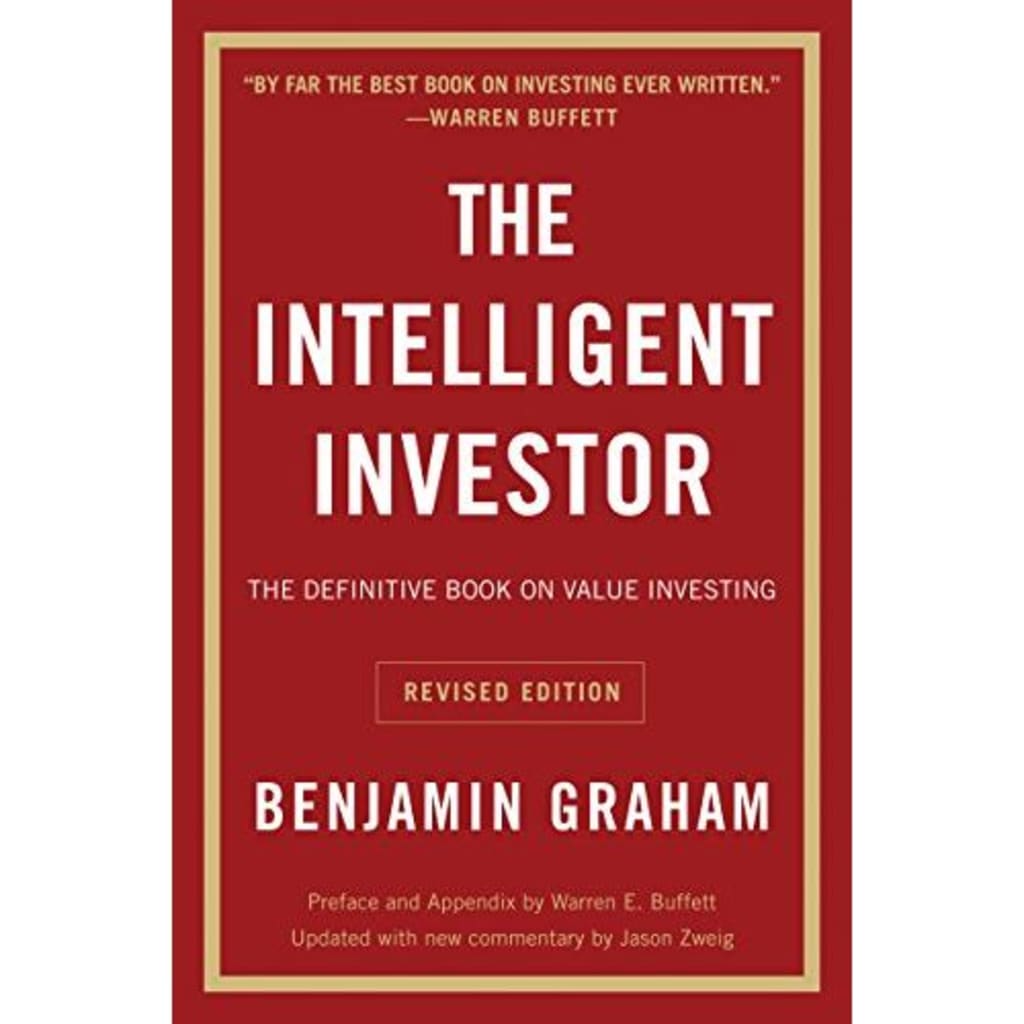
Introduction
Investing in the stock market can be a daunting task, especially for beginners. The unpredictability and volatility of the market can make it difficult to navigate without proper guidance. This is where "The Intelligent Investor" by Benjamin Graham comes in. Published in 1949, this timeless classic has become a cornerstone of value investing and provides valuable insights and strategies for both novice and seasoned investors. In this article, we will explore the key concepts and principles put forth by Benjamin Graham in his influential book.
Table of Contents
Understanding the Philosophy of Value Investing
The Difference between Investing and Speculating
Analyzing Stocks: Fundamental Analysis
The Importance of Margin of Safety
Building a Diversified Portfolio
Contrarian Investing: Buying When Others Are Selling
Market Fluctuations: The Mr. Market Analogy
Long-Term Investing and the Power of Compound Interest
The Role of Emotional Discipline in Investing
The Investor's Relationship with Brokers and Financial Advisors
The Case for Passive Investing: Index Funds and ETFs
Evaluating Bonds and Fixed-Income Securities
Investing in Real Estate: REITs and Property
Strategies for Dealing with Market Bubbles and Crashes
Benjamin Graham's Lasting Legacy
1. Understanding the Philosophy of Value Investing
Value investing is the core philosophy advocated by Benjamin Graham. It involves identifying stocks that are undervalued by the market and investing in them with a long-term perspective. The intelligent investor seeks out opportunities where the market price does not reflect the true intrinsic value of the stock, presenting a potential for substantial returns.
2. The Difference between Investing and Speculating
Graham emphasizes the importance of distinguishing between investing and speculating. Investing involves careful analysis of a company's fundamentals, such as its earnings, assets, and competitive position, while speculation is driven by short-term price movements and market trends. The intelligent investor focuses on investing rather than speculating, aiming to build wealth steadily over time.
3. Analyzing Stocks: Fundamental Analysis
To make informed investment decisions, Graham emphasizes the significance of fundamental analysis. This involves assessing a company's financial statements, industry position, management team, and competitive advantages. By evaluating these factors, investors can gain insights into the company's intrinsic value and make rational investment choices.
4. The Importance of Margin of Safety
Graham introduces the concept of the margin of safety, which acts as a protective buffer against unforeseen events and market fluctuations. By purchasing stocks at a significant discount to their intrinsic value, investors create a margin of safety that reduces the risk of permanent capital loss.
5. Building a Diversified Portfolio
Diversification is a key strategy for risk management in investing. Graham advises investors to spread their investments across different asset classes and industries to minimize exposure to any single stock or sector. This approach helps to cushion against losses and increases the potential for long-term gains.
6. Contrarian Investing: Buying When Others Are Selling
Graham encourages contrarian investing, which involves buying stocks when they are out of favor with the market. By going against the crowd and identifying undervalued opportunities during market downturns, investors can capitalize on potential future appreciation as market sentiment improves.
7. Market Fluctuations: The Mr. Market Analogy
In "The Intelligent Investor," Graham introduces the concept of Mr. Market, an allegorical figure representing the stock market's emotional behavior. Graham advises investors to treat Mr. Market's daily price fluctuations as noise and not let them dictate investment decisions. Instead, investors should focus on long-term fundamentals and rational analysis.
8. Long-Term Investing and the Power of Compound Interest
Graham emphasizes the benefits of long-term investing and harnessing the power of compound interest. By patiently holding quality stocks over an extended period, investors can benefit from the compounding effect, where their investment gains generate additional returns over time.
9. The Role of Emotional Discipline in Investing
Controlling emotions is crucial in successful investing. Graham highlights the importance of emotional discipline and avoiding herd mentality. By maintaining a rational and disciplined approach, investors can avoid making impulsive decisions driven by fear or greed.
10. The Investor's Relationship with Brokers and Financial Advisors
Graham provides guidance on establishing a constructive relationship with brokers and financial advisors. He advises investors to carefully select trustworthy professionals who prioritize the investor's best interests and provide unbiased advice.
11. The Case for Passive Investing: Index Funds and ETFs
"The Intelligent Investor" also touches upon the concept of passive investing through index funds and exchange-traded funds (ETFs). Graham highlights the benefits of low-cost, diversified investment vehicles that track broad market indexes, offering exposure to a range of stocks.
12. Evaluating Bonds and Fixed-Income Securities
In addition to stocks, Graham delves into the evaluation of bonds and fixed-income securities. He explains the key metrics and considerations for assessing the creditworthiness of bonds, including interest rates, maturity dates, and the issuer's financial stability.
13. Investing in Real Estate: REITs and Property
Graham expands the scope of investing beyond stocks and bonds, discussing the merits of real estate investment trusts (REITs) and direct property investment. He provides insights into evaluating real estate opportunities and the potential benefits of including real estate in an investment portfolio.
14. Strategies for Dealing with Market Bubbles and Crashes
Graham offers strategies for navigating market bubbles and crashes, which are inherent parts of investing. He advises investors to exercise caution during periods of excessive optimism and euphoria, as well as during market downturns. By maintaining a long-term perspective and adhering to a disciplined investment approach, investors can mitigate the impact of market volatility.
15. Benjamin Graham's Lasting Legacy
"The Intelligent Investor" has stood the test of time and remains one of the most influential investment books ever written. Graham's principles continue to guide investors around the world, emphasizing the importance of value investing, rational analysis, and emotional discipline.
Conclusion
"The Intelligent Investor" by Benjamin Graham is a must-read for anyone looking to navigate the complexities of the stock market with intelligence and prudence. This seminal work provides invaluable insights into value investing, risk management, and long-term wealth creation. By following Graham's teachings, investors can increase their chances of achieving financial success while maintaining a rational and disciplined approach.
Frequently Asked Questions
What makes "The Intelligent Investor" by Benjamin Graham a timeless investment classic?
" The Intelligent Investor" by Benjamin Graham has stood the test of time due to its timeless principles and valuable insights into value investing, risk management, and emotional discipline.
Is "The Intelligent Investor" suitable for beginner investors?
Yes, "The Intelligent Investor" provides a solid foundation for beginner investors by introducing fundamental concepts and emphasizing long-term investing strategies.
Can I apply Benjamin Graham's principles in today's modern market?
Yes, Benjamin Graham's principles are applicable to today's market. While market conditions may change, the core principles of value investing, rational analysis, and emotional discipline remain relevant.
Are there any updated editions of "The Intelligent Investor" available?
Yes, there are updated editions of "The Intelligent Investor" that include commentary and annotations by financial experts. These editions provide additional insights and context.
How can I incorporate the teachings of Benjamin Graham into my investment strategy?
To incorporate Benjamin Graham's teachings, focus on fundamental analysis, seek undervalued opportunities, maintain a long-term perspective, and exercise emotional discipline. It's also advisable to diversify your portfolio and consider the margin of safety.
About the Creator
Karim Mossa
mmmm
Keep reading
More stories from Karim Mossa and writers in Education and other communities.
Think and Grow Rich by Napoleon Hill
Introduction "Think and Grow Rich" by Napoleon Hill is a renowned self-help and personal development book that has inspired millions of individuals to unlock their potential for success and wealth. Published in 1937, this timeless classic offers practical advice, mindset shifts, and success principles that can be applied to various aspects of life. In this article, we will delve into the key concepts and teachings presented in "Think and Grow Rich."
By Karim Mossa3 years ago in Education
Are Wormholes Real or Just Equations? Exploring the Reality of Spacetime Tunnels
What Is a Wormhole? A wormhole is a hypothetical tunnel connecting two separate regions of spacetime. Instead of traveling across the vast distances of space, a traveler could pass through a shortcut created by spacetime geometry itself.
By shahkar jalal7 days ago in Education
Do You have a Support Network?
Life is harder when you’re on your own. Human beings are social creatures, and we usually feel better when we have support from a strong social network around us. For most people, it’s our families that hold us together like glue.
By Elizabeth Woodsabout 12 hours ago in Psyche


Comments
There are no comments for this story
Be the first to respond and start the conversation.