
The Importance of Foreign Languages in the Era of Globalization
Bridging Cultures and Economies: The Role of Multilingualism in Today’s Globalized Society

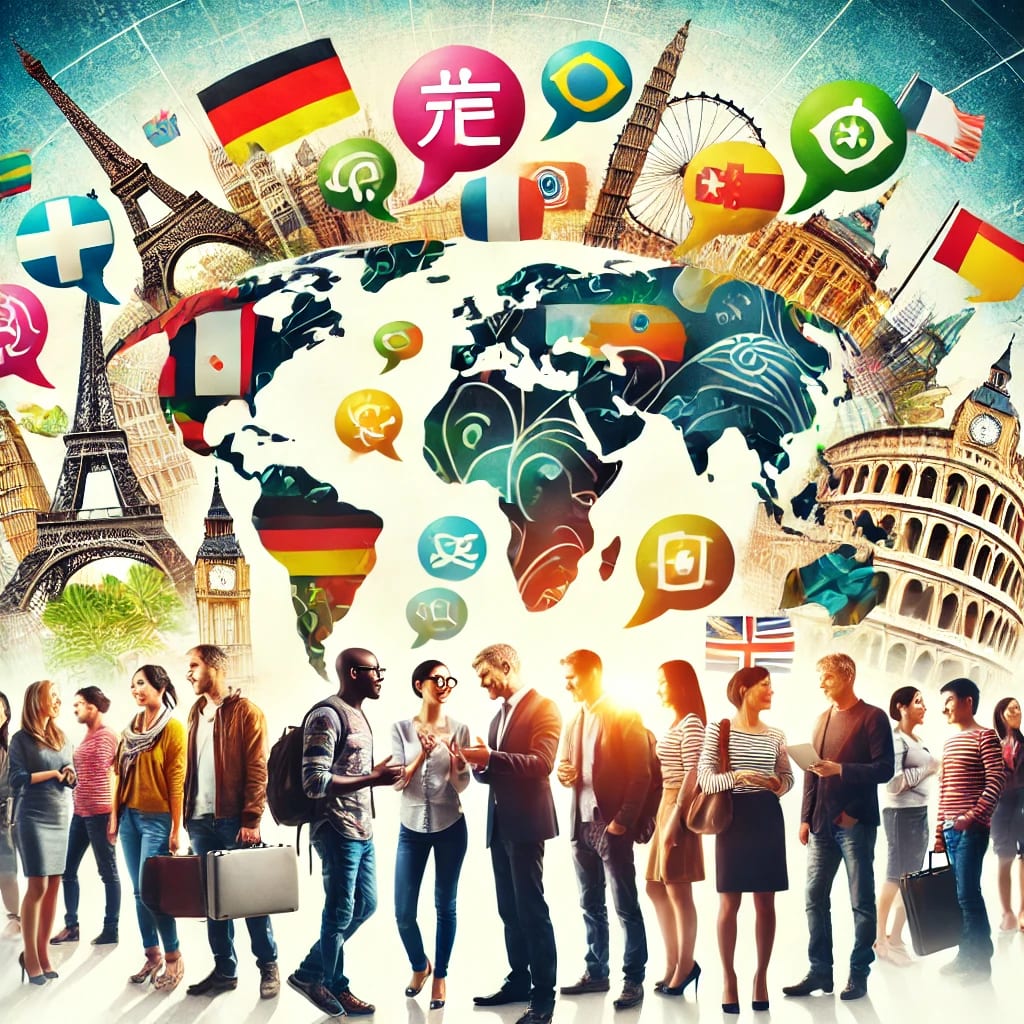
Introduction
In the era of globalization, learning foreign languages has become a crucial aspect of personal and professional development. With increasing interconnectedness between countries and cultures, the ability to communicate in multiple languages not only enriches individual skills but also opens new opportunities in the global job market. This article explores the importance of foreign languages in contemporary society, analyzing the economic, cultural, and personal benefits derived from the knowledge of multiple languages.
Economic Benefits
Job Opportunities
One of the primary advantages of learning foreign languages is the increase in job opportunities. In an increasingly competitive job market, employers tend to prefer candidates with advanced language skills, as they can facilitate international communications and open new business possibilities. Multinational companies, in particular, seek professionals who can operate effectively in multicultural contexts, managing clients and foreign partners with ease.
The importance of this skill is particularly evident in sectors such as tourism, hospitality, and export-import. For example, a sales manager who speaks the client’s language fluently is more likely to close a deal than one who communicates only in English. Additionally, the ability to understand and adapt to different business cultures can determine the success of a negotiation or an entire business strategy.
Salary Increase
Various studies show that knowing a second language can lead to a significant increase in salary. For example, a report from the National Bureau of Economic Research highlighted that bilingual individuals can earn on average between 5% and 20% more than their monolingual colleagues. This salary difference is particularly evident in sectors such as international trade, diplomacy, and interpreting, where the mastery of foreign languages is a fundamental skill.
The salary difference also reflects in additional benefits and career advancement opportunities. Multilingual employees tend to receive more prestigious assignments and international travel, which in turn offer valuable experiences and further growth opportunities. This economic advantage also extends to entrepreneurs who can expand their target markets and diversify their income sources.
Benefits for Companies
Companies that invest in language training for their employees can benefit from increased competitiveness in the international market. The ability to communicate effectively in different languages allows for stronger relationships with foreign partners and clients, improving the company’s reputation and increasing the chances of success in international negotiations. Additionally, a multilingual workforce can help overcome cultural barriers and avoid costly misunderstandings.
Corporate language training not only improves internal communication but also creates a more inclusive and collaborative work environment. Employees from different parts of the world can work together more effectively, sharing ideas and innovative solutions. This type of linguistic and cultural diversity within the company can lead to greater creativity and better problem-solving capabilities.
Cultural Benefits
Cultural Understanding and Tolerance
Learning foreign languages promotes greater understanding and tolerance of cultural differences. By studying a language, one comes into contact with the history, traditions, and values of the country where it is spoken. This process enriches one’s worldview and helps develop a more open and inclusive mindset. Intercultural competence is essential in a global society where cooperation between different nations is crucial to addressing common challenges such as climate change, international security, and public health.
Moreover, the knowledge of foreign languages facilitates access to literary works, films, music, and other forms of cultural expression in their original language. This cultural enrichment not only increases one’s knowledge but also allows for better appreciation of the nuances and deep meanings that may be lost in translation. For example, reading Dostoevsky in Russian or listening to Edith Piaf in French offers a much more intense and authentic experience.
Preservation of Cultural Heritage
Languages are vehicles of a community’s cultural heritage. Through language, stories, poems, legends, and traditional knowledge that constitute a people’s cultural identity are transmitted. Learning and spreading minority and indigenous languages, in particular, play a crucial role in preserving the world’s cultural diversity. Educational programs promoting bilingualism and multilingualism help keep these languages alive and value the cultures they come from.
The preservation of minority languages is not just a matter of cultural safeguarding but also of social justice. Communities that speak these languages often face discrimination and marginalization. Promoting bilingual education and supporting the use of indigenous languages in public institutions and media can contribute to improving equality and social inclusion, while strengthening the sense of identity and belonging of these communities.
Personal Perspective Expansion
Learning a new language is not just an academic exercise but a personal journey that expands one’s horizons. Interaction with people from different cultures enriches life experiences and fosters the development of advanced social and communication skills. This process can also lead to greater self-esteem and self-confidence as cognitive challenges are overcome and new milestones are reached.
The experience of learning a foreign language can also stimulate greater intellectual curiosity and a thirst for knowledge. Discovering new worlds through language can lead to interests and passions that enrich one’s life in unexpected ways. For example, a student of Japanese might develop an interest in calligraphy, while a Spanish enthusiast might discover a passion for flamenco.
Personal Benefits
Cognitive Development
Learning foreign languages has positive effects on cognitive development. Various neuroscientific studies have shown that bilingualism improves problem-solving skills, critical thinking, and memory. These benefits result from the constant training of the brain to alternate between different linguistic structures and communicative contexts. Additionally, mastery of multiple languages can delay the onset of neurodegenerative diseases such as Alzheimer’s and senile dementia.
These cognitive advantages are not limited to children but also extend to adults. Studies have shown that adults who learn a second language exhibit greater brain plasticity and better adaptability. This demonstrates that it is never too late to start learning a new language and that the benefits can be enjoyed at any age.
Expanding Social Networks
Knowing multiple languages allows for the establishment of wider and more diverse social connections. Traveling, studying, or working abroad becomes a more accessible and rewarding experience when one can communicate in the local language. This ability facilitates integration into foreign communities and allows for authentic experiences that would otherwise be inaccessible. Additionally, multilingual social networks can offer unique opportunities for collaboration and cultural exchange.
Moreover, communication in a foreign language can open the door to deep and meaningful personal relationships. Intercultural friendships and relationships enrich life and offer new perspectives. The ability to speak a foreign language can also facilitate the creation of international professional networks, expanding career and personal growth opportunities.
Personal Enrichment
Learning foreign languages is a process that requires dedication, patience, and curiosity. Overcoming initial difficulties and progressing towards linguistic fluency represents a source of great personal satisfaction. This continuous learning journey stimulates intellectual curiosity and encourages open-mindedness. Every new language learned is an open door to a world of knowledge, experiences, and friendships.
Mastery of a new language can also enhance one’s cultural sensitivity and ability to empathize with others. This empathy is particularly important in a globalized world, where understanding and respecting cultural differences are essential for peaceful coexistence and international cooperation. Additionally, learning foreign languages can become a rewarding hobby, offering a sense of achievement and personal pleasure.
The Impact of Technology on Language Learning
Digital Tools and Applications
Technology has revolutionized the approach to learning foreign languages. Today, numerous applications and online platforms make language study more accessible and interactive. Tools like Duolingo, Babbel, and Rosetta Stone offer structured courses, practical exercises, and immediate feedback, facilitating autonomous learning. These tools leverage gamification to maintain user interest and promote continuous learning.
Besides apps, there are also numerous websites and YouTube channels dedicated to language learning. These resources offer free lessons, tutorials, and practical tips that can be used to supplement formal study. The use of technologies such as augmented reality and virtual reality is also opening new frontiers in language teaching, offering immersive learning experiences that simulate real-life situations.
Language Exchange Platforms
Online language exchange platforms like Tandem and HelloTalk allow users to practice languages with native speakers worldwide. These services offer a unique opportunity for immersive learning, enabling the improvement of language skills through real conversations. Moreover, these platforms promote intercultural understanding and foster the creation of international friendships.
These platforms not only facilitate language practice but also provide a window into the cultures of other countries. Users can learn idioms, colloquial expressions, and cultural traditions directly from native speakers, enriching their linguistic and cultural knowledge. Additionally, many of these platforms offer additional features such as language lessons, grammar exercises, and competency assessment tests.
Online Educational Resources
The availability of online educational resources has expanded the possibilities for learning foreign languages. Websites, podcasts, video tutorials, and MOOC (Massive Open Online Courses) offer a wide range of educational materials for students of all levels. These resources allow for the personalization of the learning path according to one’s needs and interests, making language learning a more flexible and accessible process.
Access to quality educational resources is crucial for maintaining high motivation and engagement among students. Platforms like Coursera, edX, and FutureLearn offer language courses taught by university experts, ensuring a high standard of teaching. Moreover, many of these courses are free or low-cost, making language education accessible to a wide range of people.
Challenges and Solutions in Language Learning
Psychological Barriers
One of the main challenges in learning foreign languages is psychological barriers. The fear of making mistakes and being judged can hinder students’ progress. To overcome these difficulties, it is important to create a positive and encouraging learning environment where mistakes are seen as an integral part of the learning process. Additionally, constant practice and interaction with native speakers can help build self-confidence.
Another psychological obstacle is imposter syndrome, which can make students feel incompetent despite their progress. To counter this phenomenon, it is helpful to adopt a positive approach and focus on the improvements made. Additionally, participating in study groups and sharing experiences with other students can offer support and encouragement.
Access to Resources
Despite the availability of many online resources, access to quality materials can be limited by economic and technological barriers. To ensure inclusive language education, it is essential to promote the accessibility of educational resources through public and private initiatives. Government programs, scholarships, and partnerships with non-profit organizations can play a key role in providing learning opportunities to those most in need.
Moreover, libraries and community centers can play an important role in providing free or low-cost language resources. The creation of collaborative learning spaces where students can share resources and knowledge can also help overcome economic barriers. Finally, the use of open-source technologies and free educational materials can make language learning more accessible to everyone.
Motivation and Consistency
Maintaining motivation and consistency in studying foreign languages can be difficult, especially for those with work or family commitments. Setting realistic and measurable goals, finding a study partner, and integrating learning into the daily routine are effective strategies for keeping motivation high. Additionally, celebrating progress and achievements, even if small, helps maintain enthusiasm and determination.
Game-based learning techniques, such as using apps that reward progress with points and badges, can make language study more fun and engaging. Additionally, participating in cultural events such as screenings of films in the original language, concerts, and international festivals can offer further opportunities for practice and linguistic immersion. Finally, establishing a regular study routine, even for short periods of time, can help maintain consistency and build a solid linguistic foundation.
Conclusion
The importance of foreign languages in the era of globalization is undeniable. Language skills not only improve professional and economic prospects but also enrich personal and cultural life. With the help of technology and access to quality educational resources, language learning has become more accessible than ever. Overcoming the psychological and practical challenges associated with studying languages is possible with the right approach and constant motivation. In an increasingly interconnected world, the ability to communicate in multiple languages represents an invaluable resource for building bridges between cultures and promoting global understanding.
About the Creator
Fabio Smiraglia
I am a passionate content writer with extensive experience in crafting engaging texts for blogs, websites, and social media. I love telling stories, informing, and connecting with audiences, always with creativity and precision.
Keep reading
More stories from Fabio Smiraglia and writers in Education and other communities.
Time Travel: The History of Fashion and Current Trends
Introduction Fashion has always played a crucial role in shaping and reflecting the cultural and social identities of different historical eras. Beyond mere appearance, clothing and accessories have served as mediums for expressing power, status, belonging, and even rebellion. Fashion is not just about style; it’s a visual language that communicates values, beliefs, and aspirations.
By Fabio Smiragliaabout a year ago in Education
The Night of Mi‘rāj: A Journey Beyond Time, Space, and Human Imagination
Mi‘rāj — A Night That Reshaped Human Understanding Among all the extraordinary events recorded in Islamic tradition, Mi‘rāj stands as one of the most profound. It is not merely a journey; it is a moment when the boundaries of time, space, and perception were transcended by the Prophet Muhammad ﷺ through the will of God.
By Muhammad Islam khan swati5 days ago in Education
How Milwaukee Businesses Misjudge Mobile App Timelines?
Timeline optimism is one of the most expensive habits in software. In Milwaukee, it shows up quietly. A launch date is set to align with a trade show. A quarter-end deadline is chosen to please leadership. A six-month roadmap is approved because “the features aren’t that complex.” On paper, everything looks reasonable.
By Mary L. Rodriquez7 days ago in Education




Comments (1)
Nice article 👍