
Time Travel: The History of Fashion and Current Trends
Exploring the Evolution of Fashion from Ancient Times to Modern Sustainability Trends

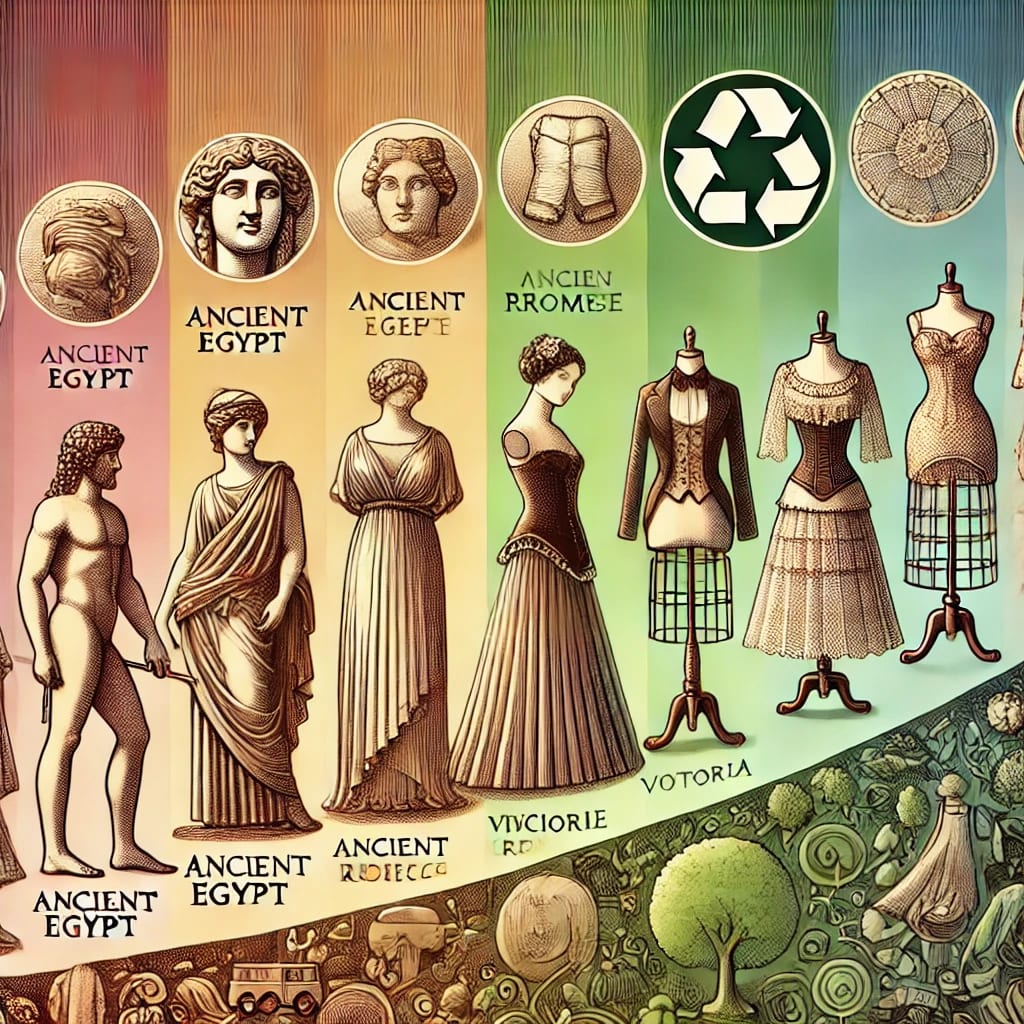
Introduction
Fashion has always played a crucial role in shaping and reflecting the cultural and social identities of different historical eras. Beyond mere appearance, clothing and accessories have served as mediums for expressing power, status, belonging, and even rebellion. Fashion is not just about style; it’s a visual language that communicates values, beliefs, and aspirations.
The importance of fashion is evident even in ancient civilizations, where clothing choices were not only functional but also symbolic. Since then, fashion has undergone continuous evolution, mirroring social, economic, and technological changes. Each era has left a unique mark on the world of fashion, influencing not only how people dress but also how they perceive and interpret the world around them.
This historical overview allows us to understand that current trends are not isolated phenomena but the result of centuries of evolution and innovation. From the magnificence of ancient Egyptian garments to contemporary minimalism, each period has contributed to building a cultural heritage that continues to evolve. Exploring the history of fashion, therefore, means exploring the history of humanity itself.
Ancient Fashion
Clothing in Ancient Egypt: Symbolism and Materials
In ancient Egypt, clothing was closely tied to social and religious status. Egyptians primarily used linen, a lightweight and cool fabric suitable for the country’s hot climate. The colors and decorations of garments had symbolic meanings; for example, white was associated with purity and sanctity. The upper classes wore more elaborate and colorful garments, often decorated with precious stones and intricate embroidery.
Style in Ancient Greece and Rome: Togas, Peplos, and Tunics
In ancient Greece, the peplos and chiton were the main garments for women, while men wore the himation and chiton. These garments were made of wool or linen and draped around the body, often fastened with decorative pins. The simplicity and elegance of Greek clothing greatly influenced Roman fashion. The Romans adopted the toga as a symbol of citizenship and status. Clothing in Rome was not only an indication of social rank but also a sign of cultural identity.
The Influence of Ancient Fashion on Modern Times
The influences of ancient clothing are still visible in contemporary fashion. The draping and fluid lines of Greek and Roman garments have inspired many modern designers. Moreover, the use of natural materials and traditional weaving techniques continues to be appreciated for their quality and beauty. This connection between the past and present demonstrates how fashion can act as a bridge between different eras, celebrating cultural heritage through clothing.
The Middle Ages and the Renaissance
Evolution of Fashion During the Middle Ages: From Functional to Ornamental
During the Middle Ages, fashion reflected the rigid social structure of the time. Initially, clothing was simple and functional, designed primarily for protection against the cold. However, over time, clothing became a distinctive sign of the different social classes. Precious fabrics like silk and velvet, imported from distant lands, were accessible only to the wealthy. Decorations, such as gold embroidery and embedded gems, were used to display wealth and power. Women’s clothing evolved with the introduction of the corset, which shaped the body according to the beauty ideals of the time.
The Fashion Explosion During the Renaissance: Rich Fabrics and Elaborate Silhouettes
The Renaissance marked an explosion of creativity in fashion. This era saw the introduction of new weaving and dyeing techniques, which allowed for the creation of more refined and colorful fabrics. Silhouettes became more elaborate, with women’s clothing characterized by wide skirts and tight bodices. Men adopted the doublet and tight trousers, often accompanied by ornate capes and hats. Renaissance fashion was not just about clothing but a true art form, with stylists and tailors becoming famous and sought after throughout Europe.
Renaissance Legacy in Contemporary Fashion
The legacy of Renaissance fashion is evident even today. Haute couture often features garments reminiscent of the rich fabrics and elaborate silhouettes of that period. The use of velvet, silk, and embroidery is still highly valued, as are the structured silhouettes that enhance the figure. Additionally, Renaissance fashion has influenced the way we view design and fashion as art forms, a concept still celebrated in today’s fashion houses.
The Baroque and Rococo
The Opulent Fashion of the Baroque: Voluminous Garments and Elaborate Decorations
The Baroque period, characterized by exaggeration and drama, was deeply reflected in the fashion of the time. Garments became increasingly voluminous, with wide skirts supported by crinolines and stiff corsets that emphasized the female figure. Men wore long coats, richly decorated waistcoats, and tight pants, often completed with elaborate wigs. The fabrics used were luxurious, often silk, velvet, or brocade, decorated with gold embroidery, pearls, and precious stones. Accessories such as fans, gloves, and jewelry completed the ensemble, highlighting the wealth and refined taste of the wearer.
The Refined Elegance of the Rococo: Changes in Forms and Details
The transition to the Rococo style brought a lightening of forms and a more playful and refined elegance. Silhouettes became softer and more sinuous, with women’s garments featuring wide skirts but less rigid structures compared to the Baroque period. Decorations focused on more delicate details, such as bows, lace, and floral embroidery. Men adopted a lighter and more informal style, with shorter, less ornate coats. This period also saw the emergence of pastel colors and floral motifs, reflecting a taste for refined elegance and a love of nature.
Baroque and Rococo Influences in Modern Collections
The influences of the Baroque and Rococo periods are clearly visible in contemporary fashion, especially in haute couture collections. Designers often draw inspiration from these eras to create garments with voluminous silhouettes, rich fabrics, and elaborate details. Fashion shows frequently feature modern reinterpretations of historical garments, such as corsets, decorated jackets, and elaborate accessories. Even pastel colors and floral motifs, typical of the Rococo, continue to be used, demonstrating how these historical styles have left a lasting imprint on the world of fashion.
The Nineteenth Century and the Victorian Era
Romanticism in Nineteenth-Century Fashion: Bustles, Crinolines, and Corsets
The nineteenth century, particularly the Victorian era, is known for its romantic and sophisticated fashion. Women wore complex garments, characterized by rigid bustles and voluminous crinolines that gave skirts a wide, bell-like shape. Corsets were essential elements, used to shape the body and emphasize a narrow waist, creating an hourglass silhouette. Fabrics were often rich and heavy, such as velvet, silk, and taffeta, and garments were decorated with lace, embroidery, and elaborate details. This fashion expressed a sense of opulence and decorum, reflecting the values of Victorian society, which emphasized modesty and control.
Transition to More Practical and Less Restrictive Clothing at the End of the Century
Towards the end of the nineteenth century, fashion began to change, becoming more practical and less restrictive. Technological and social innovations led to greater mobility and activity in daily life, reflected in clothing. Women began to wear simpler, less voluminous garments, with narrower skirts and less rigid corsets. The invention of the sewing machine allowed for faster and more accessible garment production, promoting the spread of ready-to-wear fashion. Additionally, the increasing presence of women in the workforce and sports activities led to the introduction of more functional garments, such as bloomers and tailored suits.
Victorian Influence on Gothic and Retro Styles
The Victorian era has left a significant mark on contemporary gothic and retro styles. The characteristic elements of this period, such as corsets, wide skirts, and intricate details, are often revived in modern garments that evoke Victorian aesthetics. The gothic style, in particular, draws heavily from Victorian fashion, with the use of dark colors, lace, and accessories like cameos and crosses. The retro revival of the ’80s and ’90s also saw a return to these influences, with designers reworking Victorian details in a modern key, demonstrating how the fashion of that time continues to influence current trends.
The Twentieth Century: From Wars to Liberation
Fashion in the 1920s and 1930s: The Jazz Age and War Influence
The 1920s, known as the “Roaring Twenties,” were a period of great change and experimentation in fashion. After World War I, women began wearing shorter, simpler dresses, reflecting a new sense of freedom and independence. The female silhouette became more androgynous, with dropped waistlines and straight lines. Evening dresses, known as “flapper dresses,” were often decorated with fringe, beads, and sequins, perfect for the jazz dances that characterized the era. Men also adopted more relaxed styles, with less rigid suits and more colorful ties.
The 1930s, however, saw a return to more sophisticated and glamorous fashion, influenced by the economic crisis and growing political tensions. Women’s dresses returned to higher waistlines and more formal silhouettes, often accompanied by long coats and accessories like hats and gloves. Men favored double-breasted suits and elegant coats. This decade also saw the rise of style icons like Greta Garbo and Marlene Dietrich, who influenced fashion with their refined elegance.
The 1960s Revolution: Miniskirts and Freedom of Expression
The 1960s were a decade of cultural and social revolution, reflected in fashion. Mary Quant introduced the miniskirt, a symbol of liberation for many women embracing a new sense of autonomy and personal expression. This period also saw the rise of psychedelic fashion, with vibrant colors, geometric patterns, and synthetic fabrics. The influence of music, particularly the Beatles and other British bands, helped define the mod style, characterized by short dresses, boots, and wide-brimmed hats. Unisex fashion also began to take hold, with bell-bottom pants and colorful shirts worn by both men and women.
1980s and 1990s Fashion: Excess and Stylistic Diversity
The 1980s were characterized by bold and excessive fashion. Padded shoulders, fluorescent colors, and shinyfabrics became emblematic of the decade. Pop culture icons like Madonna and Michael Jackson greatly influenced fashion, with looks combining elements of streetwear and high fashion. Both men and women adopted a more aggressive and flashy style, with voluminous hair, bold makeup, and metallic accessories.
The 1990s, on the other hand, marked a return to a more casual and minimalist look. Grunge, popularized by bands like Nirvana, introduced ripped jeans, plaid shirts, and combat boots as wardrobe staples. At the same time, minimalism became popular in high fashion, with designers like Calvin Klein promoting clean lines and neutral colors. This decade also saw the beginning of streetwear culture, mixing urban and athletic influences.
Current Trends and the Future of Fashion
Sustainability and Ethical Fashion: The Move Towards Eco-friendly Materials
In recent years, sustainability has become one of the main trends in the fashion world. With growing awareness of the environmental and social impacts of the industry, many fashion houses and designers are adopting more ethical and sustainable practices. This includes the use of eco-friendly materials such as organic cotton, linen, bamboo, and recycled fabrics. Production processes are also becoming more transparent, with greater attention to working conditions and fair wages. Brands like Stella McCartney and Patagonia are pioneers in this field, promoting collections that respect the environment and workers’ rights. Sustainable fashion is no longer a niche but a growing necessity in the contemporary landscape.
The Influence of Technology: Digital Fashion and Wearable Tech
Technology is revolutionizing the fashion world, with the introduction of tech-infused clothing and the growing importance of digital fashion. Wearable tech, such as smartwatches and smart glasses, is becoming an integral part of everyday wardrobes, combining functionality and style. Additionally, the industry is exploring new frontiers with smart fabrics that can change color or regulate body temperature. Augmented reality (AR) and virtual reality (VR) are transforming the shopping experience, allowing customers to virtually try on clothes before purchasing. Fashion shows are also becoming more interactive and accessible thanks to technology, allowing a global audience to participate in exclusive events.
The Future of Fashion: Emerging Trends and Potential Evolutions
Looking ahead, it’s clear that fashion will continue to evolve in response to social, technological, and environmental changes. Emerging trends indicate a growing interest in personalization and exclusivity, with consumers seeking unique, bespoke garments. Circular fashion, which promotes the recycling and reuse of clothing, is gaining traction as a solution to reduce waste. Additionally, inclusivity and diversity are becoming core values for many brands, committed to representing a broader range of sizes, ethnicities, and gender identities. Digitalization and artificial intelligence are also playing an increasing role, with the potential to personalize the shopping experience and design garments through algorithms and data.
The future of fashion is likely to be characterized by a balance between technological innovation and social responsibility. With the ongoing evolution of trends and technologies, the fashion industry is uniquely positioned to positively influence consumer behavior and the environment. Companies that can adapt and innovate in this context will be the ones to define the fashion landscape of the future.
Conclusion
Fashion is a constant reflection of the social, cultural, and economic dynamics of an era. Throughout the centuries, from the opulence of Baroque clothing to the sophisticated elegance of the Renaissance, up to the technological and sustainable innovations of the 21st century, the evolution of fashion has always accompanied societal changes. Each historical period has left a unique mark that continues to influence contemporary trends, showing how clothing is not only a form of personal expression but also a language through which cultures communicate and evolve.
Current trends, emphasizing sustainability, inclusivity, and the integration of technology, mark a new era for fashion, where ethics and innovation become fundamental pillars. Therefore, the future of fashion is not only exciting for new stylistic possibilities but also responsibly aware of its impact on the world.
In this journey through time, fashion has not only adorned bodies but also told stories, shaped identities, and influenced cultural perceptions. Continuing to explore and understand the history of fashion offers a deeper insight not only into the past but also into the future we can build. Fashion remains one of the most powerful forms of art and communication, constantly evolving and always ready to surprise us.
About the Creator
Fabio Smiraglia
I am a passionate content writer with extensive experience in crafting engaging texts for blogs, websites, and social media. I love telling stories, informing, and connecting with audiences, always with creativity and precision.
Reader insights
Nice work
Very well written. Keep up the good work!
Top insights
Compelling and original writing
Creative use of language & vocab
Excellent storytelling
Original narrative & well developed characters
Keep reading
More stories from Fabio Smiraglia and writers in Education and other communities.
The Future of Work: Automation and Artificial Intelligence
The Future of Work: Automation and Artificial Intelligence Introduction Automation and artificial intelligence (AI) are two of the most transformative forces of the modern era. Automation refers to the use of technology to perform tasks with minimal or no human assistance, while AI involves the ability of machines to learn, reason, and make decisions in a manner akin to humans. With rapid and continuous technological advancements, these innovations are reshaping almost every aspect of our daily lives, particularly the world of work.
By Fabio Smiragliaabout a year ago in Education
How to Succeed at the Benson Directory®
Congratulations and welcome to the Benson Directory® employee #22391! As our newest call handler, you will have the privilege of speaking with dozens of unique and interesting people on a daily basis as well as the opportunity to earn bonuses for high performance. Contained within this handbook you will find a set of ease to follow instructions designed to help you settle in to your new role and begin paving the way to success.
By S. A. Crawford2 days ago in Fiction




Comments (1)
Excellent piece , long but worth it