
The “Black Abyss Syndrome”: When Astronauts Face the Fear of Infinite Space
Space

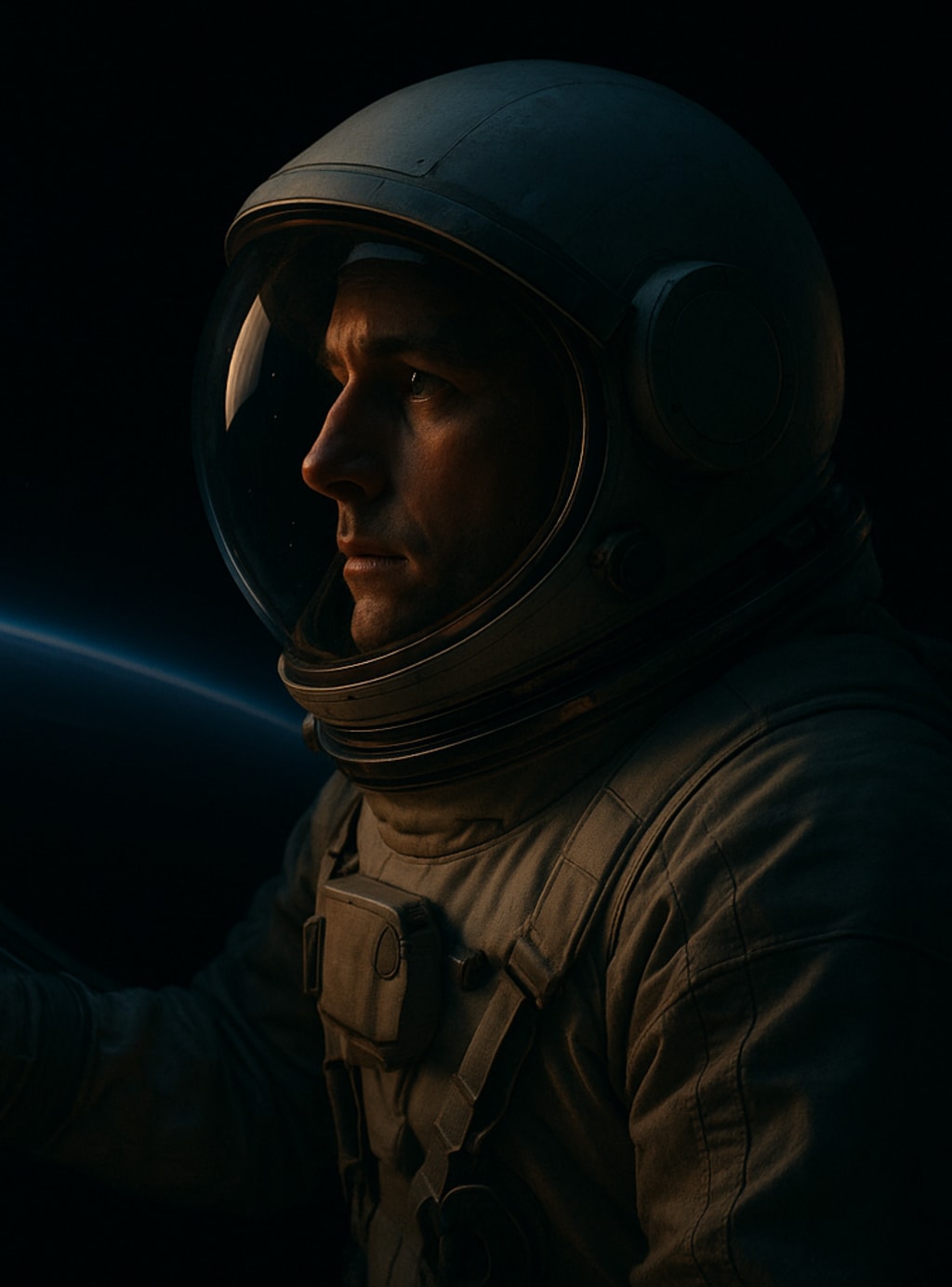
When we gaze at the night sky from Earth, it feels magical — a canvas of stars that inspires dreams of exploration and wonder. But for those who actually venture beyond our planet, space can reveal a far darker, more unsettling side. Among astronauts and space psychologists, there’s an unofficial term that captures this haunting experience: the “Black Abyss Syndrome.” It describes the deep, instinctive fear that can emerge when a human mind is confronted with the endless, silent vastness of the cosmos.
What Is the “Black Abyss Syndrome”?
The “Black Abyss Syndrome” isn’t a clinical diagnosis — at least not yet. It’s a poetic but powerful phrase used to describe a unique psychological response: a profound terror of infinite emptiness. Imagine standing inside a spacecraft, looking out through the window into pure blackness. There’s no ground, no horizon, no sound. Just eternal night stretching in every direction.
Astronauts have reported moments of overwhelming dread during spacewalks or when observing the void outside. The experience is unlike any earthly fear. It’s not about danger or physical threat — it’s about the mind’s inability to comprehend infinity. The human brain evolved to deal with finite spaces, to find edges and boundaries. In the limitless black of space, those reference points vanish. The result is a strange, almost existential vertigo.
The Psychology Behind the Fear
Psychologists describe this as a form of “existential disorientation.” Our minds are built to function within a world that has walls, gravity, and atmosphere — where “up” and “down” make sense. In space, those concepts dissolve. The brain, starved of familiar cues, can interpret that absence as danger.
In fact, the “Black Abyss Syndrome” could be considered the inverse of claustrophobia. Where claustrophobia is the fear of confinement, this is the fear of boundlessness — the panic that comes from realizing there is no end, no shelter, and no limits.
Space psychologists have noted that even in simulations, such as immersive VR environments that mimic the deep void of space, some participants experience intense anxiety, rapid heart rate, and a feeling of being “pulled” into the emptiness. These sensations are rooted in both evolutionary biology and existential thought — we are wired to fear the void because it represents the unknown, and ultimately, our own mortality.
Astronauts Who Have Faced the Void
Cosmonaut Alexei Leonov, the first human to walk in space in 1965, later described a fleeting moment of panic as he floated above Earth. The realization that nothing but a thin suit separated him from endless nothingness was both awe-inspiring and terrifying. “You feel an absolute loneliness,” he wrote. “There’s no sound, no air — only you and eternity.”
Many NASA astronauts have echoed similar emotions. During his mission aboard the International Space Station, one astronaut described looking into the blackness beyond the solar panels and feeling a “visceral tug,” as though the void was calling him. Another confessed that even after years of training, “the sight of endless darkness makes your mind rebel.”
To prepare for this, modern space agencies include psychological adaptation programs as part of astronaut training. These often involve VR simulations of deep space, guided meditation, and cognitive exercises designed to help astronauts reframe their perceptions of the infinite. Breathing techniques and grounding routines — like focusing on physical sensations or repeating a mental mantra — help counteract panic and maintain orientation.
Why the Fear Matters
The “Black Abyss Syndrome” isn’t just a curiosity — it’s a reminder of how profoundly space challenges human nature. As humanity pushes toward long-term missions to the Moon, Mars, and beyond, psychological resilience becomes just as important as physical fitness or technical skill.
Understanding this fear could shape the future of space exploration. Mental health professionals working with astronauts study how prolonged exposure to isolation and vast emptiness affects cognition, sleep, and emotional balance. The insights they gain don’t only apply to astronauts — they’re also useful in understanding extreme environments on Earth, such as deep-sea missions, polar stations, or even future virtual worlds that mimic infinity.
From Fear to Transcendence
Interestingly, many astronauts report that once they overcome the initial fear, something extraordinary happens. The terror gives way to a sense of cosmic awe — an emotional state where fear dissolves into wonder. Psychologists call this the “overview effect.”
When astronauts see Earth from space — fragile, blue, and alone in the darkness — they often describe a shift in consciousness. The infinite void that once seemed threatening transforms into something profound and beautiful. They no longer feel small in a frightening way, but in a connected one.
As Apollo 14 astronaut Edgar Mitchell once said:
> “You develop an instant global consciousness, a people orientation, an intense dissatisfaction with the state of the world, and a compulsion to do something about it.”
What begins as the “Black Abyss Syndrome” can evolve into a deeper appreciation for existence itself. The same black void that terrifies can also humble, inspire, and unite.
Facing the Infinite
The “Black Abyss Syndrome” reminds us that space is not only a physical frontier but a psychological one. Humanity’s greatest challenge might not be building rockets or surviving radiation — it might be confronting infinity without losing ourselves in it.
Perhaps that’s the ultimate lesson of the void: to look into the endless blackness and see not terror, but reflection. For in that darkness, stripped of boundaries and noise, we come face to face with what it truly means to be human — fragile, finite, yet endlessly curious.
About the Creator
Keep reading
More stories from Holianyk Ihor and writers in Education and other communities.
Racing the Light: How Speed Bends Time and the Limits of Reality
Light travels at an unimaginable pace—299,792,458 meters per second. That’s about 7.5 times around the Earth in just one second. But what makes this number truly extraordinary isn’t how fast it is—it’s the fact that it represents the ultimate speed limit of the universe. Nothing, according to Einstein’s theory of relativity, can go faster. The speed of light isn’t just a measure of velocity; it’s the foundation of how space and time themselves are built.
By Holianyk Ihor4 months ago in Education
What your poop can tell you about your health
The average person poops out approximately 11,030 kilograms of cumulative waste. That's the equivalent of more than six SUVs. Now, oftentimes, that poop is brown. But why is that, considering all the colorful comestibles one consumes? And what's going on when poop appears in different colors and textures? Say you’re eating a beautiful, rainbowy salad. Your teeth and saliva first help break down the food and add lubrication. Each bite enters your esophagus and sequential muscle contractions push it towards your stomach.
By Munesh Yadava day ago in Education
Adding Tech to Ed
Technology is reshaping education in ways that were unimaginable just a generation ago. While access to quality learning was once limited by geography, income, language, or physical ability, digital innovation is steadily removing many of those barriers. Today, technology is not simply enhancing classrooms—it is expanding who education is for, when it happens, and how it is experienced. By increasing flexibility, personalization, and inclusion, technology is making education more accessible to learners of all ages and backgrounds.
By Dennis Muizers Lovejoy4 days ago in Education
Autonomy Is The Real Privilege
Good morning, freedom-seekers! Today we’re gonna be looking at autonomy. A strange word, I know; one many would probably look at blankly and run away from on sight. We’re gonna figure out what it actually means, consider how it’s achieved, and decipher just how deeply most of us are tangled up in dependence without realising it.
By That ‘Freedom’ Guyabout 10 hours ago in Humans




Comments
There are no comments for this story
Be the first to respond and start the conversation.