
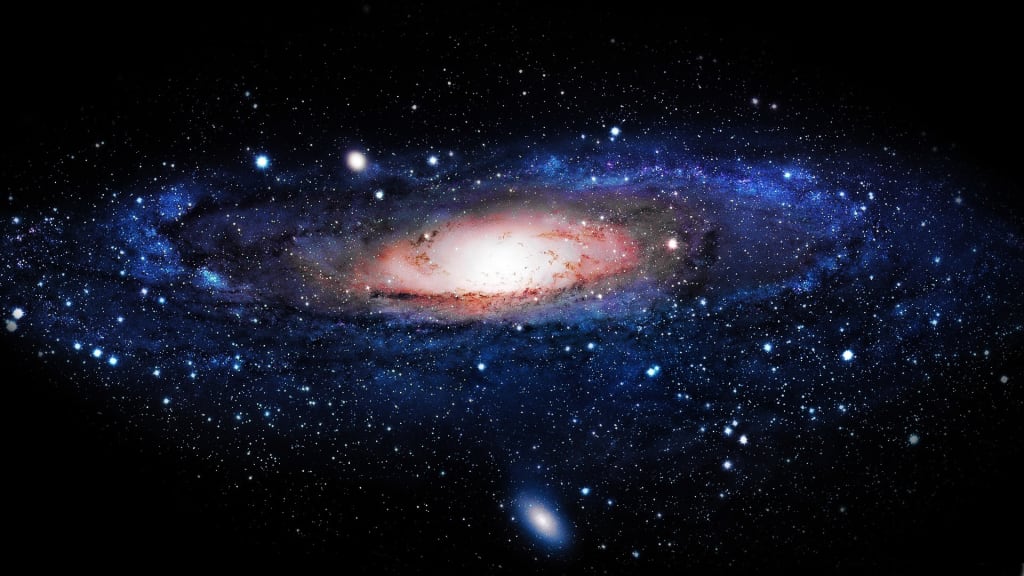
Scientists have been asking one question for decades. Is space really as black as we think it is? Turns out, NASA's New Horizons space mission might have just given us the answer. The extensive expedition of NASA's New Horizons mission commenced in 2006, utilizing America's largest and most powerful rocket, equipped with every possible booster. A lightweight spacecraft was constructed and a substantial launch vehicle was procured, resulting in a formidable combination.
New Horizons wakes up for the last time from hibernation New Horizon is speeding towards Pluto at a phenomenal rate and we can't wait for it to get there. January 27, 2015, six months of approach science begins. July 14, 2015, new horizons long journey of three billion miles nine years in flight and 85 years. Speculation about Pluto climaxes in one day of close approach and flyby. You know, we're around in third base and we're headed home the dream the adventure the promise of discovery. That's what makes 2015 the year of Pluto
Studying Pluto and its neighbors from Earth is one of the toughest challenges in astronomy. It takes the largest telescopes and most advanced instrumentation on the planet, and it's tough even for the Hubble space telescope. It takes time from the discovery of Pluto in 1930 to NASA approving the New Horizons mission in 2001 to arrival at the planet in 2015.
For decades Pluto remained more or less a point of light. But in the mid-70s Dale Crookshank and colleagues attached cameras with infrared filters to a telescope at Kitt Peak. Detectors or sensors had been improved and larger telescopes had become available. They did that work in 1976 and found evidence for frozen methane on Pluto's surface. It was several years later that they found the evidence for the other isis in 1978.
After exploring Pluto, the spacecraft kept going and is now billions of miles away from Earth. This means it's far from all the light pollution we get from sources like the sun and dust particles around our planet. Through little more than a camera, scientists were able to see what looked like incredibly boring Blank Space. Free of bright stars or anything else that could scatter light back into the camera. They then processed these images to remove all known sources of visible light. Once they'd done this, they found that there was still plenty of unexplained light present- in fact, it was about equal to all the light coming in from the known galaxies. That means there's just as much light outside of galaxies as inside them.
The origin of the aforementioned light remains a subject of inquiry. It is plausible that it emanates from sources that have yet to be identified, such as diminutive, indistinct dwarf galaxies or enigmatic phenomena that exist in the cosmos. Alternatively, it may be linked to dark matter, which continues to elude scientific comprehension. The pioneering research conducted on this topic has revealed that the void of space is not as dim as previously believed. If one were to extract all the light emitted by the stars and galaxies in the universe and introduce gas and dust clouds, the resulting hue would be beige.
This inquiry prompts an additional question. Is the sun still a necessity in light of the vivid hues present in space? The succinct response is affirmative. The chromatic spectrum of space arises from the interplay of light with various celestial entities, including stars, galaxies, and gas clouds. Although these colors are captivating to behold, they do not furnish the vital energy requisite for the sustenance of life on earth. Thus, it is imperative to acknowledge that the color of the sky in space is not a phenomenon that can be observed.
About the Creator
Keep reading
More stories from writers in Education and other communities.
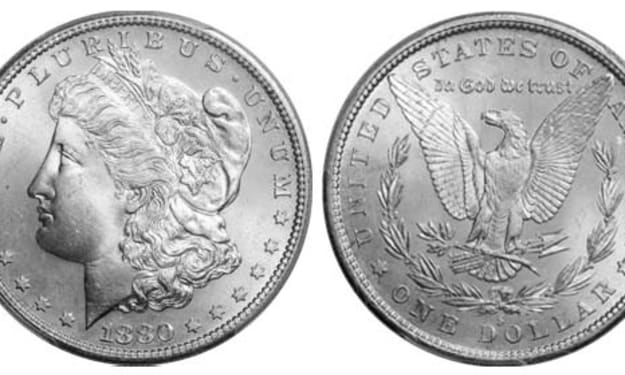
Morgan Silver Dollars: A Beginner's Guide to Identifying Key Dates and Mint Marks
For over eight years as a Senior Numismatic Analyst, I've seen the glint in a new collector's eye when they hold their first Morgan Silver Dollar. It's a powerful feeling—the weight of 90% pure silver, the history in Lady Liberty's profile, the sheer size of America's most iconic coin. Yet, with hundreds of millions minted across 27 years and five mints, it's easy to feel overwhelmed. A common 1921 Morgan might be worth $50, while a pristine 1895 Proof commands over $100,000. The difference lies in the tiny details of dates and mint marks. This guide will give you the foundational map to navigate this classic series, turning confusion into confident identification.
By Laura Bennett4 days ago in Education



Comments