
Situational Leadership: Adapting Leadership Styles for Effective Team Management
Reach a broader audience by submitting to these well-known content sites.

Situational Leadership: Adapting Leadership Styles for Effective Team Management
With the sense of dynamism in the workplace today, adaptive leadership styles have emerged as the most preferred versions under the concept of Situational Leadership. The original developers of this model are Paul Hersey and Ken Blanchard. Situational Leadership looks at the change in the behavior of the leader for the maturity level of the team members. Knowledge about the principles of Situational Leadership equips a leader with the optimum engagement of employees, the best performance from the team, and growth in an organization.
Knowledge Base of Situational Leadership The Situational Leadership concept is based on the basis that there isn't an adequate leadership style suited for one and all. Effective leaders should instead monitor the capabilities and commitment of each to employ correct leadership. According to Situational Leadership, leaders approach a flexible responsive way that draws upon four different forms of leadership — Directing, Coaching, Supporting and Delegating- the specific needs for the member that they are looking to transform.
Situational Leadership has the core strength of adaptability, which aligns closely with the demands of modern workplaces. Leaders are supposed to provide an atmosphere that develops individuals and teams. As organizations continuously change, the Situational Leadership model continues to be relevant in guiding teams in predictable and unpredictable challenges.
Leadership Styles in Situational Leadership
There are four distinct leadership styles in Situational Leadership.
The Four Leadership Styles in Situational Leadership
The four styles of leadership are the core of Situational Leadership: each of them was designed to solve specific development and readiness levels of team members. Understanding and application of these styles are the keys to achieving a positive and productive work environment.
Directing: This behavior is highly directive and rather low on support. High Directing is very much instructions given by leaders with clear directives, setting expectations, and monitoring with close observation. This is usually practiced best when dealing with those at D1 level within the team who are least competent but most committed.
Coaching: The coaching style is high directive and supportive. Coaches are directive and supportive in their behavior. A coach is someone who actively gives guidance, feedback, and encouragement to the team members. This is a suitable leadership for D2, who possesses some competence but needs extra support to improve their skills and maintain commitment.
Supporting: Leaders exhibiting the supporting style focus more on emotional support and encouraging member participation, thus reducing the directive approach. The supporting style fits D3 profiles-those with moderate to high competence but low commitment. A leader's role is assistance in instilling a feeling of ownership and participation in decision making.
Delegating: This style shows low levels of both directive and supportive behaviors, allowing team members to work with a lot of autonomy. It is best for D4 types, the most competent and committed persons. The leader lets team members execute tasks on their own with the confidence that they would be there when needed in case of a problem.
The four styles, according to Situational Leadership, provide a pattern that the leaders can adapt towards the needs of each team member. By aligning approaches with the development level of whom they lead, leaders allow empowerment and drive better performance from their team members.
Four Development Levels: Matching Leadership with Follower Needs
Situational Leadership is a simple yet important principle: to understand the different levels of development in your team members. There are four development levels, which reflect a combination of competence and commitment in a D1-D4 continuum. These levels guide you on how to use the right leadership style at the right time.
D1: Low competence, high commitment. Employees at the D1 level are eager to learn but lack the skills or experience to do things independently. The leaders should adopt a Directing style in this regard to create structure and guidance.
D2: Some competence, low commitment. Employees at D2 have acquired some skill but have doubt or uncertainty about doing things. Leaders must apply a Coaching style for development and building confidence.
D3: Moderate to high competence, variable commitment. In this category, members are found to possess high skill but lack motivation. Managers would apply the Supporting approach that fosters participation and shared responsibility.
D4: High competence, high commitment. In this category, members are both skilled and motivated. A Delegating approach would allow them to perform independently but ensure productivity and job satisfaction.
In this regard, the Situational Leadership model can enable leaders to identify the level of development in each team member, thus creating a supportive and responsive environment suited to individual needs.
Flexible Leadership Styles for Efficient Team Management
With Situational Leadership, there is always the flexibility of adapting leadership styles into each and every one's developmental needs. Contrary to rigid approaches, in which leaders can't change their leadership style to suit each member's needs, Situational Leadership presents the possibility for leaders to adapt according to the needs of each member. This means that leaders can apply Directing on new employees, supporting on seasoned team members, or even delegating to those ready for more responsibility.
For example, in a fast technology start-up, the Situational approach allows the leaders to stretch experienced in-house guidance to new developers while allowing the more experienced team members the latitude to take lead in the delivery of any projects. Another example would be that of a Coaching style applied in closing up skill gaps for employees engaged with complex, very high-stake projects. This flexibility presents Situational Leadership as a beneficial tool for most leaders who want to spur growth and thrive in a rapidly evolving environment.
Advantages of Situational Leadership: The Importance of Adaptability
There are numerous advantages of Situational Leadership, which form an ideal foundation for leading heterogeneous teams. Situational Leadership fosters the following aspects:
Enhanced group productivity: Based on the maturity level of each team member, leaders become more productive and effective with situational adjustment.
Better employee satisfaction: When people acknowledge and pay attention to employees' needs, they feel a sense of belonging that increases job satisfaction and loyalty.
Improved communication: Situation Leadership encourages team members to openly communicate their problems and aspirations.
Higher motivation: Situation leadership enables leaders to motivate their employees by providing them with the appropriate level of direction and autonomy.
These benefits of Situation Leadership illustrate how a situational and interrelating style of leadership affects the performance of teams and organizations.
Challenges of Situation Leadership: Limitations to be Aware of
Flexibility is offered but at the same time puts forward difficulties. The challenge is huge as it requires adequate time and energy to perceive the developmental level of individual team members and then follow the styles of leadership suitable for the same. It puts a demand on the minds of the leaders to take decisions, which demands tremendous emotional intelligence.
Its applicability also proves tough in large teams, since individual needs vary widely and the leader needs to adjust to that all the time. Furthermore, a leader might not be able to judge the competency or commitment levels of the team member, especially in a remote or fast-changing environment.
However, Situational Leadership is still one of the most useful growth-oriented models for leaders, who tend to make an engaging work environment and a supporting culture for employees.
Practical Applications in the Workplace
The Situational Leadership model applies to all sectors, from corporate to nonprofits and educational establishments. In the corporate setting, Situational Leadership allows managers to adopt styles that suit employees at various skill levels and experience. For instance, a new employee is best suited for a Directing style, while the experienced employee is suited by a Delegating approach.
Within the nonprofit arena, leaders may apply Situational Leadership to their volunteer management when coaching new volunteers and supporting volunteers who have increased responsibility. School administrators and teachers within the school may use Situational Leadership to involve students and have them work in collaboration as a classroom.
Organizations train and mentor Situational Leadership in training programs and workshops on developing the skills of the assessment of the development level along with applying the appropriate situational leadership style. All these training programs emphasize aspects such as emotional intelligence, being adaptable, and effective communication.
Conclusion: The Future of Situational Leadership in a Changing Workplace
Situational Leadership is a very responsive and adaptive approach to teamwork management. With the four styles of leadership- Directing, Coaching, Supporting, and Delegating-, leaders can develop an environment that is responsive to an eclectic pool of employees.
The fast-paced and dynamic work environments of today do not underestimate the leadership flexibility. Situational Leadership, besides increasing employee engagement and satisfaction in organizations, promotes a healthy and productive work culture. Situational Leadership offers a reliable and flexible framework for organizations interested in developing individual and group capacity toward success.
About the Creator
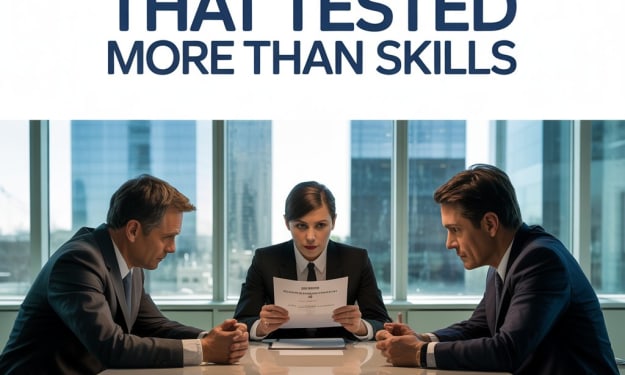
The Interview That Tested More Than Skills
The interview was scheduled for ten in the morning, but I arrived at the building an hour early. I didn’t want to risk being late, not today. This opportunity meant more than just a job. It felt like a doorway to a future I had been quietly working toward for years. As I sat in the lobby, watching people pass by with confident strides, I realized how small the moment looked from the outside—and how enormous it felt on the inside.
By NAIB REHMAN4 days ago in Education
From Bullion to Numismatic: How to Identify and Grade Modern U.S. Commemorative Coins
For over eight years as a Senior Numismatic Analyst, I've witnessed countless collectors reach a fascinating crossroads. They start with bullion coins—valuable for their weight in gold or silver—but eventually feel drawn to coins with a story. This is where the world of modern U.S. commemorative coins opens up, blending precious metal with historical narrative, artistic beauty, and the intricate craft of numismatic grading. Shifting your focus from pure metal content to a coin's condition, rarity, and design is the journey from an investor to a true collector. This guide will equip you with the knowledge to confidently identify, evaluate, and grade these modern treasures.
By Laura Bennetta day ago in Education
Self Help: Grifters' Gospel
On Self-Help, Snake Oil, and the Illusion of Change Psychology professionals and students can be imagined on two opposite sides of a line called self-help books: likely a larger group opposes pop-science and step-by-step manuals filled with talk of success, journaling, and not giving a f**k; others love them, but they aren’t many.
By Avocado Nunzella BSc (Psych) -- M.A.P 4 days ago in BookClub



Comments
There are no comments for this story
Be the first to respond and start the conversation.