
Saving the Great Indian Bustard: A Critical Effort to Protect India's Rare and Elusive Bird.
Many Challenges of Conserving the Great Indian Bustard: Power Lines, Hunting, and Habitat Loss: Many Challenges of Conserving the Great Indian Bustard.

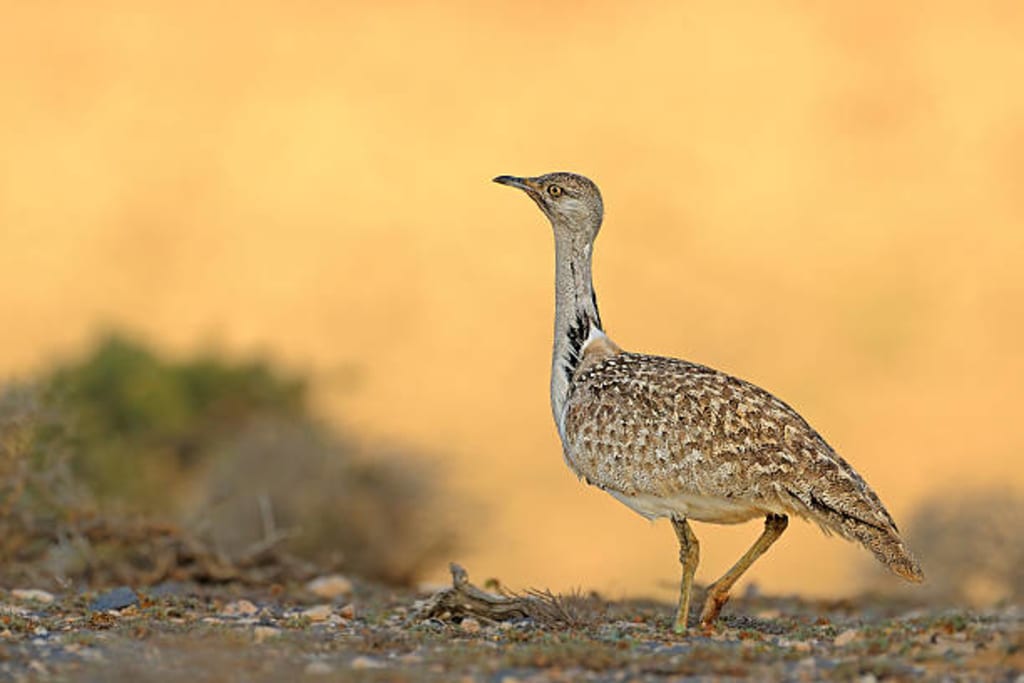
The Great Indian Bustard (Ardeotis nigriceps) is a large ground-dwelling bird native to the grasslands of India and Pakistan. It is one of the heaviest flying birds in the world, with males weighing up to 18 kilograms (40 pounds) and females weighing up to 18 kilograms (40 pounds). The Great Indian Bustard (Ardeotis nigriceps) is a large ground-dwelling bird native to the grasslands of India and Pakistan. It is one of the heaviest flying birds in the world, with males weighing up to 18 kilograms (40 pounds). The species is known for its distinctive appearance, with brown and white plumage, a long neck, and a rounded body.
The Great Indian Bustard was once widespread across the grasslands of India and Pakistan, but its population has declined dramatically in recent decades. The bird is now considered one of the rarest birds in the world, with an estimated population of only 150-200 individuals. The main threats to the species include habitat loss, hunting, and collision with power lines.
Efforts to conserve the Great Indian Bustard has been underway for several years. The Indian government has established several protected areas for the bird, and there are also initiatives to educate local communities about the importance of the species and to reduce threats such as power line collisions. Conservation organizations and researchers are also working to study the biology and ecology of the Great Indian Bustard better understand the species and inform conservation efforts.
Despite these efforts, the future of the Great Indian Bustard remains uncertain. The species is listed as "critically endangered" by the International Union for Conservation of Nature, and much work remains to be done to ensure its survival.
In addition to habitat loss and hunting, the Great Indian Bustard faces other threats to its survival. For example, the species is highly susceptible to collisions with power lines, which can result in fatal electrocutions. The bustard's large size and ground-dwelling habits make it particularly vulnerable to this threat.
The Great Indian Bustard is also highly prized by hunters, both for its meat and for the challenge of hunting such a large and elusive bird. In some regions, hunting remains a significant threat to the species, and conservation efforts must also address this issue.
Despite these challenges, conservation organizations and researchers remain optimistic about the future of the Great Indian Bustard. By working to protect its habitat, reduce threats such as power line collisions, and engage local communities in conservation efforts, they hope to secure a future for this magnificent bird.
In conclusion, the Great Indian Bustard is a magnificent bird that is facing significant challenges to its survival. However, with continued conservation efforts and public awareness, is hope that this species can be saved from extinction. The Great Indian Bustard is an important part of India's natural heritage and a symbol of the country's rich biodiversity, and it is essential that we take action to protect it for future generations. Brown and white plumage, a long neck and a rounded body.
The Great Indian Bustard was once widespread across the grasslands of India and Pakistan, but its population has declined dramatically in recent decades. The bird is now considered one of the rarest birds in the world, with an estimated population of only 150-200 individuals. The main threats to the species are habitat loss, hunting and collision with power lines.
For several years there have been efforts to conserve the Great Indian Bustard. The Indian government has established several protected areas for the bird, and there are also initiatives to educate local communities about the importance of the species and to reduce threats such as power line collisions. Conservation organizations and researchers are also working to study the biology and ecology of the Great Indian Bustard better understand the species and inform conservation efforts.
Despite these efforts, the future of the Great Indian Bustard remains uncertain. The species is listed as "critically endangered" by the International Union for Conservation of Nature, and much work remains to be done to ensure its survival.
In addition to habitat loss and hunting, the Great Indian Bustard faces other threats to its survival. For example, the species is highly susceptible to collisions with power lines, which can result in fatal electrocutions. The bustard is particularly vulnerable to this threat because of its large size and its habits of living on the ground.
The Great Indian Bustard is also highly valued by hunters, both for its meat and for the challenge of hunting such a large and elusive bird. In some regions, hunting remains a significant threat to the species, and conservation efforts must also address this issue.
Despite these challenges, conservation organizations and researchers remain optimistic about the future of the Great Indian Bustard. By working to protect its habitat, reduce threats such as power line collisions and engage local communities in conservation efforts, they hope to secure a future for this magnificent bird.
In conclusion, the Great Indian Bustard is a magnificent bird that is facing significant challenges to its survival. However, with continued conservation efforts and public awareness, is hope that this species can be saved from extinction. The Great Indian Bustard is an important part of India's natural heritage and a symbol of the country's rich biodiversity, and it is essential that we take action to protect it for future generations.
About the Creator
Smart Storage & Grading for U.S. Coin Collections: a Checklist
Phase 1: First Aid for Your Collection (The 24-Hour Triage) Before buying any special supplies, you need to perform some emergency triage. Think of this as stopping the bleeding. The goal here is to prevent any active damage right now.
By Laura Bennettabout 22 hours ago in Education
How Neuroscience Is Changing the Way We Learn
In recent decades, advances in neuroscience have reshaped our understanding of human learning. Rather than viewing learning as merely memorizing facts, researchers now see it as a biological process that physically and functionally changes the brain. This shift in perspective — from teaching content to understanding how the brain learns — is transforming educational theory, classroom practice, and lifelong learning strategies across the globe.
By Games Mode Onabout 22 hours ago in Education



Comments
There are no comments for this story
Be the first to respond and start the conversation.