
Rich Dad Poor Dad: What the Rich Teach Their Kids About Money That the Poor and Middle Class Do
That the Poor and Middle Class Do

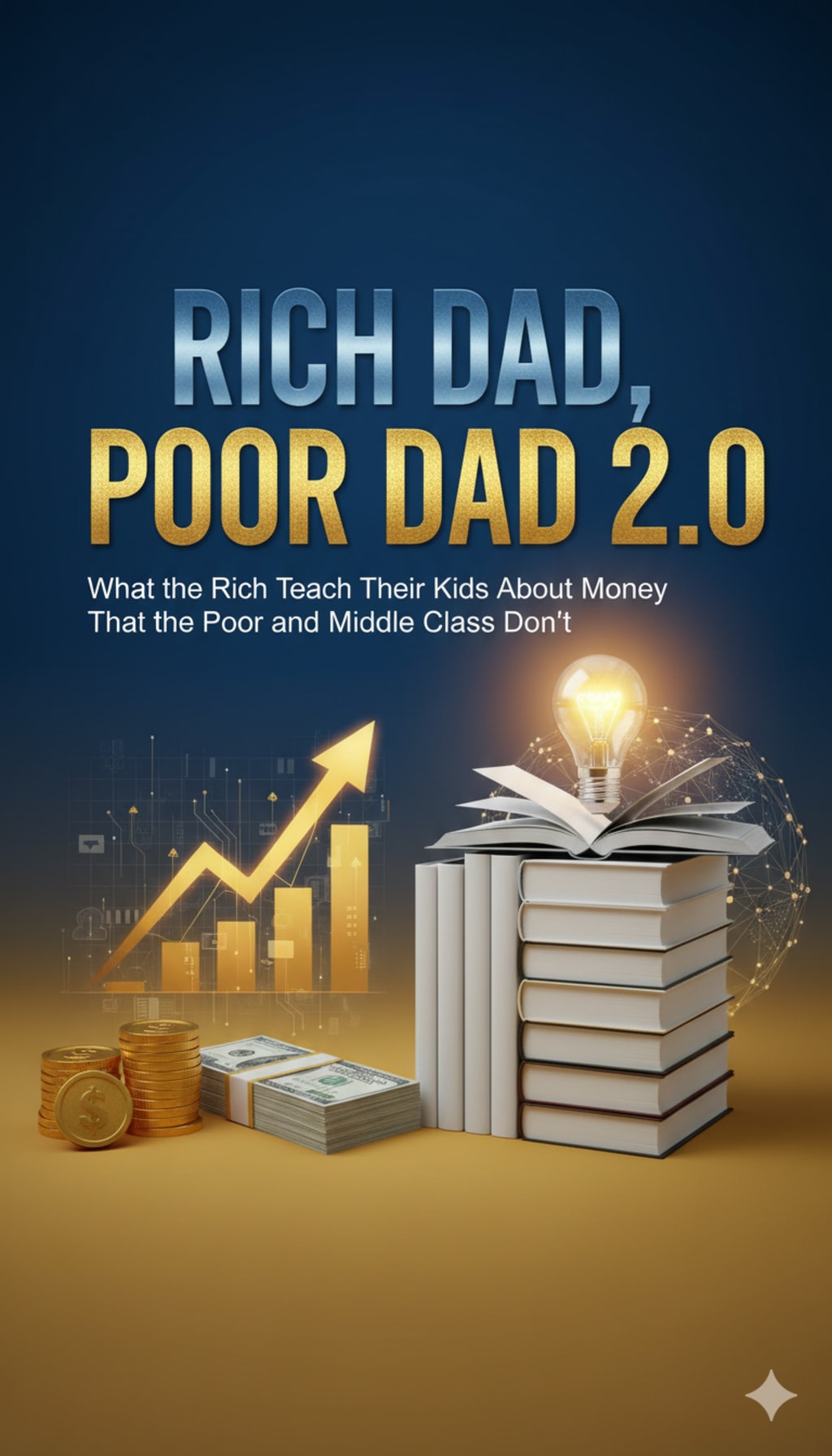
grew up with two fathers. One taught me how to work for money. The other taught me how to make money work for me.
One said, “Go to school, get good grades, and find a safe job.”
The other said, “Learn how money works, so you’ll never need to depend on a job.”
Those two voices shaped everything I believed about success, failure, and freedom.
The first father — my Poor Dad — was educated, respected, and stable. He had a college degree, a steady job, and believed in security. He paid his bills on time, took care of his family, and told me education was the key to success.
The second father — my Rich Dad — never went to college. He owned small businesses, invested in properties, and understood how to build assets. He told me, “The system isn’t built to make you rich. It’s built to keep you working for those who are.”
As a child, I didn’t know who was right.
As an adult, I realized they both were — in their own ways.
The Education That Schools Don’t Teach
When I was young, I thought school would prepare me for life. But it prepared me only for work.
Schools teach how to earn a living, not how to build wealth.
We learned algebra, grammar, and history — but not taxes, investing, or credit.
We learned how to follow rules — but not how to create opportunities.
My Poor Dad believed that the key to a good life was a good degree.
My Rich Dad believed that the key to a good life was financial education — the kind you never get in school.
He said,
> “If you don’t control your money, your money will control you.
And he was rights
The Illusion of Job Security
When my Poor Dad was growing up, a job meant security.
Today, it means survival.
Back then, you could work for one company your whole life, retire, and collect a pension.
Now, companies lay off employees overnight. AI takes over jobs. Freelancers replace full-timers.
We live in a world where skills change faster than diplomas, and degrees expire faster than iPhones.
My Poor Dad told me, “Find a good job.”
My Rich Dad told me, “Find a good problem to solve — and people will pay you for it.”
That difference changed my life.
Understanding the Game of Money
The rich don’t work harder — they work smarter and differently.
They see money as a tool, not a reward.
They build assets that make money while they sleep.
Poor and middle-class people chase salaries.
The rich chase cash flow.
Poor Dad said, “I can’t afford that.”
Rich Dad said, “How can I afford that?”
One statement ends the conversation.
The other opens possibilities.
That’s the real secret: financial language shapes financial destiny.
The 21st Century Cash Flow
In Rich Dad’s time, wealth meant owning land, stores, or factories.
In today’s world, it means owning digital assets — websites, online businesses, content, crypto, AI tools, or personal brands.
The digital economy has created new roads to freedom:
You can start an online business from your phone.
You can invest from an app.
You can make income while you sleep through digital products, rentals, or dividends.
Rich Dad would have loved today’s world — because it rewards creativity and ownership, not just hard work.
Poor Dad’s advice — get a job, save money, buy a house — made sense in the past.
But in the age of inflation, high rent, and global competition, that path often leads to debt, not freedom.
The Trap of the Middle Class
The middle class is stuck between comfort and fear.
They earn just enough to feel secure, but not enough to break free.
They buy nice cars, upgrade phones, and chase promotions — yet their expenses grow faster than their income.
Rich Dad called it The Rat Race:
> “Running faster every year, but staying in the same cage.
He taught me that assets put money in your pocket, while liabilities take money out.
A car, for example, isn’t an asset — it costs gas, insurance, and repairs.
A house isn’t always an asset either — if it takes money out every month, it’s a liability.
True assets create cash flow — income that works even when you don’t.
Money Doesn’t Make You Rich — Knowledge Does
Rich Dad once said,
> “If you gave every broke person a million dollars, they’d lose it within years.
But if you took away every rich person’s money, they’d make it back.”
Because wealth isn’t about money — it’s about mindset.
Rich people focus on learning, not just earning.
They study markets, invest time in skills, and take calculated risks.
Poor people avoid risk because they fear loss.
The rich embrace risk because they understand growth.
The rich don’t pray for easier lives — they build stronger skills.
Lessons from Both Fathers
From my Poor Dad, I learned discipline, education, and work ethic.
From my Rich Dad, I learned financial intelligence, leverage, and independence.
Both lessons matter — but only one leads to freedom.
You need Poor Dad’s foundation to survive.
You need Rich Dad’s mindset to thrive.
Modern Money Lesson
1. Money is a tool, not a goal.
2. Financial education is the real degree of the 21st century.
3. Don’t work for money — make money work for you.
4. Build assets (digital, physical, or intellectual).
5. Learn to speak the language of money — cash flow, equity, ROI, debt, and leverage.
Action Steps
1. Write down all your sources of income — and separate them into active (you work for it) and passive (it works for you).
2. Start reading one financial book a month — learn how money moves.
3. Follow three successful entrepreneurs or investors online and study what they teach.
4. Start a small side hustle — even $1 earned passively is proof of concept.
5. Change your vocabulary — stop saying “I can’t afford it.” Start saying, “How can I afford it?”
The world has changed — but the rules of wealth haven’t.
The poor still trade time for money.
The rich still trade money for time.
The difference isn’t in opportunity — it’s in understanding.
And that’s the beginning of financial freedom.
Thanks for read
About the Creator
Keep reading
More stories from Fazal wahid and writers in Education and other communities.
Stop Negative Thinking
Negative thinking is more than just occasional worry or stress. It’s a pattern of thoughts that focuses on failure, self-doubt, and pessimism. These thoughts can affect your decisions, emotions, and even your physical health. Exercise: Write down recurring negative thoughts for one week. Seeing them on paper helps you understand their frequency and triggers.
By Fazal wahid 3 months ago in Education
Was Alexander the great really that great?
Order, order! Who do we have on the stand today? Alexander... the Great, eh? Well, what’s so great about him? Your honor, the better question is, what's not great about him? He was the King of Macedon and considered a living demigod by Egyptians and Greeks alike. He conquered Persia when it was one of Earth's largest empires. And he was a thoughtful student of Aristotle, creative enough to untie the impossibly tight Gordian knot by cutting it in half. The Gordian knot is a myth— just like the countless other stories invented to enhance Alexander’s legend!
By Munesh Yadava day ago in Education
Taher Saifuddin: Transforming Toronto’s Classrooms with Inclusive and Future-Focused Education
In the heart of Canada’s most diverse city, Toronto educator Taher Saifuddin is quietly leading a transformation in the way learning is delivered, measured, and experienced. With over two decades of experience, Taher is recognized for his dynamic role in teaching, academic leadership, and digital innovation across Toronto’s private and independent schools.
By Dena Falken Esq7 days ago in Education
Silver Screen Magic with Mae West
American actress and singer Mae West became a popular film actress during the Great Depression. She started entertaining in vaudeville, then performed on Broadway, and finally went to Hollywood. She signed up with Paramount Pictures and made her debut in the 1932 film “Night After Night.” She also starred in musicals, comedies, and crime dramas. The American Film Institute named her one of the best classic Hollywood actresses.
By Rasma Raisters7 days ago in Geeks


Comments
There are no comments for this story
Be the first to respond and start the conversation.