
Stop Negative Thinking
How to Rewire Your Mind for Peace and Success

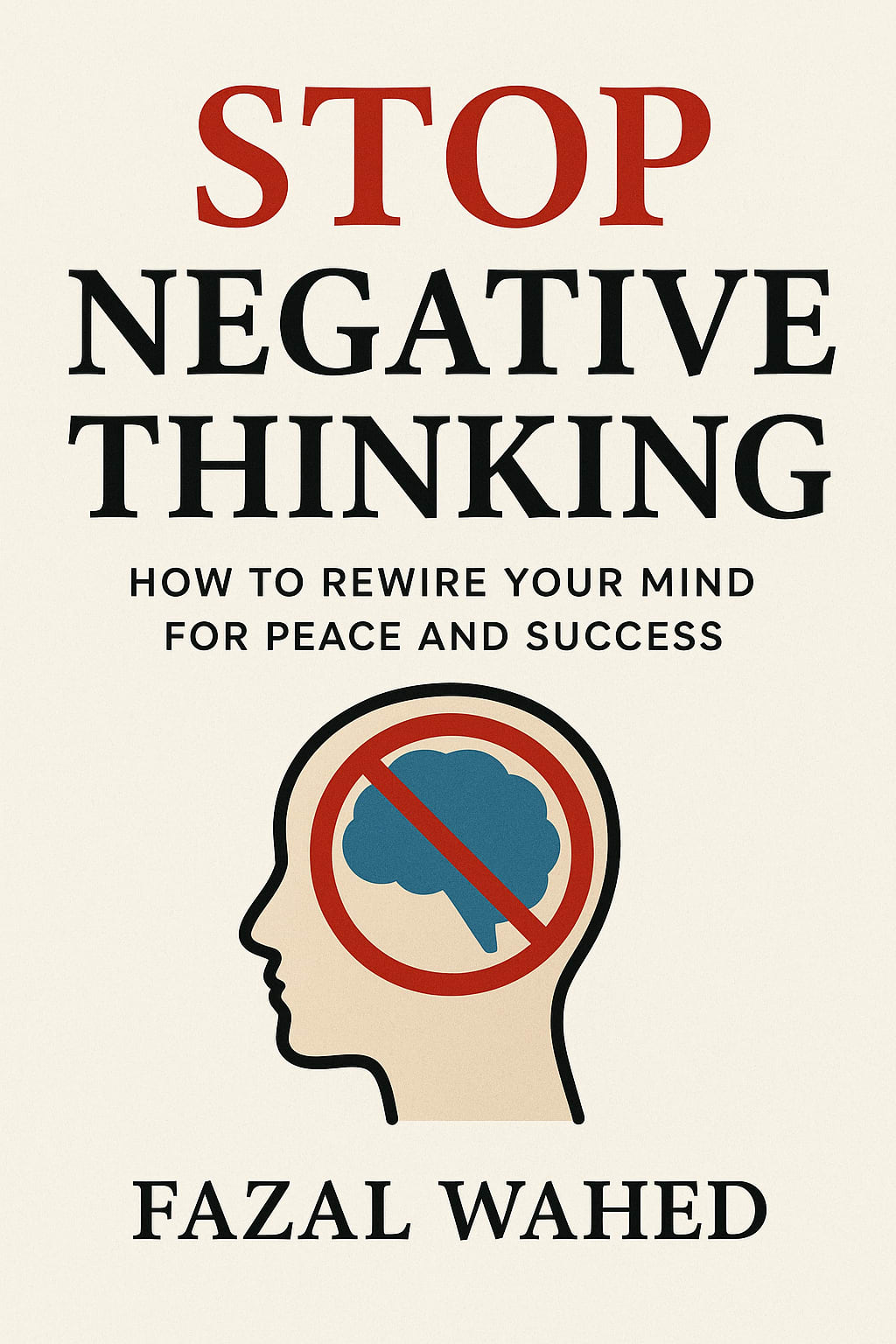
Negative thinking is more than just occasional worry or stress. It’s a pattern of thoughts that focuses on failure, self-doubt, and pessimism. These thoughts can affect your decisions, emotions, and even your physical health.
Exercise: Write down recurring negative thoughts for one week. Seeing them on paper helps you understand their frequency and triggers.
The Root of Negativity
Most negative thoughts stem from fear, past experiences, social conditioning, or low self-esteem. Identifying the source is the first step to control them.
Example: If you fear public speaking due to a past embarrassing moment, acknowledging it helps reduce its power.
How Negative Thinking Affects Your Life
Negative thoughts influence your relationships, career, and happiness. Chronic negativity can lead to stress, anxiety, depression, and missed opportunities.
Tip: Notice moments when you self-sabotage due to negative thinking and journal about them.
Awareness is Power
Before you can stop negative thoughts, you must recognize them. Start by pausing and asking yourself: “Is this thought helping me or hurting me?”
Exercise: Practice mindfulness for 5 minutes daily, observing your thoughts without judgment.
Challenge Your Thoughts
Not every thought is true. Negative thinking often distorts reality. Question your assumptions: “Is this fact or my interpretation?”
Example: Thinking “I always fail” is not accurate—focus on evidence of your successes.
Replace Negativity with Positivity
Once you identify negative thoughts, replace them with positive or neutral alternatives. This doesn’t mean ignoring problems—it means focusing on solutions.
Exercise: Turn “I can’t do this” into “I will try and learn from this.”
Practice Gratitude
Gratitude shifts focus from what’s wrong to what’s right. Daily gratitude can rewire your brain for positivity.
Exercise: List 3 things you’re grateful for every morning or night.
Surround Yourself with Positivity
People, media, and environments influence your thinking. Engage with uplifting content and supportive individuals.
Tip: Limit time on negative news or social media accounts that trigger stress.
The Power of Self-Talk
Your inner dialogue shapes your reality. Speak to yourself kindly, encouragingly, and with patience.
Exercise: Each time you catch yourself thinking negatively, say a positive affirmation out loud.
Mindfulness and Meditation
Mindfulness keeps you grounded in the present moment, reducing worry and rumination.
Exercise: Meditate for 10 minutes, focusing on your breath. Let negative thoughts pass without attachment.
Visualize Success
Visualization helps rewire the brain. See yourself achieving goals, overcoming challenges, and handling stress calmly.
Exercise: Spend 5 minutes imagining a positive outcome for a current challenge.
Break the “What If” Cycle
“What if” thinking fuels anxiety. Focus on what is rather than what could go wrong.
Exercise: Replace “What if I fail?” with “I will do my best and learn.”
Develop Resilience
Challenges are inevitable. Resilience helps you bounce back instead of spiraling into negativity.
Tip: Reflect on past challenges and how you overcame them. Recognize your inner strength.
Limit Comparisons
Comparing yourself to others fuels self-doubt. Everyone’s journey is unique.
Exercise: Write your achievements and progress, however small, and celebrate them daily.
Cultivate Optimism
Optimism is a habit. Expect good outcomes, focus on solutions, and trust your abilities.
Exercise: Start each day by writing one positive intention: “Today I will focus on…”
Physical Health and Mental Clarity
Exercise, sleep, and nutrition impact mental patterns. A healthy body supports a healthy mind.
Tip: Daily movement—even 10 minutes—reduces stress hormones and clears mental clutter.
Learn from Mistakes
Mistakes are not failures—they are feedback. Negative thinking often magnifies mistakes unnecessarily.
Exercise: For every mistake, write down the lesson learned and one positive takeaway.
-Use Affirmations and Journaling
Affirmations reinforce positive thought patterns. Journaling clarifies thinking and reduces mental chaos.
Exercise: Start each day with 3 affirmations: “I am capable. I am worthy. I choose positivity.”
Seek Support When Needed
Sometimes, negativity is deep-rooted and requires help. Therapy, coaching, or support groups can provide guidance.
Tip: Talking about your thoughts with someone you trust can lighten mental burden.
Make Positivity a Lifestyle
Stopping negative thinking is ongoing. Integrate habits from this book daily. Over time, positive thinking becomes second nature.
Action Plan:
1. Track your thoughts.
2. Practice gratitude and mindfulness.
3. Replace negative thoughts with solutions.
4. Celebrate small victories.
About the Creator
Keep reading
More stories from Fazal wahid and writers in Education and other communities.
When Alliance Meets Fracture: The U.S.–Israel Relationship in the Gaza War
For decades, the alliance between Israel and the United States has been described as “unshakeable.” But as the war in Gaza enters its third year, the nature of that alliance is being tested — not only by the strategic realities on the ground, but by questions of power, agency, morality and diplomacy.
By Fazal wahid 4 months ago in Education
Why More Companies Are Seeking ISO Consultancy in Abu Dhabi Before Expanding Operations
Business expansion sounds exciting. New markets, larger teams, bigger contracts. But behind the scenes, expansion also introduces operational pressure that many companies underestimate. Processes that worked for a small or mid-size organization often begin to fail when scale increases. And that’s exactly why many companies in Abu Dhabi are turning to structured management systems before they grow further.
By Umar Quality Jounal6 days ago in Education
Smart Growth Strategies for Long-Term Wealth
Expanding a diverse portfolio in real estate and beyond is one of the smartest ways to build long-term wealth. Markets can shift without warning, and relying on one type of asset can expose you to high risk. When you focus on expanding a diverse portfolio in real estate and beyond, you spread your investments across different areas, helping protect your capital and generate steady returns. This balanced approach gives investors more control and more confidence during uncertain times.
By Adam Adler6 days ago in Education



Comments
There are no comments for this story
Be the first to respond and start the conversation.