
Pass HESI A2 Anatomy & Physiology on your first Attempt
A Smarter Ways to prepare for the most challenges section of HESI A2 and Secure your nursing school admission

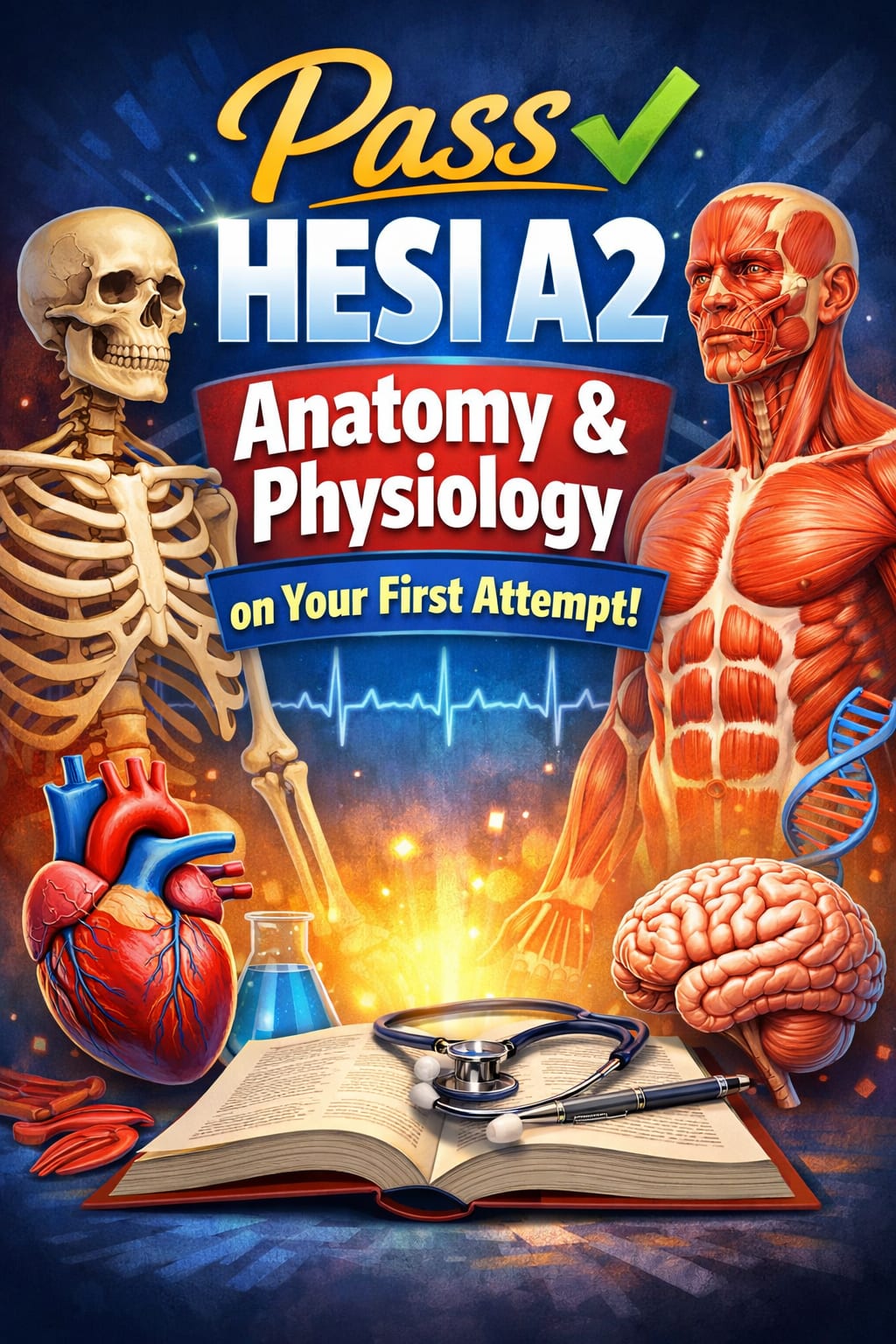
Every year, thousands of students apply to nursing schools across the United States. Strong grades and passion for healthcare are important, but there’s one hurdle that stops many qualified applicants: the HESI A2 entrance exam.
Among all sections, Anatomy and Physiology is often considered the most challenging. It requires more than memorization. It tests your understanding of body systems, processes, and clinical connections — all under timed exam pressure. For students aiming to enter nursing school in 2026, preparing strategically for this section can make the difference between acceptance and delay.
The good news is that passing the HESI A2 Anatomy & Physiology exam is completely achievable with the right approach.
Understanding What the Exam Really Tests
Many students begin studying by reviewing notes, textbooks, and flashcards. While this is helpful, it doesn’t fully prepare you for the way HESI A2 questions are structured. The exam focuses heavily on application-based knowledge rather than simple recall.
You may be asked to identify how different body systems interact, recognize functions of organs in specific conditions, or apply terminology in practical scenarios. Questions often combine multiple concepts into one problem, requiring you to think critically and quickly.
For example, instead of simply asking about the function of the kidneys, a question may require you to connect kidney function with blood pressure regulation or fluid balance. This integrated approach reflects the real-world knowledge expected from future nursing students.
Understanding this exam format early helps you adjust your study strategy. It shifts your focus from passive reading to active learning and practice.
Why Students Struggle With Anatomy & Physiology
Anatomy and physiology is content-heavy. There are numerous systems, processes, and terms to remember. Many students feel overwhelmed trying to cover everything at once.
One common issue is information overload. Students try to memorize every detail without understanding the underlying concepts. When exam questions appear in unfamiliar formats, memorized facts alone are not enough.
Another challenge is lack of realistic practice. Free quizzes and basic review materials often present simple, direct questions. The actual HESI A2 exam, however, includes more complex and scenario-based questions. Without exposure to exam-style practice, students may feel unprepared on test day.
Time pressure also plays a major role. Even well-prepared students sometimes struggle because they are not used to answering detailed questions within a limited timeframe. Building speed and accuracy together is essential.
Building a Strong Study Foundation
Successful HESI A2 candidates usually begin with a clear study plan. Instead of randomly reviewing topics, they break anatomy and physiology into manageable sections. Focusing on one body system at a time allows for deeper understanding and better retention.
Start with core systems such as:
• Cardiovascular system
• Respiratory system
• Nervous system
• Muscular and skeletal systems
• Digestive and endocrine systems
Understanding how these systems function individually and together is critical. Pay attention to terminology, processes, and interactions between organs. Visual aids such as diagrams and labeled illustrations can help reinforce learning.
Consistency is more important than long study sessions. Even one to two hours of focused study each day can produce significant improvement over a few weeks.
The Importance of Practice Tests
One of the most effective ways to prepare for the HESI A2 Anatomy & Physiology section is through realistic practice testing. Practice tests allow you to apply what you’ve learned and identify areas that need improvement.
Working through exam-style questions helps you become familiar with how topics are presented. It also improves critical thinking and time management skills. Detailed answer explanations are especially valuable because they show not only the correct answer but also the reasoning behind it.
Many high-scoring students rely on structured resources such as a comprehensive HESI A2 Anatomy and Physiology Practice Test to simulate real exam conditions and strengthen weak areas before test day. Practicing with targeted questions builds confidence and reduces surprises during the actual exam.
Smart Study Techniques That Work
Not all study methods are equally effective. Some techniques can significantly improve retention and understanding.
Active recall is one of the most powerful strategies. Instead of rereading notes repeatedly, test yourself on key concepts. Try explaining processes out loud or writing them from memory. This strengthens neural connections and improves recall during exams.
Spaced repetition is another useful technique. Reviewing material at regular intervals helps move information from short-term to long-term memory. Create a schedule to revisit important topics every few days.
Practice under timed conditions is essential as the exam approaches. Set a timer and answer questions as if you were in the testing environment. This builds speed, accuracy, and confidence.
Studying with purpose rather than simply spending long hours with books leads to better results.
Avoiding Last-Minute Stress
Procrastination is a common problem among students preparing for entrance exams. Waiting until the final weeks to begin serious preparation often leads to stress and lower scores.
Ideally, start preparing at least four to six weeks before your exam date. This allows enough time to review concepts, practice extensively, and strengthen weak areas. Rushed preparation rarely produces strong results.
Sleep and mental health also matter. Exhaustion can reduce concentration and memory retention. Balanced study routines, regular breaks, and proper rest can improve performance significantly.
Confidence comes from preparation. When you know you’ve practiced thoroughly and covered all major topics, test-day anxiety decreases.
Thinking Beyond the Exam
Preparing for the HESI A2 is not just about passing a test. It’s about building the knowledge base required for nursing school. Anatomy and physiology will continue to play a major role throughout your nursing education and career.
Students who invest time in truly understanding these concepts often find their first year of nursing school less overwhelming. They enter programs with stronger foundations and greater confidence.
Treat this preparation period as the beginning of your professional journey in healthcare. The habits you develop now — disciplined study, consistent practice, and commitment to understanding — will benefit you long after the exam.
Final Thoughts
The HESI A2 Anatomy & Physiology exam may seem intimidating at first, but it is entirely manageable with the right preparation strategy. Focus on understanding concepts rather than memorizing blindly. Practice regularly with realistic questions. Track your progress and refine weak areas.
Every successful nursing student once stood exactly where you are now — preparing for entrance exams and working toward acceptance. With consistent effort and smart preparation, you can achieve a strong score and move one step closer to your nursing career.
Your path to nursing school starts with preparation today. Stay focused, practice with intention, and approach the exam with confidence.
About the Creator
PrepPool
PrepPool helps students prepare smarter for exams through realistic practice questions, exam-aligned study resources, and practical strategies for AP, nursing, healthcare, and professional certification exams.
From Dugout to Teamwork: Strengthening Bonds in Travel Baseball
Travel baseball is more than just a sport. It is a commitment that brings together young athletes, coaches, and families for months of practices, road trips, and high-stakes tournaments. While the focus is often on sharpening skills and chasing championships, one of the most valuable aspects of travel baseball lies in the relationships formed along the way. Strong team bonds not only improve performance but also create an environment where players thrive emotionally, socially, and competitively.
By Joe Sottolano2 days ago in Education
Mismatch Challenge Winners
Blending genres isn’t about stacking elements side by side. It’s about what happens when two sets of expectations refuse to cooperate. The strongest entries in the Mismatch Challenge understood that tension and leaned into it. Rather than smoothing the edges, these stories let their chosen genres complicate one another, creating friction that carried through voice, structure, and consequence.
By Vocal Curation Teamabout 17 hours ago in Resources



Comments
There are no comments for this story
Be the first to respond and start the conversation.