

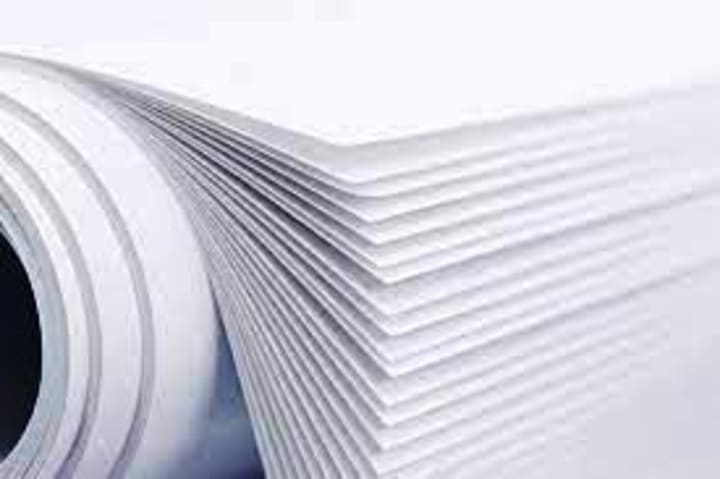
The invention of paper is widely attributed to the Chinese philosopher and government official Cai Lun, who is said to have created a paper-making process around the year 105 AD. Before the invention of paper, people in China used materials such as bamboo strips, silk, and parchment made from animal hides for writing and record-keeping. Cai Lun's creation of paper revolutionized the way information was recorded and disseminated in ancient China, and it later spread to other parts of the world, including the Islamic world and Europe. The process of making paper has evolved over the centuries, but the basic principles established by Cai Lun have remained largely unchanged.
The process of making paper has a long history that dates back to ancient China. The exact timeline of the development of paper-making is difficult to determine, but it is estimated that the process began around 105 AD, when the Chinese official Cai Lun is said to have created a method for making paper using rags, tree bark, and other plant fibers.
After the invention of paper, the process of making it was further refined over the centuries, with improvements made to the materials used, the methods of production, and the quality of the final product. By the 7th century, the Islamic world had adopted the technique of paper-making from China and made further innovations, such as the use of animal gelatin as a sizing agent to improve the strength and durability of the paper.
In the centuries that followed, the process of making paper spread throughout the world, with Europe and other regions adopting and refining the technique. Today, modern technology has revolutionized the paper-making process, with highly automated factories producing large quantities of high-quality paper in a matter of minutes. However, the basic principles established by Cai Lun over 1,900 years ago remain largely unchanged.
The process of making paper has continued to evolve over the centuries since its invention, with a number of important updates and innovations along the way. Here are a few key developments:
Industrialization:
With the advent of the Industrial Revolution in the 18th and 19th centuries, the process of paper-making became more mechanized and efficient. Factories were built to produce paper on a large scale, using steam-powered machines and other technologies to streamline the process.
Improved materials:
The materials used to make paper have also evolved over time. Today, paper is often made from a combination of wood pulp and recycled fibers, but other materials, such as cotton, hemp, and flax, are also used. Additionally, the use of chemicals such as bleach and sizing agents has improved the quality and durability of paper.
Digital technology:
In recent decades, the rise of digital technology has had a major impact on the paper industry. While paper continues to be widely used for many purposes, the rise of electronic communication and document storage has reduced demand for traditional paper products.
Despite these changes, the basic process of making paper remains largely the same as it was in ancient China over 1,900 years ago. Raw materials are beaten into a pulp, which is then spread out and pressed to form sheets of paper. The finished product is then dried and cut to the desired size.
The size of paper in ancient China varied depending on the specific use and the availability of materials. In the early days of paper-making, the size of paper was limited by the manual production process and the materials used, which were often pieces of cloth or plant fibers that were difficult to standardize.
Over time, however, the size of paper became more standardized as the production process became more efficient and the materials used became more uniform. During the Tang dynasty (618-907 AD), the size of paper in China became more standardized, with the introduction of imperial paper money and the use of paper for official government documents. These uses required paper of a specific size, which helped to establish a standard for paper production.
In the Islamic world and Europe, the size of paper also became more standardized as the technique of paper-making was adopted and refined. By the 14th century, the size of paper used for books and other written documents in Europe was relatively standardized, with most paper being produced in sheets that were approximately 22 by 30 inches.
Today, paper sizes are standardized around the world, with the most common size being the International A series, which includes sizes such as A4 (210 x 297 mm) and letter size (8.5 x 11 inches).
The use of paper for official documents and the recognition of paper as a valid form of record-keeping is generally associated with China, where paper was first invented around 105 AD. The Chinese imperial court began using paper for official documents and record-keeping soon after its invention, and the widespread use of paper in this way helped to establish its credibility and reliability as a medium for preserving information.
As paper-making spread to other parts of the world, such as the Islamic world and Europe, the use of paper for official documents and record-keeping became more widespread. In Europe, the use of paper for official documents became more widespread in the Middle Ages, with the rise of the Catholic Church and the development of the modern European state system.
Today, paper documents are used and recognized as valid forms of record-keeping in virtually every country in the world. In many countries, the use of electronic forms of record-keeping is becoming increasingly common, but paper documents continue to play an important role in many legal and financial transactions.
In ancient China, the first inks used on paper were made from a mixture of soot and animal glue or gelatin. This type of ink was used in calligraphy and was suitable for writing on the porous surface of early paper.
As paper-making spread to other parts of the world, different types of inks were developed to meet the needs of different cultures and uses. For example, in the Islamic world, iron gall ink, made from tannin extracted from oak galls and iron salts, became widely used for writing on paper. This type of ink was highly valued for its ability to produce sharp, dark lines and its resistance to fading over time.
In Europe, a variety of inks were used for writing on paper, including carbon-based inks, iron gall inks, and inks made from other materials such as lampblack and indigo. The development of printing technology in Europe in the 15th century led to the widespread use of oil-based inks for printing, which provided greater durability and a wider range of colors than the inks used for writing.
Today, there are many different types of inks used for printing and writing on paper, including water-based inks, oil-based inks, pigment-based inks, and others. The type of ink used for a specific application will depend on factors such as the type of paper, the intended use, and the desired properties of the ink, such as color fastness, water resistance, and permanence. The first mechanized paper-making machine was invented in England in the late 18th century. The machine was designed by Nicholas-Louis Robert, a French engineer, and was based on earlier designs for paper-making machines that had been developed in France and other countries.
The first machine-made paper was produced in England in 1798 and was an important milestone in the development of the paper industry. The machine was designed to automate many of the manual steps involved in paper-making, such as pulping the fibers, spreading the pulp into a thin sheet, and pressing and drying the paper. This allowed for the production of paper on a much larger scale and with greater efficiency than had been possible with manual methods.
The success of the first paper-making machine led to the development of a number of other paper-making machines and technologies, which continued to evolve and improve throughout the 19th and 20th centuries. Today, paper is produced on a large scale using highly advanced and automated machines that can produce paper at high speed and with high quality.
In addition to increasing the efficiency and quality of paper production, the development of machine-made paper also had a significant impact on the cost of paper and its availability to consumers, helping to make paper products an important part of everyday life around the world.
About the Creator
Keep reading
More stories from writers in Education and other communities.
Rarely Seen: Experimental & Pattern U.S. Coins That Spark the Hobby
So, What Exactly Are These Coins? Let’s clear up the biggest confusion first. "Pattern" and "experimental" are related, but they’re not the same thing. Knowing the difference is your first step from curious collector to informed enthusiast.
By Laura Bennett8 days ago in Education
The Blue Ridge Stalker
Tom had left the Ford down the way, its spark plugs finally exhausted and no mechanics for a dozen miles back through the foothills to Strossburg. No matter, he had worn his boots—almost as if he planned for this to happen. The puzzle he sought to solve emanated from the woods clinging to the slopes above; the valley behind held no mysteries.
By Stephen A. Roddewig7 days ago in Fiction



Comments
There are no comments for this story
Be the first to respond and start the conversation.