
"Why the U.S. is Obsessed with Greenland – The Global Power Game"
"The hidden minerals, strategic location, and melting Arctic ice that could change global power forever."
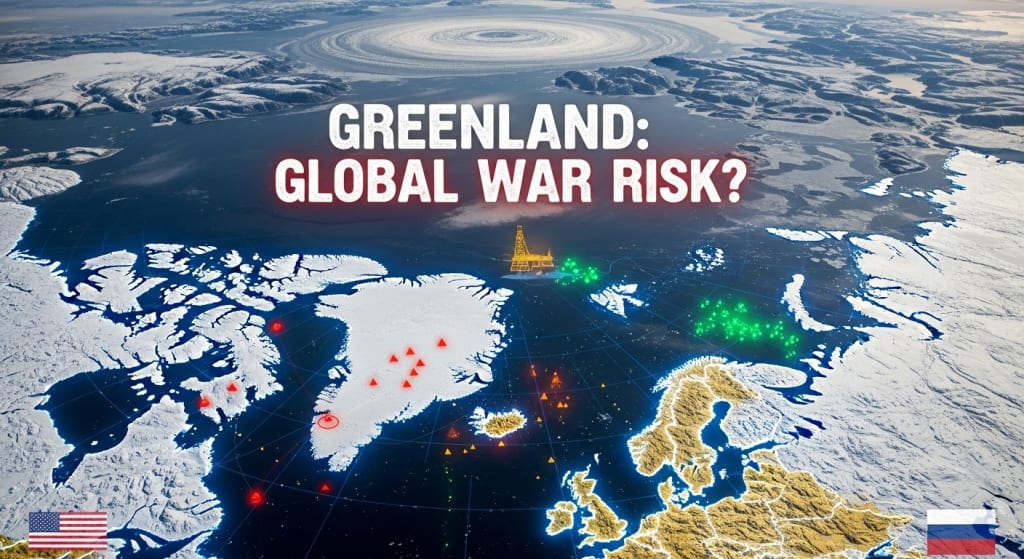
We’re about to make a move in Greenland—whether the world approves or not. This icebound island has suddenly captured global attention, and the United States is intensely focused on it, not just for minerals, oil, or national security, but for its potential to reshape global power in ways that could change the balance of nations for decades. Greenland, the world’s largest island located near the North Pole, with 80% of its surface covered in thick, ancient ice, surpasses the land area of Saudi Arabia, Mexico, and Indonesia combined, yet only about 57,000 people inhabit this vast, frozen land, mostly along the relatively ice-free coastlines where survival is feasible. Temperatures here are extreme, ranging from -30°C in common conditions to as low as -50°C in the northern regions, with summers fleeting and barely reaching 10°C during the day, making this one of the harshest habitable regions on Earth. Despite these brutal environmental conditions, Greenland has become the center of a new Cold War, drawing attention from superpowers due to its strategic location, untapped resources, and geopolitical significance.
Former President Donald Trump openly expressed a desire to bring Greenland under U.S. control, even hinting that military action might be necessary, a statement that alarmed international experts and stirred debate worldwide. Yet Trump is far from the first American leader to covet Greenland. Historically, the United States has always considered Greenland a cornerstone of national security. From the purchase of Alaska in 1867 to the failed acquisition attempts under President William Howard Taft, through World War II when the U.S. took responsibility for Greenland’s defense to prevent Nazi bases from forming, and President Truman’s 1946 gold offer to Denmark—which was refused—Greenland has consistently been seen as vital to American strategic interests. Today, about 10,000 U.S. soldiers are stationed at the Thule Air Base, ensuring a permanent military presence, yet fears remain that an independent Greenland could demand the removal of these forces or increase financial obligations for hosting them. Greenland has no army of its own, Denmark’s defense forces are modest, and global skepticism about U.S. intentions persists because of America’s history of interventions and strategic maneuvers around the world.
Beyond military and security considerations, Greenland is extraordinarily rich in rare earth minerals, including neodymium, gallium, uranium, and silicon—resources that are critical for electric vehicles, AI technology, nuclear energy, semiconductors, and solar panels. Currently, China dominates the global supply of these elements and has implemented export restrictions that place Western countries under economic and technological pressure. Securing Greenland would give the U.S. leverage to break this monopoly and control access to resources essential for emerging technologies and future industries. Greenland also contains massive oil reserves, with estimates suggesting 31 billion barrels in the northeast alone, further increasing its strategic value. Its location is pivotal for undersea internet cables linking North America and Europe, and Russian “ghost ships” have been observed near these cables, raising fears of potential sabotage during conflict. U.S. control over Greenland ensures the security and stability of these critical communication lines. Additionally, Greenland hosts the B-2 Space Base, equipped with upgraded early warning radar capable of detecting Russian intercontinental ballistic missiles immediately upon launch. Any missile targeting the U.S. would likely pass over Greenland, making American control of this territory directly linked to national security.
Greenland also guards the emerging Northwest Passage, a new Arctic shipping route that is gradually opening due to melting ice caused by climate change. This route could cut the distance between China and London by roughly 9,000 kilometers, saving fuel, costs, and 10–15 days of travel, effectively positioning the controlling nation as the global trade gatekeeper. Russia already controls the largest Arctic coastline and plans to levy taxes on the route, while China envisions a “Polar Silk Road” for Arctic trade. U.S. control of Greenland would allow America to dominate this strategic maritime corridor, influencing global commerce and reinforcing its geopolitical influence. Experts warn that such a move could trigger significant geopolitical tension, as Denmark is a NATO member and its Prime Minister has stated that any attempt by the United States to seize Greenland by force could undermine the alliance, potentially creating conflict among allied nations. If the U.S. succeeds, it could become the undisputed Arctic superpower, control critical mineral resources, challenge China’s technological dominance, reshape global trade networks, and alter Greenland’s fragile ecosystems. Indigenous communities may face the loss of centuries-old cultural heritage, while the melting Arctic continues to open new opportunities alongside unprecedented dangers. The fate of Greenland will therefore be a pivotal factor shaping global geopolitics over the next century, determining whether humanity moves toward lasting peace or the brink of a third world war.
About the Creator
Travel Made Easy: A Practical Guide to Planning a Smooth and Relaxing Vacation Anywhere
Travel has the power to refresh the mind, inspire new ideas, and create unforgettable memories. However, planning a vacation can sometimes feel more stressful than rewarding. From choosing destinations to managing time and expenses, many travelers feel overwhelmed before they even pack their bags. The key to enjoying a peaceful journey lies in thoughtful planning and a calm mindset. This guide explains how to plan a stress-free vacation anywhere while keeping the process simple, organized, and enjoyable.
By Nathalie Kyriakou5 days ago in Education
Growing with Purpose: Smart Paths to a Sustainable Future
Green industry growth strategies are shaping how modern businesses plan for the future. Companies now see that caring for the planet can also support steady growth. This approach is not a trend. It is a long-term shift in how business works. Firms that act early often gain trust, reduce risk, and build stronger brands.
By Gary S Winemaster7 days ago in Education


Comments
There are no comments for this story
Be the first to respond and start the conversation.