
Rarely Seen: Experimental & Pattern U.S. Coins That Spark the Hobby
Discover the world of rare U.S. pattern & experimental coins. Learn their story, value, and how to start collecting with expert Laura Bennett's guide. Explore Judd numbers, auctions, and key examples.

So, What Exactly Are These Coins?
Let’s clear up the biggest confusion first. "Pattern" and "experimental" are related, but they’re not the same thing. Knowing the difference is your first step from curious collector to informed enthusiast.
- A Pattern Coin is a design proposal. Imagine the Mint needs a new dollar. Engravers create sketches, then turn them into physical, coin-sized models. These are pattern coins—official prototypes made to show Treasury officials or Congress what the new money could look like. They were struck from real dies, often in multiple metals (like copper, aluminum, or silver), to help visualize the final product. Their story is one of art, politics, and rejected ideas.
- An Experimental Coin is a science project. Here, the challenge isn’t design, but engineering. Could a new alloy make cents cheaper? Would a different metal hold up better in circulation? Experimental coins were the Mint’s R&D, testing new metal blends (like the aluminum cents of the 1970s) or striking processes. Their value is in their innovation and technical history.
Why do collectors obsess over them?
It’s the ultimate combo for a serious enthusiast: mind-blowing rarity paired with a direct, tangible link to U.S. Mint history. Owning one feels like holding a secret. For a passionate collector, moving into patterns is often the pinnacle of the hobby.
My Two Cents: "A classic rookie mistake is calling any odd-looking coin a 'pattern.' The bible for this is the Judd catalog, which assigns official reference numbers. If a coin doesn't have a Judd number, it's not a genuine U.S. pattern. Always verify with the catalog before you get excited—it'll save you from costly errors."
A Tour Through History's Greatest "What-Ifs"
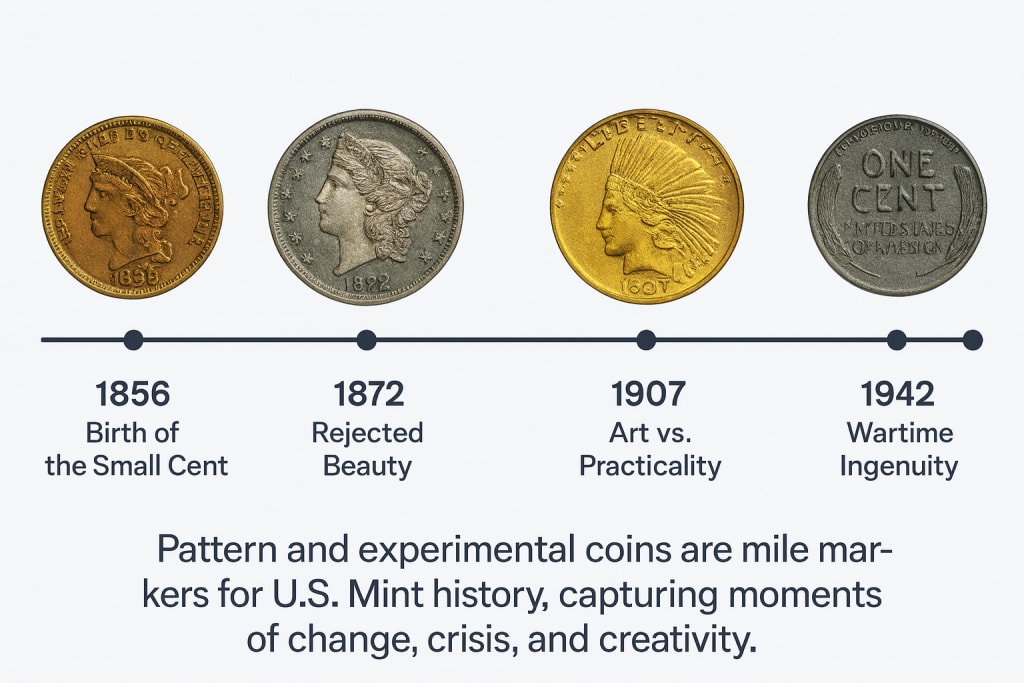
The best way to understand this world is to see it. Here’s a quick tour of some pieces that aren’t just coins—they’re stories.
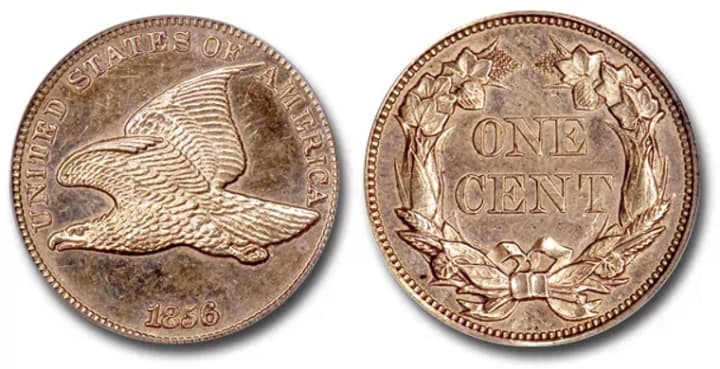
The 1856 Flying Eagle Cent (Judd-137):
Before the iconic "Flying Eagle" cent hit circulation in 1857, the Mint made test runs in 1856. These patterns, struck in the new copper-nickel alloy and even rarer metals like aluminum, are the missing link between the old large cents and America's first small cent. Snagging one is a crown jewel for any serious cent collection.
The 1872 "Amazonian" Patterns (Judd-1255, etc.):
Some of the most beautiful coins America never made. Designer William Barber created a stunning allegorical figure. While the design was rejected, these silver proof patterns are considered masterpieces. They regularly sell for hundreds of thousands of dollars, prized for their breathtaking art.
The 1907 Saint-Gaudens High Relief Patterns:
Augustus Saint-Gaudens’ double eagle is a masterpiece. His original vision was an ultra-high relief coin that was stunning but impractical for mass production. The patterns struck to test lower relief levels show the sculptor’s vision being adapted for reality. They’re a slice of artistic compromise.
WWII Alloy Experiments (1942-43):
A perfect example of experimentation driven by crisis. To save copper and nickel for the war, the Mint frantically tested alternatives—leading to the steel cent and silver-alloy nickel. They also tried wild ideas: zinc, glass, even fiber. These pieces are history you can hold, born from national emergency.
The 1856 Flying Eagle CentH2: How to Navigate This Market (Without Getting Burned)
Let’s be real: this isn’t the market for flea market finds. Prices are set almost entirely at major auctions by firms like Heritage Auctions. Here’s what drives those eye-popping prices:
- Rarity (The Judd Number): This is king. A coin that’s one-of-a-kind (unique) is in a different league than one with ten known examples. Auction listings always highlight this.
- Condition is Everything: A one-grade difference on a common coin might mean 20% more value. On a rare pattern, it can mean 200% or more. For proof patterns, look for "Cameo" contrast—it commands a huge premium.
- The Story (Provenance): A coin with a pedigree from a famous collection carries a premium. It’s not just a coin; it’s a piece of collecting history.
- The "Wow" Factor (Eye Appeal): Subjective but critical. A sharply struck, beautifully toned coin will always outperform a dull sibling of the same grade.
Thinking of taking the plunge? Here’s a realistic roadmap:
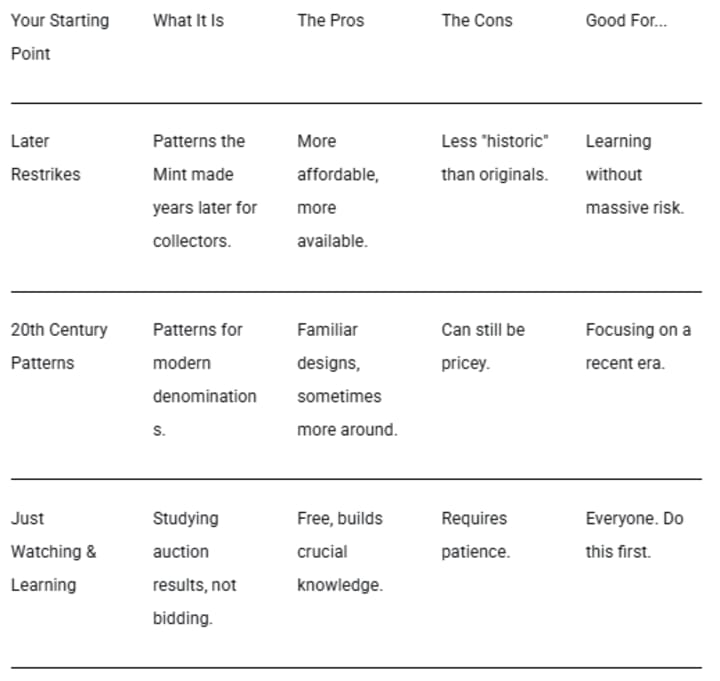
My non-negotiable advice? Buy the holder. For this tier of collecting, you should only consider coins certified and slabbed by PCGS or NGC. It removes the terrifying risk of buying a fake. Before you spend a dime, spend time in auction archives. Use a good coin value checker to see what similar pieces are actually sold for, not just what people are asking. Knowledge is your best shield and your most valuable tool.
Red Flags and Smart Collecting
Where there’s high value, there are people trying to fake it. Staying safe is about knowing the warning signs.
The price is "too good to be true." If it’s way under recent auction prices, it’s a scam or a fake.
The seller is vague or pushy. No extra photos? Rushing you to decide? Walk away.
The coin is raw (not certified). Buying an uncertified pattern is extremely high-risk. Stick to slabbed coins from reputable auction houses.
Also, know the difference between an original strike (made during the original design phase) and a restrike (made later for collectors). Both are legitimate, but originals are more valuable. Honest sellers will always be clear about this.
From My Experience: "Early on, a collector showed me an '1879 Stella' he’d bought privately. The story was great, but the coin felt wrong—the weight was off. It was a clever fake. That lesson was expensive for him. It taught me that in this niche, trust must be verified. A PCGS or NGC slab isn’t just plastic; it’s your peace of mind."
FAQ
What’s the most a U.S. pattern coin has ever sold for?
The record holder is an 1879 “Quintuple Stella” $25 gold pattern (Judd-1655). One of only two known, it sold at auction for over $2.5 million. Its unique status and gold composition make it the holy grail.
Could I find a pattern coin in loose change?
Almost certainly not. These were never released for public circulation. They were kept by officials, given to dignitaries, or sold directly to 19th-century collectors. If you see one in a jar of pennies, it’s a modern reproduction.
What’s the one book I need?
Get the latest edition of “United States Pattern Coins” by J. Hewitt Judd (updated by Q. David Bowers). It’s the master catalog that gives every genuine pattern its "Judd number."
Where can I see these in person?
The Smithsonian’s National Numismatic Collection in Washington, D.C., has the world’s best public display. The ANA Money Museum in Colorado Springs is another fantastic spot. Major coin shows often have exhibit cases too.
What’s a Judd number vs. a Pollock number?
Judd numbers are for standard pattern coins. Pollock numbers (from Andrew Pollock’s book) cover a wider net, including more experimental pieces and trial strikes. A coin can have both.
Are experimental coins always made of weird metals?
Often, but not always. They tested aluminum, strange alloys, even plastic. But an experiment could also be a standard metal struck with a new technique or die.
How much more does grading matter for patterns vs. regular coins?
Exponentially more. For a common Morgan dollar, a higher grade might double its value. For a rare pattern, the same grade jump could multiply its value by five or ten times, because top-condition examples are so scarce.
Is this a good place for a new collector to invest?
Honestly, it’s not ideal for beginners. The knowledge barrier is high, and mistakes are costly. Build your expertise with mainstream series first. Learn how to grade, follow the market, and then consider patterns once you’re confident.
About the Creator
Laura Bennett
Numismatist and data science expert passionate about uncovering the stories behind historical coins through analytics. Bachelor’s degree in Archaeology and a Master’s in Data Science from Harvard University. https://coin-identifier.com/
Keep reading
More stories from Laura Bennett and writers in Education and other communities.
Smart Storage & Grading for U.S. Coin Collections: a Checklist
Phase 1: First Aid for Your Collection (The 24-Hour Triage) Before buying any special supplies, you need to perform some emergency triage. Think of this as stopping the bleeding. The goal here is to prevent any active damage right now.
By Laura Bennetta day ago in Education
The Importance of Strong Leadership in IT and Cybersecurity Teams
In today’s rapidly evolving digital landscape, IT and cybersecurity are no longer support functions—they are central to business success and resilience. With growing threats, complex infrastructures, and constant technological change, these departments face intense pressure to perform at the highest levels. At the heart of their performance is a critical factor that often determines whether a team succeeds or struggles: strong leadership.
By Keith Brautigam7 days ago in Education


Comments
There are no comments for this story
Be the first to respond and start the conversation.